Foshan Mingjun Textile Company Ltd.

Views: 0 Author: Site Editor Publish Time: 2025-11-01 Origin: Site
So, are ski socks waterproof or just water-resistant? Most ski socks offer water resistance, not true waterproofing. This means your feet stay dry from sweat because the socks wick moisture away. If snow or water sneaks into your boots, though, ski socks can only do so much. You should expect dry, comfortable feet during normal skiing, but don’t count on ski socks to keep out heavy moisture from the outside.
Ski socks are mostly water-resistant, not fully waterproof. They keep your feet dry from sweat but can’t stop water from soaked boots.
Look for ski socks made with a high percentage of merino wool. This material wicks moisture away and keeps your feet warm and odor-free.
Check your boots for leaks before skiing. Dry boots are essential for keeping your feet dry, as wet boots will lead to wet socks.
Consider waterproof socks or boot covers for wet conditions. They provide extra protection when skiing in slushy snow or puddles.
Wash ski socks after each use to prevent odor and maintain comfort. Clean socks help keep your feet happy on the slopes.
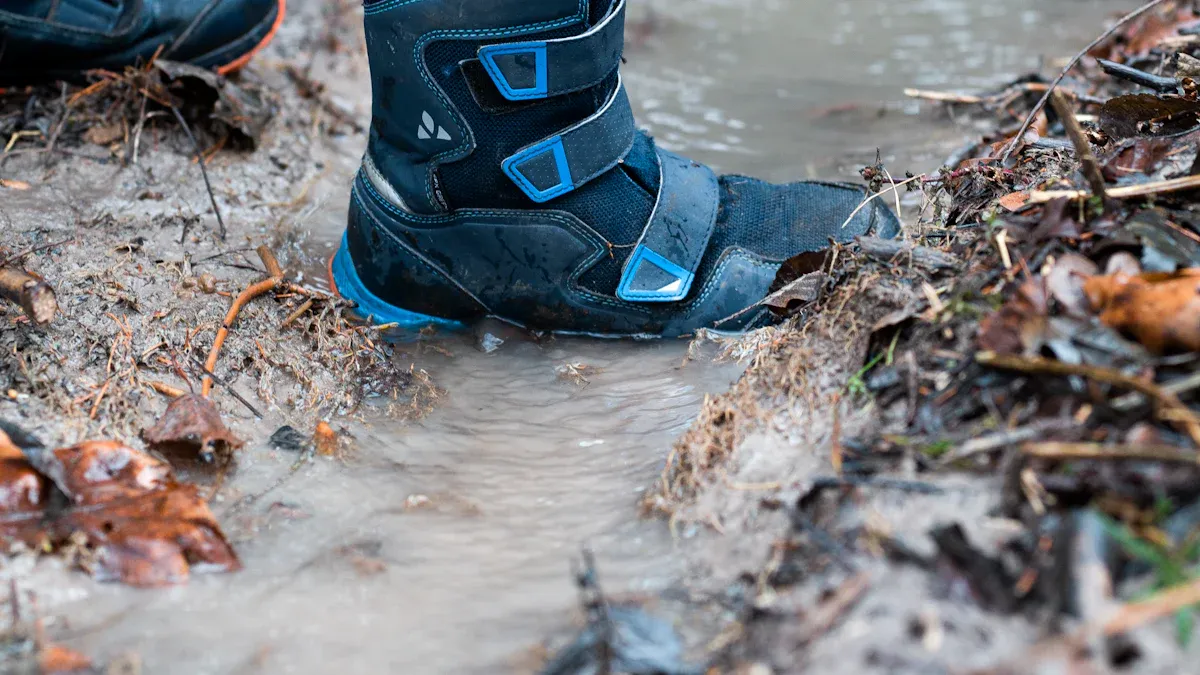
You might wonder, are ski socks waterproof or just water-resistant? Let’s break it down. Waterproof means no water gets in or out. If you dunk something waterproof in a puddle, it stays dry inside. Water-resistant means the material can block some water, but not all. It slows down how fast water gets through, but it does not stop it forever.
Ski socks usually fall into the water-resistant group. They use special fabrics and tight weaves to keep out splashes and snow for a while. But if you stand in wet boots or snow for a long time, water can still sneak in. The main job of ski socks is to move sweat away from your skin, not to block outside water completely.
Tip: If you want socks that keep out all water, you need special waterproof socks. Most ski socks focus on comfort and breathability instead.
So, are ski socks waterproof enough for a day on the slopes? Most of the time, yes—at least when it comes to sweat. Brands like Darn Tough and Smartwool make socks that pull moisture away from your feet and dry quickly. This helps your feet stay dry, even if you ski all day. The socks breathe well, so sweat does not build up and make your feet cold.
But what if snow gets inside your boots? Here’s where you see the difference. Are ski socks waterproof when it comes to outside water? Not really. They can handle a little bit of snow or dampness, but if your boots fill with water, your socks will get wet. That’s why it matters to keep your boots sealed and dry.
You might ask, are ski socks waterproof enough for deep powder or slushy days? They do a great job with sweat and light moisture, but they are not built to handle soaking from the outside. If you expect to be in very wet conditions, you might want to look at waterproof socks or extra boot covers.
Note: The best ski socks keep your feet dry by moving sweat away and drying fast. They do not act like rain boots. For most skiers, this is enough to stay comfortable and warm.
When you pick out ski and snowboard socks, you’ll notice a few main materials. Each one brings something special to the table, especially when it comes to keeping your feet dry and warm. Here’s a quick look at what you’ll find:
| Material | Moisture-Wicking Capability | Extra Benefits |
|---|---|---|
| Merino Wool | Excellent | Soft, great warmth, odor-resistant |
| Polyester | Good | Soft, dries fast, comfortable |
| Nylon | Good | Durable, fights bacteria |
| Acrylic | Moderate | Lightweight, holds warmth, wool-like |
| Elastic/Lycra | N/A | Adds stretch for a snug fit |
| Blends | Varies | Mixes the best features for performance |
Merino wool stands out for its natural moisture-wicking power and warmth. It pulls sweat away from your skin and keeps your feet cozy, even if the weather turns cold. You also get great odor control, so your socks stay fresh longer. Synthetic fibers like polyester and nylon dry quickly and add durability. Acrylic helps hold warmth and feels light on your feet. Most ski and snowboard socks use a blend of these materials to give you the best mix of comfort, warmth, and performance.
Tip: If you want socks that keep your feet warm and dry, look for ones with a high percentage of merino wool or a smart blend of synthetics.
You might wonder why ski and snowboard socks aren’t just made waterproof. The answer comes down to breathability and moisture management. Waterproof socks trap sweat inside, so your feet end up wet from the inside out. That’s not what you want on a long day in the snow. When socks can’t breathe, they get hot and uncomfortable. You might even get blisters because the socks don’t fit as well or feel bulky.
Manufacturers know you need socks that let sweat escape while still keeping your feet warm. Fully waterproof materials also cost more and don’t last as long. Over time, they can even start to leak. That’s why most brands focus on materials that balance warmth, comfort, and breathability instead of blocking out all water.
So, when you choose ski and snowboard socks, you get the best results from socks that wick moisture, breathe well, and keep your feet warm all day.
You work hard on the slopes, and your feet sweat even in cold weather. Ski socks help you stay dry by moving sweat away from your skin. This is called moisture management. Good ski socks use special materials and smart designs to keep your feet comfortable all day.
Here’s how they do it:
The fabric has thermoregulatory properties. This means it helps control temperature and keeps your socks dry.
Some socks use Arrowool™. This material wicks sweat and helps it evaporate fast. It also keeps your feet warm, even if the socks get a little damp.
Many socks have ventilation zones. These let humid air escape, so your feet do not feel soggy.
Let’s look at how different materials work inside your boots:
| Material | Functionality |
|---|---|
| Wool | High capacity for absorbing and wicking moisture, keeping feet dry. |
| Polyester | Effectively wicks away perspiration and prevents moisture accumulation. |
| Ventilation | Allows humidity to evacuate properly, enhancing comfort. |
You want socks that wick moisture away and dry quickly. This keeps your feet from feeling sticky or cold.
Tip: If you pick socks with merino wool or high-tech blends, you get warmth when wet and less chance of blisters.
Ski socks do a great job with sweat, but they have limits when it comes to outside water. If snow sneaks into your boots or you step in a puddle, your socks can only hold off the wetness for so long. The water-resistant design slows down how fast water gets in, but it does not stop it forever.
You might notice your feet stay dry during normal skiing. If your boots stay sealed, you will not have a problem. But if your boots get soaked, your socks will get wet too. That is why you should always check your boots for cracks or gaps before you hit the slopes.
Note: Ski socks focus on keeping sweat under control. They are not built to handle deep water or heavy snow inside your boots. For extra protection, you can try waterproof socks or boot covers.
You might wonder how waterproof socks actually keep your feet dry. These socks use a special three-layer design. The outside layer feels tough and protects against scrapes. The middle layer is a waterproof membrane that blocks water from getting in, but still lets sweat escape. The inside layer feels soft and pulls moisture away from your skin. Some waterproof socks also get a DWR (Durable Water Repellent) treatment on the outside, which helps water bead up and roll off.
Here’s a quick look at what makes these socks different:
| Feature | What It Does |
|---|---|
| Three-layer construction | Blocks water, lets sweat out, adds comfort |
| DWR treatment | Makes water roll off the sock’s surface |
| Cushioning pads | Protects your feet and helps prevent blisters |
| Seamless design | Stops rubbing and chafing |
| Antibacterial properties | Keeps socks fresh and fights odor |
Regular ski socks focus on warmth and moisture-wicking. They use merino wool or synthetic fibers to keep your feet warm and dry from sweat, but they do not have a waterproof membrane.
You do not always need waterproof socks on the slopes. Most days, regular ski socks work great. But sometimes, you face wet and cold conditions where waterproof socks shine. You should grab a pair when:
The snow is wet and slushy.
You expect to step in puddles, mud, or streams.
Your boots might leak or get soaked.
The best waterproof socks keep your feet dry in these tough spots. They work well for winter sports, but you can also use waterproof socks for hiking, waterproof socks for cold weather, waterproof socks for running, and waterproof socks for biking. If you want breathable waterproof socks, look for ones with a membrane that lets sweat out but blocks water.
Sometimes, you want even more protection. You can try these options:
Wear good ski socks to keep your feet warm, dry, and blister-free.
Use boot warmers if your feet get cold easily.
Add liners for extra warmth and moisture control.
Try boot covers to keep snow and water out.
You can mix and match these options to find what works best for you. The best waterproof socks are great for really wet days, but you have lots of choices to keep your feet happy on the mountain.
Ski socks keep your feet dry from sweat, but they aren’t fully waterproof. You want socks with a high merino blend, a snug fit, and moisture-wicking power for the best comfort. Check out these features:
| Feature | Benefit |
|---|---|
| Higher-merino blend | Less odor, less irritation |
| Anatomical sizing | Better fit, more comfort |
| Easy-care knit | Dries fast for next-day use |
If you ski in wet, slushy snow or have leaky boots, try waterproof socks or boot covers:
Waterproof gear keeps feet warm and dry.
Good fit stops cold feet and discomfort.
Remember, the right socks balance comfort, dryness, and performance so you enjoy every run!
Ski socks help with sweat, but they can't stop water from soaked boots. If snow or water gets inside, your socks will get wet too. You need dry boots for dry feet.
Regular socks don't wick moisture or keep your feet warm like ski socks. You might get cold feet or blisters. Ski socks work better because they fit snug and manage sweat.
You should wash ski socks after each day on the slopes. Clean socks help prevent odor and keep your feet comfortable. Use gentle detergent and let them air dry.
| Feature | Benefit |
|---|---|
| Soft texture | Feels comfortable |
| Odor control | Stays fresh |
| Warmth | Keeps feet cozy |
| Moisture-wicking | Moves sweat away |
Merino wool keeps your feet warm, dry, and fresh all day.
Tip: Always check your boots for leaks before you ski. Wear moisture-wicking socks and change them if they get damp. Boot covers add extra protection on wet days.


