Foshan Mingjun Textile Company Ltd.

Views: 0 Author: Site Editor Publish Time: 2025-10-06 Origin: Site
You want your trips to be safer and more comfy when you fly. One of the key benefits of wearing compression socks while flying is that they can really help protect you and make you feel better. These socks gently squeeze your legs, which aids in better blood circulation. This not only lowers your chance of blood clots and swelling but also enhances your overall flying experience. Here is how they help:
Mechanism/Benefit | Description |
|---|---|
Blood Flow Improvement | Compression socks press on veins near the skin, pushing blood into deeper veins. This helps blood move better when you walk. |
Risk Reduction | They significantly lower the chance of getting venous thromboembolism (VTE) on long flights. |
Comfort Enhancement | They help prevent your legs from feeling sore, which is especially beneficial for people with venous insufficiency. |
Duration Impact | The longer you fly, the more they help. The risk of VTE increases significantly after four hours. |
You should take advantage of the benefits of wearing compression socks while flying. Make them a must-have for your next trip.
Compression socks help blood move better in your legs. This lowers the chance of blood clots when you fly.
They make it much less likely to get venous thromboembolism. This is very important on flights longer than four hours.
Compression socks stop your legs and feet from swelling. This helps you feel good during your trip.
Put on compression socks before you get on the plane. This helps them work best and stops swelling early.
Pick the right compression level for your flight. Use 15-20 mmHg for short flights. Use 20-30 mmHg for long trips.
Move around or stretch while you are on the plane. This helps your blood flow even more.
Anyone can wear compression socks to help their legs. Frequent flyers, older adults, and pregnant women all benefit.
You will feel better and less tired when you travel. Compression socks help you have a more comfortable trip.
Flying can cause health problems you should know about. When you get on a plane, your body faces new challenges. You sit in a small seat for hours. The air is dry, and the pressure changes. These things can raise your risk of venous thromboembolism. This includes deep vein thrombosis and pulmonary embolism.
Tip: If you have had blood clots before, be extra careful on long flights.
Blood clots, like dvt, are dangerous when you travel by air. Deep vein thrombosis happens when a clot forms in your leg veins. The clot can move to your lungs and cause a pulmonary embolism. Venous thromboembolism means both dvt and pe. You should learn how to stop blood clots when you fly.
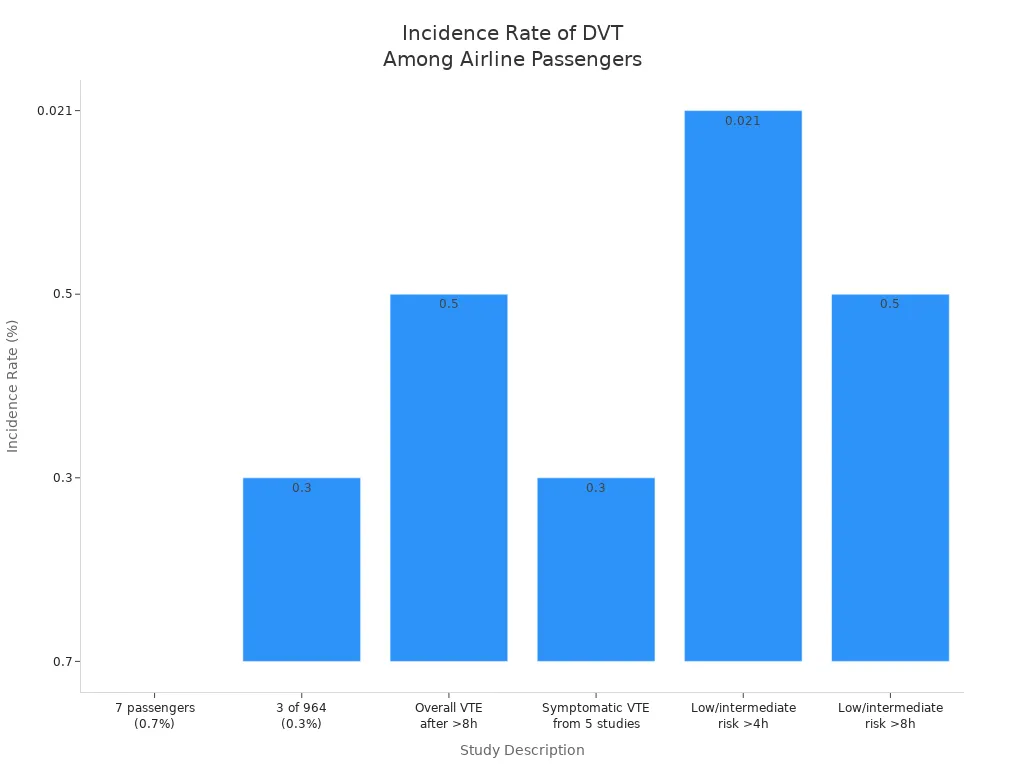
You sit for a long time on flights. Your legs do not move much. Blood collects in your lower legs. Not moving raises your risk of venous thromboembolism. Studies show dvt can happen in 0.5% of passengers after flights over eight hours. If you have had blood clots before, your risk is even higher.
Cabin pressure drops when planes fly high. Your veins get bigger, and blood moves slower. This can cause venous thromboembolism if you have risk factors. Less oxygen in the cabin makes it harder for your body to break down clots. This makes dvt and pe more likely.
Poor circulation can happen fast when you fly. Not moving, dry air, and low oxygen all play a part. These things make blood thicker and slower. This raises your risk of venous thromboembolism.
Your feet and ankles can swell on long flights. Fluid builds up because blood does not move well. Swelling means poor circulation and can make you feel bad. If you ignore swelling, you may get deep vein thrombosis or pulmonary embolism.
Your legs may hurt if you sit too long. This pain can warn you about venous thromboembolism. If you feel pain, heaviness, or cramps, try to help your blood flow.
Health Risk | Description |
|---|---|
Risk goes up on long flights because you sit in tight spaces. | |
Increased Blood Pressure | High altitudes can change your heart and blood pressure. |
Ear Discomfort | Fast air pressure changes can cause ear pain and balance problems. |
Dehydration | Dry air and not drinking enough water can make you dehydrated. |
Jet Lag | Changing time zones can make you tired and moody. |
Respiratory Symptoms | Cabin pressure can make breathing problems worse. |
Fainting, Nausea, Vomiting | These are common problems on flights. |
Heart Issues | Heart problems can happen, especially if you already have them. |
You can lower your risk of venous thromboembolism and pulmonary embolism by moving around, drinking water, and wearing compression socks. These steps help you avoid dvt and pe. They make long flights safer and more comfortable.
Image Source: pexels
When you travel by air, you want to keep your legs healthy and comfortable. Compression socks and compression stockings give you a simple way to do this. They use a special design called graduated compression. This means the socks squeeze your ankles the most and get looser as they go up your legs. You get the best results when you wear them during long flights.
Graduated compression is the secret behind the effectiveness of compression socks and compression stockings. You feel the strongest pressure at your ankles. This pressure pushes blood up your legs and helps it reach your heart faster.
Compression socks and compression stockings focus on your ankles. The tight fit at the bottom of your leg helps move blood from the surface veins into the deeper veins. You get better blood flow, and your risk of blood clots drops. Studies show that graduated compression stockings can lower the chance of developing symptomless deep vein thrombosis during flights longer than four hours. You also see less swelling after your flight.
Graduated compression stockings exert the highest pressure at your ankle.
This pressure helps move blood from superficial veins to deep veins.
You get less blood stasis, which means fewer clots.
Blood moves faster and in greater volume through your deep veins.
You want your blood to reach your heart easily. Compression socks and compression stockings help your veins work better. The pressure pushes blood upward, fighting gravity. You feel less tired, and your legs stay energized. You also lower your risk of superficial vein thrombosis.
Long flights can make your veins get bigger. Compression socks and compression stockings stop this from happening. They keep your veins tight and help your blood move quickly.
You need good circulation to avoid problems. Compression socks and compression stockings gently squeeze your legs. This keeps blood from pooling and helps prevent swelling. You get better blood flow and feel more comfortable.
Mechanism | Description |
|---|---|
Consistent Pressure | Applies pressure to the legs to improve blood circulation. |
Reduces Vein Diameter | Helps decrease the size of major veins, increasing blood flow velocity. |
Prevents Blood Pooling | Reduces the risk of blood pooling in the veins, which can lead to complications. |
Compression socks prevent blood from pooling in your veins.
You get less swelling in your legs.
These socks help with symptoms of vein disorders.
You want to feel good during your trip. Compression socks and compression stockings reduce discomfort. They keep your legs from feeling heavy or achy. You arrive at your destination feeling refreshed and ready to go.
You want to make every flight safer and more comfortable. The benefits of wearing compression socks while flying go far beyond style. You protect your health, reduce swelling, and feel energized when you choose compression socks or compression stockings for your trip. Let’s look at how wearing compression socks can transform your flying experience.
You face a higher risk of clots when you sit for hours on a plane. Compression socks and compression stockings help keep blood moving in your legs. They apply gentle pressure, which stops blood from pooling and forming clots. Clinical trials show that wearing compression socks during long flights can lower your risk of deep vein thrombosis (DVT) by up to 90%. You get peace of mind knowing you are taking steps to prevent dangerous clots.
Compression stockings push blood up your legs, reducing the chance of clots.
Anti-embolism stockings work for all travelers, even if you have no risk factors.
You protect yourself from silent clots that can cause serious problems.
You can lower your risk of clots and embolisms by wearing compression socks every time you fly.
You want to avoid serious health problems like pulmonary embolism. Compression stockings help prevent clots from forming in your legs, which lowers the risk of those clots traveling to your lungs. While studies show no direct cases of pulmonary embolism in trials, experts agree that compression socks play a key role in keeping your blood flowing and reducing your risk.
Compression socks and anti-embolism stockings keep your veins healthy.
You reduce the chance of clots moving to your lungs.
You make flying safer for yourself and your loved ones.
Swelling is common during long flights. You sit for hours, and fluid collects in your legs and feet. Compression socks and compression stockings stop this buildup by improving circulation. You keep your legs slim and comfortable, even after a long journey.
Compression socks prevent swelling by pushing fluid out of your legs.
Graduated pressure helps blood flow back to your heart.
You avoid post-flight swelling and feel better when you land.
You want to feel good from takeoff to landing. Swelling makes your legs heavy and sore. Wearing compression socks keeps swelling under control, so you stay comfortable. You can stretch, walk, and relax without worrying about tight shoes or aching legs.
Benefit | How It Helps You During Flying |
|---|---|
Less swelling | Prevents fluid buildup and discomfort |
Keeps legs energized and pain-free | |
No post-flight swelling | You arrive ready to explore |
Tip: Put on compression socks before your flight to keep swelling away from the start.
You want to step off the plane feeling your best. Compression socks and anti-embolism stockings help you avoid fatigue and soreness. You get better circulation, less swelling, and no heavy legs. You feel refreshed and ready for your next adventure.
Compression socks keep swelling down and boost comfort.
You avoid tired, achy legs after flying.
You recover faster and enjoy your trip more.
You deserve a smooth, enjoyable flight. The benefits of wearing compression socks while flying include less pain, more energy, and better health. You can focus on your destination, not your discomfort. Compression stockings and anti-embolism stockings make every trip easier.
You stay comfortable, even on long flights.
You protect yourself from clots and swelling.
You enjoy flying and arrive ready to go.
The benefits of wearing compression socks while flying are clear. You lower your risk of clots, prevent swelling, and improve your comfort. Make compression socks and compression stockings part of your travel routine for safer, happier trips.
Image Source: pexels
You want to feel good and safe when you fly. Picking the right compression socks is important. You should think about size, how tight they are, and what they are made of.
Compression socks and compression stockings need to fit your legs well. If they are too tight, your legs will hurt. If they are too loose, they will not help you. Measure your calves before you buy any socks. Most brands have charts to help you pick the right size. Use these charts to find your best fit. Good sizing helps your blood move and keeps swelling away.
Factor | Details |
|---|---|
Compression Ratings | 20-30 mmHg is best for travel and helps with swelling and tired legs. |
Fabric | Light, soft, and airy materials keep you comfy on long flights. |
Fit | The right size helps blood flow and stops pain. |
Tip: Pick compression socks made from poly-nylon blends that wick away sweat. These keep your legs dry and cool.
You need the right tightness for your trip. Mild to moderate compression socks (15-20 mmHg) work for most people. If you fly for a long time, try moderate compression (20-30 mmHg). Medical-grade compression stockings (30-40 mmHg) are only for people with health problems and should be used with a doctor’s advice.
Mild to moderate compression (15-20 mmHg) stops swelling and pain.
Moderate compression (20-30 mmHg) is good for long flights.
Medical-grade compression (30-40 mmHg) is for people with health issues.
You get the most help from compression socks and compression stockings if you wear them at the right time.
Put on compression socks before your flight starts. Do this early in the day or right before you get on the plane. Your legs are not swollen yet, so the socks work better. You stop blood from pooling and swelling right away.
Keep your compression socks and compression stockings on the whole flight. This helps your blood flow and keeps you from feeling bad. If you take them off, they will not protect you. Wear them the whole time for the best results.
Note: Waiting to put on compression socks can make your legs swell and not work as well.
Many travelers can use compression socks and compression stockings. Some people need them even more.
Older adults have a higher chance of blood clots and poor blood flow when flying. Wearing compression socks keeps their legs healthy and comfy.
Pregnant women often have swelling and changes in blood flow. Compression stockings help stop pain and lower the risk of clots when they travel.
If you fly a lot, you sit for many hours. Compression socks and compression stockings protect your legs and help you feel awake. You stop swelling and make your trips better.
Pregnant women
People who sit for a long time
Anyone with peripheral artery disease
People who had surgery recently
You make every trip safer and more comfy by picking compression socks and compression stockings. Start wearing them before your next flight. You will have better blood flow, less swelling, and more energy.
You want your legs to feel strong and healthy during every trip. Compression socks give you powerful support for your circulation. When you wear them, they apply gentle pressure to your legs. This pressure helps your blood vessels work better. Your leg muscles contract and push blood upward, and the special valves in your veins keep blood moving toward your heart. You avoid blood pooling in your legs, which lowers your risk of blood clots. If you have vascular conditions like chronic venous insufficiency or varicose veins, compression socks help your blood flow naturally and reduce discomfort. You get better circulation, which means you stay safer and more comfortable while flying.
You can trust compression socks to keep your blood moving and your legs feeling great, no matter how long your flight lasts.
Swelling can ruin your travel experience. You sit for hours, and fluid builds up in your feet and ankles. Compression socks stop this problem before it starts. They push fluid out of your legs and help your body absorb it. Clinical studies show that people who wear compression stockings have less muscle fatigue and swelling than those who wear regular socks. You avoid heavy, achy legs and step off the plane feeling refreshed. If you stand or sit for long periods, compression socks keep your legs slim and comfortable.
Benefit | How Compression Socks Help You |
|---|---|
Less swelling | Prevents fluid buildup in your legs |
More comfort | Reduces pain and heaviness |
Better health | Lowers risk of blood clots and edema |
You deserve to feel good from takeoff to landing. Compression socks make your trip more enjoyable by reducing discomfort. You avoid tired, sore legs and keep your energy up. The gentle pressure keeps your legs from feeling heavy or cramped. You can walk, stretch, and relax without worrying about pain. Compression stockings also help you recover faster after your flight. You arrive at your destination ready to explore, not looking for a place to rest.
The benefits of wearing compression socks go beyond health. You get comfort, energy, and peace of mind every time you travel.
You might think compression socks feel tight or uncomfortable. Many travelers worry about discomfort. Modern compression socks use soft, breathable fabrics. These materials keep your legs cool and dry. You can wear them for hours without feeling squeezed or itchy. Most brands design socks with graduated pressure, so you get support where you need it most.
You will notice that compression socks feel snug, not painful. The right size gives you gentle support and helps your legs feel energized.
Some people believe compression socks make your feet sweat or cause skin irritation. This is not true for most users. Manufacturers use moisture-wicking fibers to prevent sweat buildup. You can choose socks with cushioned soles for extra comfort. If you pick the right size and material, you will enjoy your flight without discomfort.
Common comfort myths:
Compression socks feel too tight.
They make your legs hot and sweaty.
You cannot wear them for long periods.
The truth:
Compression socks provide gentle pressure. You can wear them all day. They help your legs feel fresh and comfortable.
You may have heard that only older adults or people with health problems need compression socks. This myth stops many travelers from using a helpful product. Compression socks benefit people of all ages. Athletes, pregnant women, and frequent flyers use them to improve circulation and reduce swelling.
Scientific studies show that compression socks help younger adults with chronic venous insufficiency. Research also proves that compression garments improve joint position sense in both younger and older adults. Marathon runners wear compression socks to recover faster after races. Travelers of all ages lower their risk of deep vein thrombosis (DVT) by wearing compression socks during flights.
Myths about age and health:
Compression socks are only for grandmothers.
You need a doctor’s prescription for all compression socks.
Only people with health issues should wear them.
Facts:
You can buy most compression socks without a prescription.
People of all ages benefit from compression socks.
Compression socks help with swelling, fatigue, and circulation for everyone.
You do not need to wait until you have a health problem. Start using compression socks now to protect your legs and enjoy safer trips.
You might worry that compression socks will not fit with your favorite shoes. Many travelers think these socks are bulky or hard to wear with sneakers, boots, or dress shoes. Modern compression socks come in many styles and thicknesses. You can find thin, discreet socks that fit easily inside any shoe.
Myth | Reality |
|---|---|
Too thick for shoes | Most compression socks fit regular shoes |
Only for sports | You can wear them with dress shoes |
Unattractive styles | Many brands offer stylish designs |
You can choose knee-high, ankle, or crew-length socks. Some brands offer neutral colors and patterns, so you match your travel outfit. You do not need to sacrifice style or comfort. Compression socks work with almost every shoe type.
You can travel in comfort and style. Compression socks fit your shoes and your lifestyle.
You need to keep your body hydrated when you fly. Dry cabin air pulls moisture from your skin and makes your blood thicker. Drinking enough water helps your circulation and lowers your risk of blood clots. You should start your trip well-hydrated and keep sipping water throughout your flight. Choose water over soda or alcohol. Alcohol and caffeine can dry you out and make swelling worse. Salty snacks also cause fluid retention and make your legs puff up.
Strategy | Details |
|---|---|
Water Intake | Drink 8 ounces of water every hour during your flight. |
Pre-travel Hydration | Begin your journey well-hydrated. |
Limit Alcohol/Caffeine | Avoid drinks that cause dehydration. |
Avoid Salty Snacks | Skip salty foods to prevent swelling. |
Lighter Meals | Eat fruits, vegetables, and whole grains for better vascular health. |
Tip: Carry a refillable water bottle. Ask the flight crew to fill it up so you always have water nearby.
You must move your body to keep your blood flowing. Sitting still for hours makes blood pool in your legs. This can lead to swelling and increase your risk of deep vein thrombosis. Airplane seats often squeeze your veins, making it harder for blood to move. Simple movements help your muscles push blood upward and prevent clots.
Stand up and walk down the aisle every hour.
Stretch your legs and flex your ankles while seated.
Rotate your feet in circles to keep blood moving.
Avoid crossing your legs for long periods.
Try setting a timer on your phone to remind you to move every hour. Even small movements make a big difference.
You can do more to protect your veins and stay healthy during travel. Health professionals recommend several easy steps to boost circulation and lower your risk of problems.
Wear compression socks to support blood flow and reduce pooling.
Elevate your legs when possible to ease pressure on your veins.
Maintain a healthy lifestyle with regular exercise and balanced meals.
Talk to your doctor about medication if you have a history of blood clots.
Stay hydrated to keep your blood thin and flowing smoothly.
You have the power to make every flight safer. Combine hydration, movement, and smart habits for the best travel experience. Your legs will thank you, and you will arrive feeling refreshed and ready for adventure.
You want to feel safe and comfy when you fly. Compression socks help your blood move better. They also lower swelling and the chance of blood clots. Experts say to wear them on flights over four hours. This helps stop pain and keeps your veins healthy. Pick the right compression level for your needs. Put your socks on before you get on the plane. Move around during your trip to help your legs. Make compression socks part of your travel plan. You will feel fresh when you land. Always care for your health when you travel.
Better blood flow and comfort
Less swelling and lower DVT risk
Faster recovery after flying
Take care of your health and enjoy every trip with confidence!
Compression socks boost blood flow in your legs. You lower your risk of blood clots and swelling. You feel more comfortable and energetic during your flight. You protect your health every time you travel.
Tip: Put on compression socks before your flight for best results.
You can wear compression socks at any age. They help frequent flyers, older adults, and pregnant women. If you have health concerns, ask your doctor first. Most travelers benefit from compression socks.
You should pick socks with 15-20 mmHg for short flights. For long trips, use 20-30 mmHg. Medical-grade socks (30-40 mmHg) work best with a doctor’s advice. Always check the sizing chart before buying.
Compression Level | Best For |
|---|---|
15-20 mmHg | Short flights |
20-30 mmHg | Long flights |
30-40 mmHg | Medical needs |
You feel gentle pressure, not pain. Modern socks use soft, breathable fabrics. You stay cool and dry. If you pick the right size, you enjoy comfort for hours.
You should wear compression socks from before takeoff until after landing. Keep them on the whole flight. You get the most protection and comfort this way.
You can wear compression socks with sneakers, boots, or dress shoes. Many brands offer thin, stylish designs. You travel in comfort and keep your look sharp.
Note: Choose socks that match your shoe style for the best fit.