Foshan Mingjun Textile Company Ltd.

Views: 0 Author: Site Editor Publish Time: 2025-10-01 Origin: Site
You may ask how long should you wear compression socks for good health. Most experts recommend wearing them for 8 to 10 hours each day, especially when you are moving or standing. For general health, it's best to put on compression socks in the morning and take them off before you go to bed. Studies show that wearing them for 10 hours can help prevent swelling and improve your blood flow. Do not wear them at night unless your doctor advises it. If you experience pain or notice any skin changes, stop using them immediately and consult a healthcare provider. Using compression therapy correctly enhances your blood flow and provides comfort during travel, recovery, or daily activities.
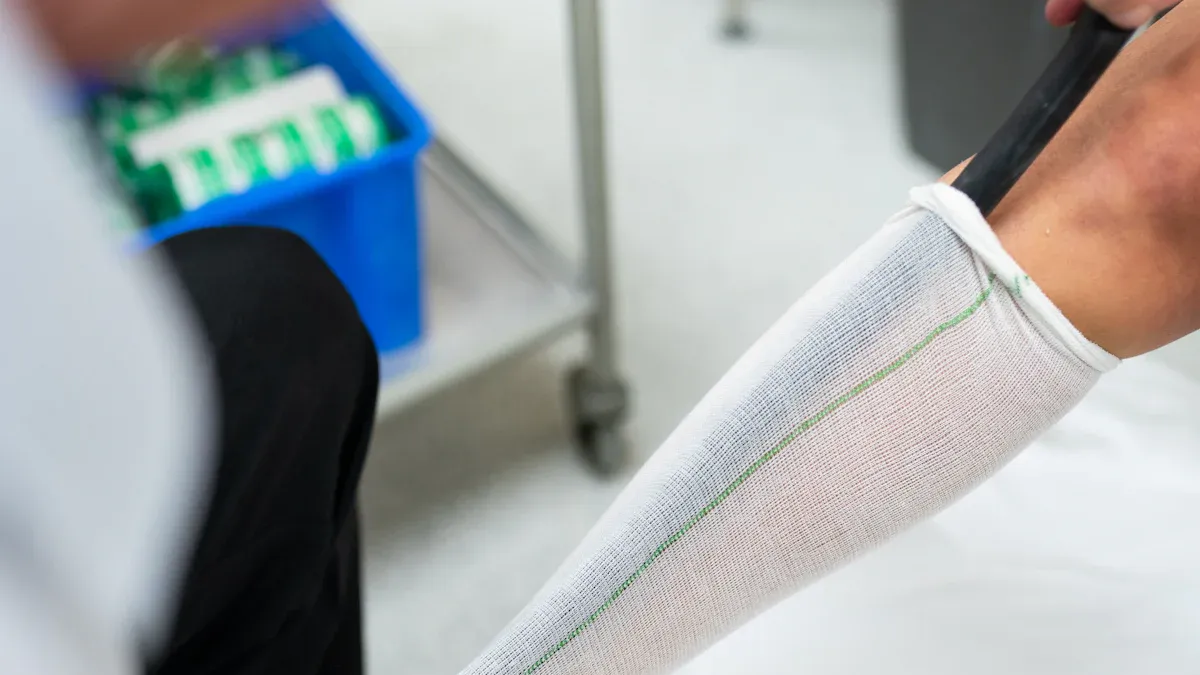
Wear compression socks for 8 to 10 hours each day. This helps you get the best results. Put on compression socks in the morning. This can help stop swelling. Take off compression socks before you go to bed. Only keep them on at night if your doctor says so. Wear compression socks for 3 to 4 hours after you exercise. This helps your muscles recover. Talk to your doctor if you need to wear compression socks every day for health reasons. Pick the right compression level for your needs. Some are light, and some are strong. Get new compression socks every three to six months. This keeps them working well. Pay attention to your body. Stop using them if you feel pain or see changes in your skin.
Image Source: pexels
You might ask how long to wear compression socks each day. Experts say you should wear them for 8 to 10 hours. This time gives you the most help from compression therapy. Put them on in the morning before your legs swell. Take them off before you go to sleep. Most people do not need to wear them at night unless a doctor says so.
Tip: Wearing compression socks during the day helps your blood move better and keeps swelling down. This is helpful if you stand or sit for a long time.
Wear compression socks for 8-10 hours during the day.
You do not need to wear them while sleeping unless your doctor tells you.
Research shows most people feel less pain and swelling when they wear compression socks for 8–10 hours. This habit helps your blood flow and stops problems like varicose veins and deep vein thrombosis.
You may wonder if you should wear compression socks all day or just for a few hours. The answer depends on your health and what you do each day. Most people get better results if they wear compression socks all day. Wearing them longer keeps steady pressure on your legs. This helps your blood move and lowers swelling.
Here is a simple table to show the good and bad sides:
Benefits of Wearing All Day | Drawbacks of Wearing All Day |
|---|---|
Helps blood move better | Not needed for everyone |
Stops swelling | Comfort and fit matter |
Lowers risk of blood clots | You may not need to wear them at night |
If you only wear compression socks for a short time, you may not get all the benefits. Some people may find wearing them all day is not comfortable or needed. Always ask your doctor if you have special health needs.
After you exercise, you may want to know how long to wear compression socks to help your muscles. Studies show wearing compression socks for 3 to 4 hours after working out can help your muscles feel less sore and recover faster. This helps your muscles feel less tired and helps your blood move better.
Studies show wearing compression socks can help muscles recover in 24 to 48 hours after exercise. This means you may feel less sore.
Wearing compression socks after exercise does not make you perform better. But it can help your legs feel better and recover faster. If you play sports or exercise a lot, this can help your muscles and comfort.
Note: For the best results, follow your doctor’s advice, especially if you have a health problem or are healing from an injury.
Some people need to wear compression socks every day. This is true if you have certain health problems. Doctors may tell you to use them daily to help with symptoms. They can also stop more problems from happening. If you have chronic venous insufficiency or bad swelling, these socks can help you feel better. They can also make your legs healthier. Here are some reasons why you might need to wear them every day:
For edema caused by paraplegia or quadriplegia.
For swelling after surgery, broken bones, burns, or injury.
For lymphedema.
To help after sclerotherapy.
For post-thrombotic syndrome.
For postural hypotension.
To stop thrombosis in people who cannot move.
For severe edema during pregnancy.
If you have any of these health problems, your doctor may want you to wear compression socks every day. This can help lower swelling and help blood move in your legs.
You do not need to be sick to use compression socks. Many people wear them every day to keep their legs healthy. If you sit or stand a lot, your legs can get tired or swollen. Compression socks can help stop swelling and make your legs feel better.
Benefit | Context of Use |
|---|---|
Better blood flow | Good for people with poor circulation |
Less swelling | Helps if you sit or stand for a long time |
Stops DVT | Good for travel to stop fluid from building up |
Support for workouts | Helps during long workouts |
Healthy legs | Good for people without health problems |
You might want to wear compression socks if you travel a lot. They are also good if you work at a desk or stand all day. Athletes use them to help their legs during and after sports. Pregnant women sometimes wear them for mild swelling, but there is not much research.
You can wear compression socks every day to help your legs.
Wearing them can help you feel good and stay active.
You may not need to wear compression socks every day. This is true if you do not have a health problem or swelling often. Sometimes, it is best to use them only for travel, long sitting, or after hard exercise. If you feel pain or see changes in your skin, stop wearing them and talk to your doctor.
Tip: Wear compression socks when you need extra help, like on flights, long car rides, or after hard exercise. This can help stop swelling and keep your legs feeling good.
Some people do not need to wear compression socks every day. Pay attention to how your legs feel and change your routine if needed. You can wear them only when your legs need more support.
You might wonder if wearing compression socks all day is safe. Doctors often say it is okay for long times, especially after surgery. This can help stop blood clots and help your legs heal. The National Health Service in the UK says surgery patients should wear compression stockings as much as they can, even at night. You should pay attention to how you feel and take breaks if you get uncomfortable. It is important to feel good when you use compression therapy. If your socks hurt or feel too tight, take them off and talk to your doctor.
Here is a table with the main ideas:
Safety Tip | Why It Matters |
|---|---|
Take breaks if needed | Stops you from feeling bad |
Check for skin changes | Helps you avoid skin problems |
Follow doctor’s advice | Makes sure you use them right |
You may ask if wearing compression socks while sleeping is safe. Sleep experts have some advice:
Most people can wear compression socks overnight without problems.
Short naps with socks on are usually fine.
Wearing socks all night can be risky for people with peripheral artery disease or diabetes.
Doctors may tell you to wear them at night if you have bad swelling or need help after surgery.
Studies say wearing socks at night does not help much more. Swelling often comes back after you wake up.
Research shows no big difference between wearing socks all the time or just at night.
Experts say you do not need compression socks for recovery after exercise.
Always ask your doctor to find the best way to use compression socks.
Tip: If you have a health problem, talk to your doctor before wearing compression socks overnight.
Some health problems mean you should not wear compression socks. You need to know when not to use them to keep your legs and body safe.
Peripheral artery disease can get worse with compression socks.
Skin infections or weak skin can trap moisture and germs.
Severe congestive heart failure can make compression unsafe.
Advanced diabetes with nerve damage can hide sore spots and slow healing.
Allergies to things like elastane, latex, or silicone can cause reactions.
If you have any of these health problems, do not wear compression socks unless your doctor says it is okay. Always check your skin and comfort when you use compression therapy. Good blood flow is important, but safety is most important.
You face a higher risk of blood clots when you travel long distances, especially on flights over four hours. Sitting for long periods in a cramped space can slow blood flow and cause swelling. You can lower your risk by wearing compression socks during your trip. These socks help prevent blood from pooling in your legs and keep your legs comfortable.
Wearing compression stockings can reduce the chance of deep vein thrombosis (DVT) from 1% to 0.1% for low-risk travelers and from 3% to 0.3% for high-risk travelers.
The American Society of Hematology recommends compression stockings for people at high risk of blood clots on long flights.
If you cannot tolerate compression socks, doctors may suggest other options like aspirin or low-molecular-weight heparin.
You should walk around the cabin when possible and do simple exercises in your seat, such as ankle circles and foot flexes.
Tip: Put on compression socks before your trip starts. This helps keep your legs healthy and reduces swelling during travel.
You may spend hours sitting at a desk, in a car, or watching TV. This can slow blood flow and cause swelling in your legs and ankles. Compression socks apply gentle pressure to your legs, which helps blood move back to your heart. You can use them to keep your legs feeling fresh and avoid problems like varicose veins or blood clots.
Compression socks increase blood flow in your legs.
They decrease swelling in your lower legs and ankles.
They prevent blood from pooling in your veins, which lowers the risk of clots.
Compression socks also help reduce water retention in your muscles and maintain healthy blood flow. You can use them to support your legs during long periods of sitting. Compression therapy is a simple way to protect your leg health.
Note: If you sit for many hours each day, consider wearing compression socks to support your circulation and comfort.
Doctors often recommend compression socks after surgery or injury. You can use them to help your body heal and avoid problems like swelling or blood clots. Rehabilitation specialists say compression therapy plays a key role in recovery.
Benefit | Description |
|---|---|
Improves blood flow | Compression therapy boosts circulation, which helps your body recover faster. |
Reduces swelling | You can minimize swelling, especially after leg or knee surgery. |
Prevents blood clots | Compression socks lower the risk of blood clots after surgery. |
Aids in wound healing | Better blood flow helps wounds heal and reduces pain. |
You should follow your doctor’s advice about how long to wear compression socks during recovery. This helps you heal safely and get the best results.
Image Source: pexels
You may feel discomfort or pain when you wear compression socks. This can happen for many reasons. If you notice any of these problems, you should check your socks and how they fit.
Socks feel painful to wear. This often means the size is wrong or the compression is too strong.
Socks slide down your leg. This shows the socks may be too big or made from poor materials.
Socks bunch up around your ankles. This usually means the socks are too long for your legs.
You see swelling that does not go away. This could mean the socks do not fit or the compression level is not right.
You have trouble putting on your socks. This may mean the socks are too small.
If you see pressure lines, soreness, or have difficulty wearing your socks, you may need a different size. Even a small mistake in measuring can cause pain or foot pain.
To find the right fit, you should:
Measure your ankle just above the ankle bone.
Measure your calf at the widest part.
Measure your leg from the floor to just below your knee.
A good fit helps you avoid discomfort and keeps your legs healthy.
Compression socks can cause side effects if you wear them for too long or if they do not fit well. You should watch for these problems:
Skin erosion can happen if socks rub too much or trap moisture.
Nerve injuries may occur if socks are too tight and press on nerves.
Pressure sores can develop if socks create too much force on one spot.
If you notice any of these side effects, you should stop using the socks and talk to your doctor. Your skin and nerves need protection. Always check your legs for changes.
Side Effect | What It Means | What You Should Do |
|---|---|---|
Skin erosion | Skin breaks or gets sore | Remove socks, see a doctor |
Nerve injuries | Tingling or numbness | Stop use, get medical advice |
Pressure sores | Red or painful spots | Take off socks, check skin |
You should stop wearing compression socks if you notice any warning signs. These signs show your socks may not be safe for you.
You feel pain or strong discomfort.
Your skin looks red, sore, or broken.
You see swelling that does not get better.
You notice numbness or tingling in your feet or legs.
You have trouble moving your toes or feet.
If you see any of these signs, take off your socks right away. Ask your doctor for advice before you wear them again.
You should always listen to your body. Compression socks help many people, but you need to use them safely. If you have foot pain or other problems, you may need a new size or a different type of sock. Your health comes first.
You want your compression socks to fit well so you get the most health benefits. Start by measuring your legs carefully. Use a tape measure to check your ankle just above the bone, your calf at its widest point, and the length from the floor to just below your knee. These measurements help you choose the right size.
Measure your legs before buying.
Look for socks made with comfortable materials like nylon-spandex blends. These help control moisture and keep your skin dry.
Make sure the socks lie flat against your skin. Avoid bunching or folding, which can cause discomfort.
Put on your socks in the morning before swelling starts.
Tip: Properly fitted compression socks should feel snug but not painful. If you notice pain or marks on your skin, try a different size.
Compression socks come in different strengths. The amount of pressure is measured in millimeters of mercury (mmHg). You should pick a level that matches your needs. Light compression works well for daily use, while stronger compression is best for medical conditions.
Compression Classification | mmHg Range | Compression Level |
|---|---|---|
Afnor Class 1 | 10-15 mmHg | Very light compression |
Afnor Class 2 | Light compression | |
Afnor Class 3 | 20-36 mmHg | Moderate compression |
Afnor Class 4 | 36+ mmHg | Strong compression |
RAL Class 1 | 18-21 mmHg | Light compression |
RAL Class 2 | 23-32 mmHg | Moderate compression |
RAL Class 3 | 34-46 mmHg | Strong compression |
RAL Class 4 | 49+ mmHg | Very strong compression |
Light compression, such as 15-20 mmHg, helps with daily swelling and supports tissue repair after exercise. Moderate and strong compression are usually for people with medical needs. Always ask your doctor before choosing higher levels.
Note: Compression socks at 15-20 mmHg can help your legs recover faster after workouts and reduce feelings of heaviness.
Taking care of your socks keeps them working well and helps you stay healthy. Wash your socks after each use to remove sweat and bacteria. Turn them inside out before washing to protect the outer fibers. Use cold or warm water in the machine. Air dry or use low heat in the dryer to keep the elastic strong. Never use bleach because it can damage the material.
Clean socks if you see dirt or debris.
Wash after sweaty workouts to control odor.
Follow the care instructions for your sock material.
Rotate between pairs so each pair lasts longer.
Store socks neatly to keep their shape.
Experts recommend replacing your compression socks every three to six months. If you wear them daily or see signs of wear, change them sooner. Old socks lose their strength and may not help your legs as much.
Tip: Fresh socks give you the best support. Worn-out socks can lead to health problems.
You should wear compression socks during the day and remove them before bed. Most experts suggest using them for 6 to 10 hours, depending on your needs. Regular cleaning and replacing old socks help keep your legs healthy. If you feel pain or notice foot pain, stop and check your socks. Always talk to a healthcare provider for advice that fits your situation.
Listening to your body and following expert guidelines keeps your legs safe and comfortable.
Replace socks every six months.
Consult a vein specialist for tailored advice.
Compression socks should feel snug but not painful. You should not see deep marks or feel numbness. Measure your ankle and calf before buying. If socks slide down or bunch up, try a different size.
Yes, you can wear compression socks on flights. They help prevent swelling and blood clots. Put them on before your trip starts. You should keep them on until you reach your destination.
You can wear compression socks during exercise. They support your muscles and help blood flow. Many athletes use them for comfort. Take them off if you feel pain or discomfort.
Replace compression socks every three to six months. Worn-out socks lose their strength. Check for holes, stretched fabric, or loose fit. Fresh socks give you better support and health benefits.
Put on compression socks in the morning before your legs swell. This helps prevent fluid buildup. You should wear them throughout the day for best results.
Some people may notice skin irritation, numbness, or pain. These signs mean the socks may not fit well. Stop wearing them and talk to your doctor if you see these problems.