Foshan Mingjun Textile Company Ltd.

Views: 0 Author: Site Editor Publish Time: 2025-09-29 Origin: Site
You can find the perfect fit for compression socks by following a simple process. Proper sizing keeps you comfortable and ensures the socks work well. Many people notice a difference:
60% of women wearing the wrong size experience discomfort or other issues.
Only 15% who use the right size have these problems.
This shows why using a clear guide for how to size compression socks makes a big impact. You can measure at home and enjoy better results.
Getting the right size for compression socks is very important. A good fit helps blood move better and lowers swelling.
Measure your ankle, calf, and thigh to get the right size. Use a soft tape measure and write down your numbers.
Always measure your legs in the morning. Legs are least swollen then. This gives you the best size.
Look at the size chart from the brand you pick. Different brands may use different numbers for the same size.
If you are between sizes, focus on the ankle size first. Pick a bigger size if you want more comfort.
Pick the right kind of compression sock for your activity. You can choose knee-high, thigh-high, or full-leg styles.
Compression levels are different. Ask a doctor to help you choose the best one, especially if you have health problems.
Check your size and fit often. Your body can change, and this can change how your socks fit.
Compression socks need to fit well to help your legs. The right size gives you many good things:
Swelling in your legs, feet, and ankles goes down.
Pain and discomfort in your legs can get better.
Your muscles feel less tired when you exercise.
You are less likely to get blood clots if you sit or stand a lot.
Your veins get support to help with spider and varicose veins.
Lactic acid builds up less after you work out.
Athletes can recover faster.
Vein disease symptoms can be less.
You get these benefits when your socks fit right. They should feel snug but not hurt. You can wear them for a long time without problems.
Wearing socks that are too tight or too loose can cause trouble. You might see marks or color changes on your skin. You could feel pain when you wear them. Putting them on might be hard.
Many people say compression feels ‘too tight’ at first. This can make them not want to wear the socks. It may take a few days to get used to them. Most discomfort happens around the ankle or foot. Pain or discomfort can mean the socks are the wrong size. It can also mean the pressure is not right or the socks are put on wrong.
Look for these signs. If you see them, you may need a new size. The wrong size can make you stop wearing compression socks. Then you miss out on the health benefits.
Many people can use compression socks. Doctors suggest them for different groups. You might be one of these people:
Population Type | Specific Conditions or Situations |
|---|---|
Varicose veins, deep vein thrombosis (DVT), lymphedema, chronic venous insufficiency (CVI) | |
Individuals in certain occupations | Those who sit or stand for long periods of time |
Frequent travelers | Individuals on long flights or extended periods of immobility |
Athletes | Individuals seeking relief during or after physical activity |
Pregnant individuals | Women experiencing discomfort during pregnancy |
You may need compression socks if you have blood clots, leg swelling, or chronic venous insufficiency. People who are healing from surgery or stay in bed a long time use them. People with varicose veins or other blood flow problems also get help from them.
Image Source: unsplash
Sizing your compression socks starts with accurate measurements. You need to know how to size compression socks to get the best results. If you measure your legs the right way, you will find socks that fit well and feel comfortable. This step is important for everyone, whether you use them for medical reasons or for sports.
You must measure your legs in the right places. Each part of your leg needs a different approach. Follow these steps to learn how to size compression socks at home.
Start with your ankle. Use a soft, non-elastic tape measure. Wrap it around the narrowest part of your ankle, just above the ankle bone. Measure both ankles. Write down the number in centimeters or inches.
Tip: The ankle is the most important spot for compression. A good fit here helps the socks work well.
Next, measure your calf. Find the widest part of your calf muscle. Stand up straight if you can. Wrap the tape around this spot. Measure both calves. Some experts say standing gives a more accurate number, but sitting is also common. If you want the best results, measure both ways and use the larger number.
Some guidelines suggest using the maximum value from both calves.
Try to measure at the same spot each time.
If you use thigh-high or full-leg compression socks, you need this measurement. Find the widest part of your thigh, just below your buttocks. Stand up straight. Wrap the tape around your thigh. Record the number.
Leg length matters for knee-high and thigh-high socks. For knee-high socks, measure from the floor to just below the bend at the back of your knee. For thigh-high socks, measure from the floor to the top of your thigh. Always measure both legs. Use the longer measurement if they are different.
Note: Accurate length helps the socks stay in place and prevents bunching.
You should measure your legs at the right time of day. Your leg size can change during the day. Swelling often happens after you sit or stand for a long time. If you measure in the morning, your legs will be at their smallest. This gives you the most accurate numbers for how to size compression socks.
Measure your legs first thing in the morning.
Avoid measuring after long periods of standing or sitting.
Swelling later in the day can make your socks too loose.
Remember: Morning measurements help you avoid socks that are too big or too tight.
Knowing how to size compression socks means you get the right fit every time. Take your time with each step. Use a chart or table to keep track of your numbers. This makes it easy to compare your measurements to size charts later.
When you look for the right fit, you need to know how to read size charts. These charts help you match your leg measurements to the correct sock size. Most size charts show several key features. You will often see a table like this:
Feature | Description |
|---|---|
Ankle Circumference | Measurements to ensure proper fit around the ankle. |
Calf Circumference | Important for determining the right compression level. |
Height | Ensures the sock fits the leg length appropriately. |
Weight Guidelines | Helps in selecting the right size based on body weight. |
Shoe Sizes | Provides a reference for selecting sizes based on footwear. |
You should always check the chart before you buy. Some brands use different measurements or add extra details. For example, one brand may use only ankle and calf size, while another includes shoe size or height. Always use the chart from the brand you choose.
Tip: Double-check your measurements before you compare them to the chart. This step helps you avoid mistakes.
Many brands offer a range of sizes, from small to extra-large. Some even have extra-small or extra-extra-large. The measurements for each size can change from one brand to another. For example:
A small size may fit ankle circumferences of 7-8 inches and calf circumferences of 11-14 inches.
A large size could fit ankle circumferences of 9-10 inches and calf circumferences of 15-18 inches.
You will find different charts for men, women, and unisex compression socks. Each chart uses its own set of measurements. Here is a sample table to show the differences:
Category | Size | Ankle Circumference | Calf Circumference | Shoe Size |
|---|---|---|---|---|
Men's | Small | 7.5"-8.5" | 11"-15.5" | up to 6.5 |
Men's | Medium | 8.5"-10" | 12.5"-17.5" | 7-9.5 |
Men's | Large | 10"-11.5" | 14"-20" | 10-12.5 |
Men's | X-Large | 11.5"-13" | 16"-23" | 13-15.5 |
Women's | Small | 7.5"-9" | 11"-15.5" | 4.5-7.5 |
Women's | Medium | 7.5"-10" | 12.5"-17.5" | 8-10.5 |
Women's | Large | 8"-10.5" | 14"-20" | 11-13.5 |
Unisex | Small | 7.5"-9" | 11"-15.5" | 4.5-7.5 |
Unisex | Medium | 8.5"-10" | 12.5"-17.5" | 7-9.5 |
You should always use the chart that matches your gender or the unisex option. This step helps you get the best fit for your body type.
Sometimes your measurements do not match one size exactly. You may fall between two sizes on the compression sock size chart. When this happens, you have a few options:
Choose the size that matches your ankle measurement first. The ankle fit is the most important for compression socks.
If your calf is much larger than your ankle, look for brands that offer wide-calf options.
If you are between sizes, many experts suggest picking the larger size for comfort, especially if you have sensitive skin or swelling.
Some brands offer custom sizing or extra sizes, so check their size charts for more choices.
Note: If you feel unsure, contact the brand’s customer service. They can help you pick the right size.
You can use size charts to find the best fit for your compression socks. Always measure carefully and compare your numbers to the chart. This step helps you get the comfort and support you need.
You can choose from several types of compression socks. Each style fits your leg in a different way. Knee-high compression socks cover your leg from your foot to just below your knee. Thigh-high socks reach up to your thigh, while full-leg socks or tights cover your entire leg.
The fit and sizing depend on the style you pick. Here is a table that shows how sizing works for different types:
Size | Ankle Circumference (inches) | Calf Circumference (inches) |
|---|---|---|
Small | 7-8 | 11-14 |
Large | 9-10 | 15-18 |
If your socks feel too long, you can fold the top down to make a cuff. This helps them stay in place. If your socks are too short, you should try a different size or switch to knee-high or thigh-high styles for better coverage.
Tip: Put on your socks in the morning when your legs are less swollen. Pull them up gently to avoid stretching them too much. Make sure they feel snug but not painful. If you feel discomfort, try a larger size. Walk around to check if your socks stay in place.
You can pick between open toe and closed toe compression socks. Open toe socks leave your toes free. This style works well if you want more comfort or need to wear sandals. Closed toe socks cover your whole foot. They give more warmth and protect your toes.
Open toe socks help if you have sensitive toes or need to check your skin often. Closed toe socks work best for colder weather or if you want full coverage. Both styles offer the same level of compression. You should choose the one that feels best for your needs.
Your activity and reason for wearing compression socks affect the type and fit you need. Different activities call for different styles:
Athletes often use full-leg or thigh-high socks for better muscle support.
People who travel or sit for long periods may prefer knee-high socks for comfort.
Medical use may require anti-embolism stockings or graduated compression socks.
Graduated compression socks are tightest at the ankle and get looser up the leg. This design helps blood flow and reduces swelling. Athletes use these socks for performance and recovery. People with medical needs use anti-embolism stockings for support during rest or recovery.
Note: Always match your sock type to your activity. The right style gives you the best results and keeps you comfortable.
When you shop for compression socks, you will see numbers like 15-20 mmHg or 20-30 mmHg. The letters "mmHg" mean millimeters of mercury. This is a way to measure how much pressure the socks put on your legs. It is like the pressure you see in a blood pressure test. Bigger numbers mean the socks squeeze your legs harder.
Compression socks use different amounts of pressure to help with leg problems. Some health issues need stronger compression:
Severe varicose veins
Chronic venous insufficiency
Deep vein thrombosis
Doctors use very strong compression, like 40-50 mmHg, for serious medical problems. You can see how these levels match with health needs in the table below:
Compression Level | Medical Application |
|---|---|
40-50 mmHg | Treatment for chronic venous insufficiency, severe DVT, post thrombotic syndrome, and severe skin changes with active ulceration. |
You should always ask your doctor before using high compression socks. Most people wear lower levels for comfort or small swelling.
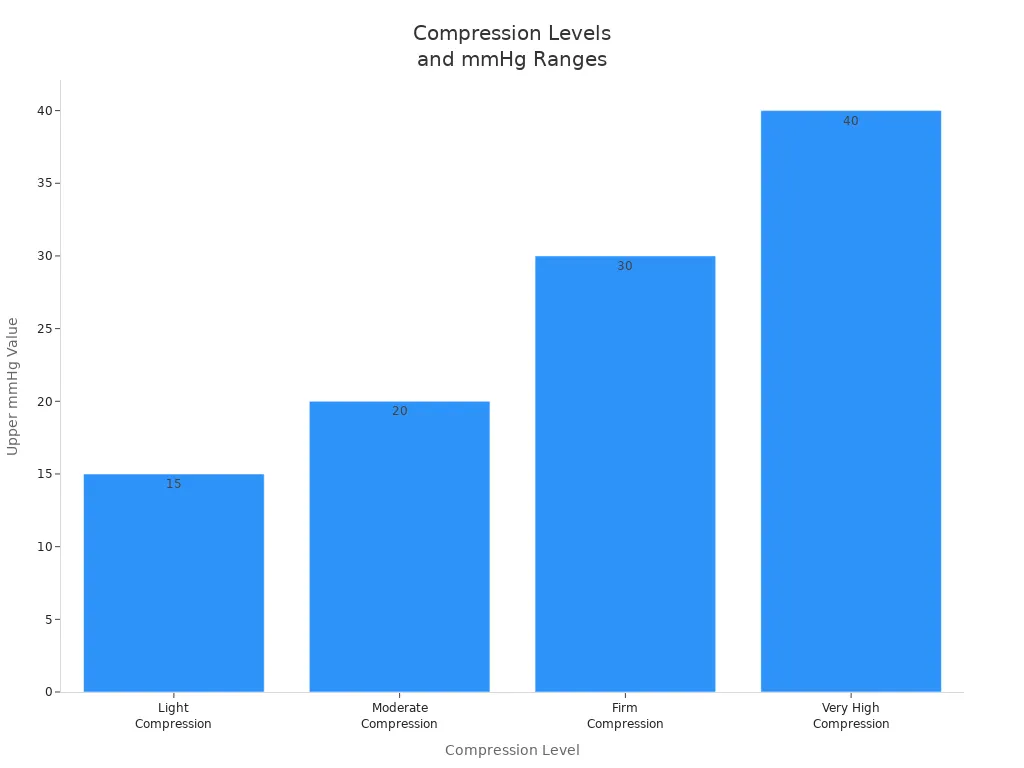
You need to pick the compression level that fits your needs. The best level depends on your health, what you do, and how you feel. Here is a table that shows common compression levels and what they help with:
Compression Level | mmHg Range | Indications |
|---|---|---|
Light Compression | 8-15 mmHg | Relief for tired legs, general comfort |
Moderate Compression | 15-20 mmHg | Everyday support, mild swelling, varicose veins |
Firm Compression | 20-30 mmHg | Medical conditions like DVT, lymphedema |
Very High Compression | 30-40 mmHg+ | Severe chronic venous insufficiency, lymphedema |
You can also see these levels in the chart below:
Here is an easy way to match compression levels to your needs:
Low Compression (8-15 mmHg): Use for tired legs, mild swelling, or if you stand a lot.
Moderate Compression (15-20 mmHg): Good for mild swelling, mild varicose veins, or mild POTS symptoms.
High Compression (20-30 mmHg): Helps with moderate varicose veins, chronic venous insufficiency, or mild to moderate POTS.
Very High Compression (30-40 mmHg and above): Needed for severe chronic venous insufficiency, advanced varicose veins, or lymphedema.
Tip: If you are new to compression socks, start with a lower compression. Only use higher levels if your doctor tells you to or if you have a health problem that needs more support.
You can choose the right compression level by thinking about your symptoms and what you do each day. Always talk to a healthcare provider if you are not sure which level is best for you.
Image Source: pexels
Getting compression socks on can feel tricky at first. You want to make sure you get a proper fit right from the start. Follow these steps to make it easier:
Turn the Sock Inside Out: Reach into the sock and grab the heel or toe. Pull it inside out, but leave the foot part right side out.
Put Your Foot Inside: Slide your foot into the sock. Make sure your heel sits in the heel cup.
Roll or Pull Up Slowly: Gently roll or pull the sock up your leg. Do not yank at the top. Work the sock up bit by bit.
Adjust for Comfort: Smooth out any wrinkles. For knee-high socks, the top band should rest just below your knee. For thigh-highs, place the band on your upper thigh.
Tip: Wearing rubber gloves can help you grip the socks better. If you have trouble, try a stocking donner. Keep your skin moisturized, but avoid lotion right before putting on your socks. Lotion can make your skin slippery.
You want your compression socks to feel snug but not painful. Here are signs you have a proper fit:
The socks do not leave deep marks on your skin.
You do not feel pain while wearing them.
Your skin color stays normal.
The socks stay in place and do not slide down.
You can move your toes easily.
If you notice any pain or color changes, take off the socks and check your measurements again.
Sometimes, even with careful measuring, you may run into problems. Here are some common fit issues and what they mean:
Fit Issue | Description |
|---|---|
Excessively Tight Socks | These can block blood flow and cause swelling. |
Loosely Fitted Socks | These do not give enough pressure and may feel uncomfortable. |
Shifting Socks | These can rub your skin and cause blisters or chafing. |
Other problems include:
Skin cuts or sore spots from socks that are too tight.
Worsening varicose veins if the socks do not fit right.
Deep pressure marks or trapped fluid from incorrect sizing.
Swelling if you wear a sock on only one leg.
Always check for these issues after you put on your socks. A proper fit helps you avoid discomfort and keeps your legs healthy.
You might notice discomfort or red marks after wearing compression socks. This can happen if the socks are too tight or if you wear them for too long. You should not ignore these signs. Your legs need to feel supported, not squeezed.
If you feel pain or see deep marks, try these steps to help your legs recover:
Lie down or sleep with your feet raised on a pillow. This helps blood flow back to your heart.
Massage your feet, ankles, or legs gently. This can ease soreness and improve circulation.
Do gentle exercises like ankle circles or walking. Movement keeps your blood moving.
Avoid wearing tight socks, shoes, or clothes. These can make discomfort worse.
Wear compression stockings that fit well. The right size should feel snug but not painful.
If you keep feeling discomfort, check your measurements again. You may need a different size or a lower compression level.
Swelling in your legs can make sizing tricky. Your legs might look and feel different at different times of the day. This can affect how your socks fit.
Proper sizing represents the single most critical factor in compression sock effectiveness. The optimal measurement process involves taking ankle circumference at the narrowest point just above the ankle bone, calf circumference at its widest point, and length from floor to bend of knee while seated with feet flat. These measurements should be taken in the morning before significant swelling develops to ensure appropriate sizing for containment purposes. Men with significant size differences between legs should measure both limbs and consider individual garments sized for each leg rather than compromising with a single size. Those between sizes should generally size up rather than down, as slightly reduced compression is preferable to excessive constriction that might create circulatory issues or compliance problems.
If your legs swell during the day, measure them in the morning. This gives you the most accurate size. If one leg is bigger than the other, measure both and choose socks that fit each leg. You can also talk to a healthcare provider for advice.
Sometimes, you need to change your sock size. Your body can change over time. Weight gain, weight loss, or changes in muscle can affect your leg size. You should check your fit often.
You should try a different size if:
Your body circumference changes.
You notice socks slipping down or feeling too tight.
You see new marks or swelling after wearing your socks.
A certified fitter or lymphedema therapist suggests a new size after checking your measurements.
Getting the right size keeps your legs healthy and comfortable. If you are unsure, ask a professional to help you measure. This can make a big difference in how your socks feel and work.
You want to make sure your compression socks fit well. Use this checklist to guide you through each step. Accurate measurements help you find the best compression sock sizes for your needs.
Measure Your Ankle
Place a soft tape measure around the narrowest part of your ankle, just above the bone. Pull the tape snug, but do not squeeze your skin. Write down the number.
Measure Your Calf
Find the widest part of your calf muscle. Wrap the tape around this spot. Stand up straight to get the most accurate measurement. Record the number.
Measure Your Leg Length
For knee-high socks, measure from the floor to two finger-widths below the back of your knee. For thigh-high socks, measure from the floor to where your thigh meets your buttock. This step helps you match your leg length to the right compression sock sizes.
Measure Your Foot (If Needed)
Some brands ask for foot measurements. Wrap the tape around the widest part of your foot. Write down the number if your chosen socks require this detail.
Tip: Measure your legs in the morning before swelling starts. This gives you the most reliable numbers.
Check your measurements against the brand’s size chart. Each brand may use different compression sock sizes, so always compare your numbers before you buy. If your measurements fall between two sizes, choose the size that matches your ankle first. The ankle fit is most important for effective compression.
Here is a simple table to help you organize your measurements:
Measurement Area | Your Number (inches/cm) |
|---|---|
Ankle | |
Calf | |
Leg Length | |
Foot |
Keep this table handy for future purchases. You can update your numbers if your body changes. Accurate measurements help you stay comfortable and get the most benefit from your socks.
Remember: Compression sock sizes can change from one brand to another. Always check the chart before you buy.
You can get the right compression sock size by using easy steps. First, measure your legs with care. Next, look at the size chart for each brand. Save your numbers for buying socks later. Socks that fit well help you feel less swelling and pain. You also feel less tired and recover faster after exercise.
They help with pain and tired muscles.
Wearing them makes you do better in sports.
They help your body recover faster.
Think about how tight your socks should be. Socks that fit right feel good and work better. Try these steps now and keep your legs healthy.
You should feel gentle pressure without pain. Your socks should not leave deep marks or cause numbness. Your toes must move easily. The socks should stay in place all day.
You can wear compression socks all day if they fit well. Many people wear them from morning until bedtime. Take them off at night unless your doctor tells you otherwise.
You will find sizes like small, medium, large, and extra-large. Brands may use different measurements. Always check the size chart before you buy. Measure your ankle and calf for the best fit.
You should measure your legs before each purchase. Your body can change over time. Accurate measurements help you choose the right size and avoid discomfort.
You can use compression socks for running, cycling, or other sports. They help reduce muscle fatigue and support recovery. Choose socks with the right compression level for your activity.
Take off the socks right away. Check your measurements again. Try a larger size or lower compression level. You should never ignore pain or numbness.
Men and women often use different size charts. Some brands offer unisex options. Always use the chart that matches your gender for the best fit.
Wash your socks by hand or use a gentle machine cycle. Use cold water and mild soap. Air dry them to keep their shape and elasticity.