Foshan Mingjun Textile Company Ltd.

Views: 0 Author: Site Editor Publish Time: 2025-10-27 Origin: Site
You want warm, dry feet on every mountain trip, right? Learning how to choose ski socks can make all the difference. When considering how to choose ski socks, remember that the material is more important than you might think. Recent studies show that Merino wool socks, like those from Icebreaker and Smartwool, keep your feet warm and manage moisture better than most. Synthetic blends are also a great option for wicking sweat, especially if you ski hard. However, cotton often leaves your feet cold and damp. When figuring out how to choose ski socks, think about your trip length, the weather, and what feels best for you.
Choose ski socks made from Merino wool or synthetic fibers for warmth and moisture control.
Avoid cotton socks as they retain moisture and can make your feet cold and uncomfortable.
Select the right thickness based on the weather; ultralight for cold days and midweight for extra padding.
Ensure a snug fit to prevent bunching and blisters, enhancing your comfort while skiing.
Pack at least two pairs of ski socks for each trip to keep your feet dry and comfortable.
You need warm feet when you ski. The material of your socks is very important. Merino wool and technical fibers keep heat in better than cotton. These materials help your body stay warm, even if it is cold outside. Many thermal socks use these materials to keep your toes warm.
Merino wool and synthetic fibers keep heat in better than cotton.
Thick socks with good insulation help you stay warm in the cold.
Wet feet lose heat quickly. That is why socks that wick away moisture are important for warmth.
Tip: Pick socks made from wool, merino wool, or synthetic fibers to stay warm on cold days.
Skiing can make your feet sweat, even when it is cold. Damp socks make your feet feel cold and not comfortable. Materials that wick away moisture pull sweat off your skin and help it dry fast. This keeps your feet dry and helps stop blisters.
Here is a simple chart showing how different materials handle moisture:
| Material | Moisture Management | Additional Benefits |
|---|---|---|
| Merino Wool | Great at wicking moisture | Stays warm even when wet |
| Polyester | Dries quickly | Strong and light |
| Nylon | Wicks moisture well | Blended for better performance |
Socks that wick away moisture are needed for every mountain trip. Dry feet help you feel good all day!
You want socks that feel nice all day long. The right material helps socks fit well and not move around. Synthetic fibers help socks stretch and keep their shape. Merino wool feels soft and helps control how warm your feet get. Blended fabrics mix the best parts of both, so you get comfort and strength.
Synthetic fibers: Good for wicking moisture, lasting long, and fitting well.
Merino wool: Soft, warm, and helps with sweat and smell.
Blends: Give comfort and strength for wearing all day.
A good fit means your socks do not bunch up or slip. This way, you can enjoy skiing and not worry about your feet.
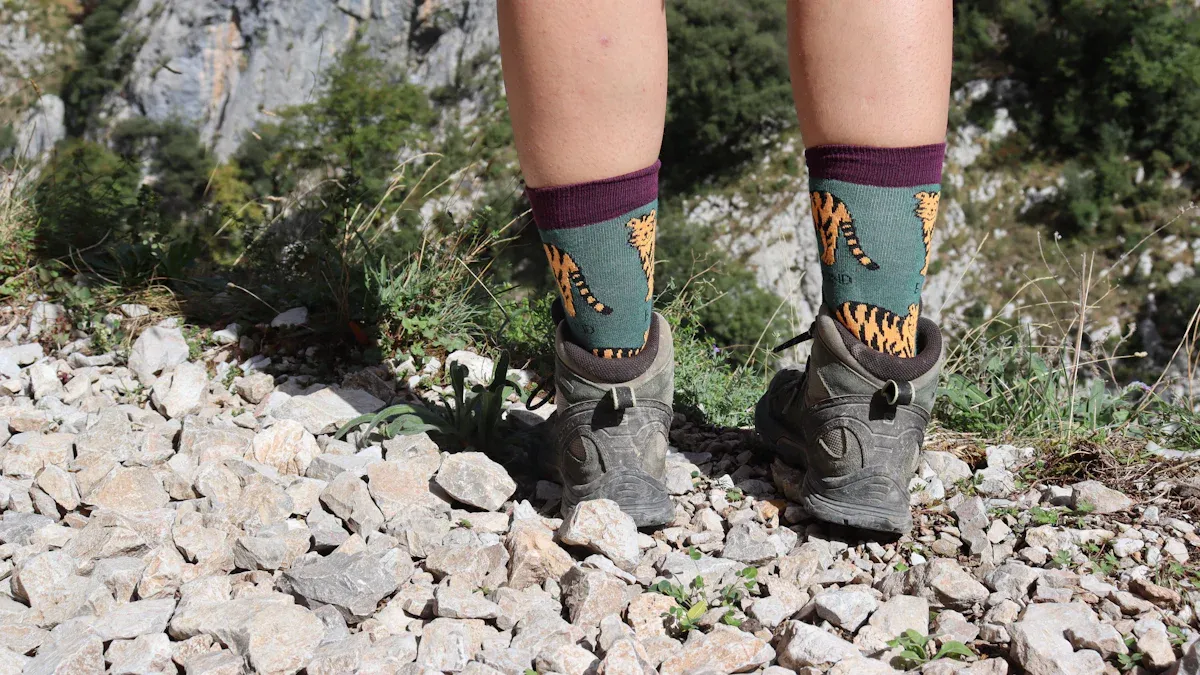
You see merino wool in many top ski socks. This material keeps your feet warm, even if they get wet. It wicks sweat away fast, so your skin stays dry. Merino wool also fights odor, which helps on long trips. You can wear these socks for days without them smelling bad. The breathability is good, but you get a bit more warmth than with other materials. Some people say merino wool socks do not last as long as synthetics, especially if they are thin. You might pay more for merino wool, but many skiers think the comfort is worth it.
| Aspect | Performance |
|---|---|
| Warmth | Warmer than most materials |
| Moisture-wicking | Pulls sweat away quickly |
| Breathability | Good, but a bit less for extra warmth |
| Odor resistance | Excellent, even after days of use |
| Durability | Not as tough as synthetics, especially thin |
| Cost | Higher than most other options |
Merino wool absorbs moisture but does not let bacteria grow, so your socks stay fresh.
Synthetic fibers like nylon and polyester show up in many ski socks. These materials dry fast and wick moisture well. You get socks that last a long time and keep their shape. Synthetic socks cost less than merino wool. They do not hold warmth as well if they get wet, and they can get smelly faster. Still, many skiers like them for their durability and quick-drying power.
| Material | Moisture-Wicking | Warmth Retention | Odor Resistance |
|---|---|---|---|
| Nylon | Excellent | Moderate | Low |
| Polyester | Good | Moderate | Moderate |
Silk feels soft and light. You often find it in thin liner socks. Silk wicks moisture and adds a bit of warmth. It works best as a base layer under thicker socks. Silk does not insulate as much as wool or synthetics, but it feels smooth and helps manage sweat.
Light and thin
Wicks moisture
Not as warm as other materials
Cotton is not a good choice for ski socks. It soaks up moisture and stays wet. Wet cotton makes your feet cold and can cause blisters. Cotton dries slowly and loses all insulation when wet. Outdoor experts do not recommend cotton for mountain trips.
Absorbs sweat and stays wet
Makes feet cold and uncomfortable
Dries very slowly
Many ski socks use blends of wool and synthetic fibers. These materials combine the best features of each. You get warmth, moisture-wicking, and durability. Blends often cost less than pure merino wool. Brands like Darn Tough and Smartwool use blends to make socks that last and feel great.
Blended socks give you comfort, strength, and a good fit for all-day skiing.
You see merino wool in many top ski socks for a reason. This material stands out for warmth and comfort. Here are the main pros and cons:
Pros:
Keeps your feet warm, even when wet.
Wicks moisture away, so your skin stays dry.
Resists odor, so you can wear the same pair for days.
Feels soft and comfortable, even after long hours.
Helps regulate temperature, keeping you cozy in cold and cool in heat.
Cons:
Takes longer to dry if it gets soaked.
Can wear out faster than synthetic socks, especially if thin.
Costs more than most other materials.
Merino wool socks get high ratings from skiers who want comfort and performance for long days on the mountain.
Synthetic fibers like nylon and polyester offer a different set of strengths. Many skiers choose them for durability and quick drying.
Pros:
Dry quickly, so your feet stay comfortable.
Wick moisture well, helping to prevent blisters.
Last longer and keep their shape after many washes.
Usually cost less than merino wool socks.
Cons:
Do not keep warmth as well if they get wet.
Can get smelly faster than wool.
Sometimes feel less soft against your skin.
| Material | Advantages | User Feedback |
|---|---|---|
| Synthetic | Lightweight, comfortable, budget-friendly | Mixed reviews; some models like Eurosock Ski Supreme are well-received, others less favored. |
Silk is a natural fiber that feels smooth and light. You often find it in liner socks.
Pros:
Feels soft and gentle on your skin.
Wicks moisture, keeping your feet drier.
Very lightweight, so it works well as a base layer.
Cons:
Not as warm as wool or thicker synthetic socks.
Can wear out quickly if used alone.
Costs more than basic synthetic options.
Silk socks work best as liners under another material for extra comfort and moisture control.
Cotton might feel soft at first, but it is not a good choice for ski socks. Experts warn against using cotton in cold or wet conditions.
Cons:
Absorbs water and sweat, making your feet cold.
Stays wet for a long time, which can lead to blisters.
Loses all insulation when wet, so your feet get even colder.
Dries very slowly, so you stay uncomfortable.
You should avoid cotton socks for any mountain trip. Choose a material that manages moisture and keeps you warm.
Many ski socks use a blend of wool and synthetic fibers. This mix gives you the best of both worlds.
Pros:
Combine warmth from wool with the durability of synthetics.
Wick moisture well, so your feet stay dry.
Often cost less than pure merino wool.
Hold their shape and last longer than single-material socks.
Feel comfortable for all-day wear.
Cons:
May not match the pure warmth of thick merino wool.
Quality depends on the blend ratio and brand.
Blended socks are a smart pick if you want balance between comfort, moisture control, and durability.

When you plan your mountain trip, always think about the weather. Cold days call for socks that keep you comfortable and warm. If you use modern ski boots, ultralight socks work well in cold weather. They give you a close fit and help with performance. Lightweight socks add a bit of cushion without making your boots feel tight. These are great for most days on the slopes. Midweight socks offer more padding, but you need to check the fit. Too much bulk can stop blood flow and hurt your performance. Moisture-wicking socks, especially those made from merino wool, keep your feet dry and warm even if you sweat or step in snow.
Ultralight: Best for cold days with modern boots; helps with performance.
Lightweight: Good for average or slightly chilly days; adds comfort.
Midweight: More cushion for extra cold, but make sure you have proper fit and sizing.
Moisture-wicking: Always important for dry, warm feet.
The length of your trip and how hard you ski matter when you pick the right socks. If you plan a long day or a multi-day trip, you want socks that last and keep you comfortable. Check the table below for what to look for:
| Factor | Description |
|---|---|
| Material | Wool for warmth and moisture control, synthetic for durability. |
| Thickness | Thick socks for cold, thin for warm days. |
| Fit | Snug fit stops blisters and boosts comfort. |
| Moisture Management | Keeps feet dry for better performance. |
| Height | Socks should go above your boot to keep snow out. |
| Special Features | Padding, seamless toes, and antimicrobial help with comfort and performance. |
Everyone has different needs. Some people want more warmth, while others need breathability. If you have sweaty feet, pick socks with strong moisture-wicking. Women's ski socks often have special sizing and extra padding for a better fit. Always try on socks before your trip to check sizing and comfort. The right socks should feel good, not bunch up, and help you stay comfortable and warm. If you want the best performance, focus on proper fit and sizing. Women's ski socks can give you a snug fit and extra comfort. When you know how to choose ski socks, you get better performance and more fun on the mountain.
You want your ski socks to help you enjoy every run. Here are some things to remember before you pack for your next mountain trip:
Pick lightweight ski socks. Heavy socks can mess up your boot fit and make your feet too hot.
Choose light to medium cushioning. This gives you comfort without making your boots feel tight.
Avoid heavy cushioning. Too much padding can cause overheating and discomfort.
Try heated ski socks if you get cold feet easily or plan to ski in freezing weather.
Women's ski socks offer a narrower fit and more arch support. These can help if you want a sock that matches your foot shape.
Look for materials like merino wool for warmth and moisture control. Synthetic blends, including polyester, give you stretch and a snug fit.
Make sure your socks fit snugly. This stops bunching and blisters but should not feel too tight.
A good pair of ski socks can make your day on the slopes much better. Focus on fit, material, and comfort for the best experience.
Many skiers make simple mistakes when picking socks. You can skip these problems by following a few easy rules:
Do not wear regular socks or cotton socks. Cotton holds moisture and makes your feet cold and wet.
Never layer socks. Only wear one smooth ski sock inside your boot. Layering causes discomfort and can make your feet colder.
Avoid socks with seams or rough spots. These can rub and cause blisters.
Do not pick socks made from low-quality materials. Always choose merino wool or synthetic fibers for better warmth and moisture control.
Make sure your socks are smooth and fit well. Wrinkles or bunching can lead to sore spots.
Many beginners think any sock will work for skiing. You will feel warmer and more comfortable if you pick ski-specific socks made from merino wool or synthetic materials. Quality socks keep your feet dry, warm, and happy all day.
Choosing the right ski socks can make your mountain trip much better. When you know the pros and cons of each material, you pick socks that fit your needs. Here’s what you should remember:
Merino wool keeps your feet warm and dry.
Synthetic fibers last longer and dry fast.
Compression socks help your legs feel less tired.
Pick socks that match your trip and what feels best for you. Your feet will thank you! ⛷️
You should pack at least two pairs of ski socks for every trip. If you plan a longer stay, bring extra pairs. Fresh socks help your feet stay dry and comfortable each day.
Regular socks do not work well for skiing. Ski socks offer better fit, warmth, and moisture-wicking breathability. You want socks that keep your feet dry and prevent blisters on the slopes.
Ski socks use special materials and designs. They fit snugly, wick moisture, and add warmth. The best socks for snow sports also have padding in key spots to protect your feet and shins.
You should wash your ski socks after each full day of skiing. Clean socks help prevent odor and keep your feet healthy. Merino wool socks can go longer between washes if needed.
Thicker ski socks do not always mean warmer feet. Too much bulk can make your boots tight and cut off circulation. Choose socks with good insulation and a proper fit for the best warmth.


