Foshan Mingjun Textile Company Ltd.

Views: 0 Author: Site Editor Publish Time: 2025-11-12 Origin: Site
Graduated compression stockings press gently on your legs. The tightest part is at your ankle. The pressure gets lighter as it goes up your leg. You wear them to help blood move back to your heart. This can lower swelling and pain. Many people use graduated compression stockings for health problems. Some examples are chronic venous insufficiency, varicose veins, or pregnancy. These stockings can also help heal venous leg ulcers. They can make life better if your legs feel swollen or tired.
Graduated compression stockings squeeze your ankle the most. This helps blood move back to your heart. These stockings can lower swelling and pain in your legs. They also help if your legs feel tired. Compression stockings come in many styles and sizes. You can pick the ones that fit you best. Wearing compression stockings often can stop blood clots. They also make your legs healthier. Always measure your legs to get the right size. The right size is important for comfort and working well. You can buy compression stockings in stores without a prescription. Ask a doctor if you have special health problems. Take care of your stockings by washing them often. Replace them every 3 to 6 months so they keep working. Think about how active you are when picking stockings. Different styles give different amounts of support.
You can find compression stockings in many places. Hospitals, sports stores, and pharmacies sell them. These socks help your legs feel good. Graduated compression means the socks squeeze hardest at your ankle. The pressure gets softer as it goes up your leg. This helps blood move back to your heart. Compression stockings come in lots of styles and sizes. Some go to your knee, and some reach your thigh. You can pick thin or thick stockings. It depends on what you need. New stockings use special knitting and printing. You can choose fun patterns like jacquard or tie-dye. Toe seams use hand-linking or rosso for comfort.
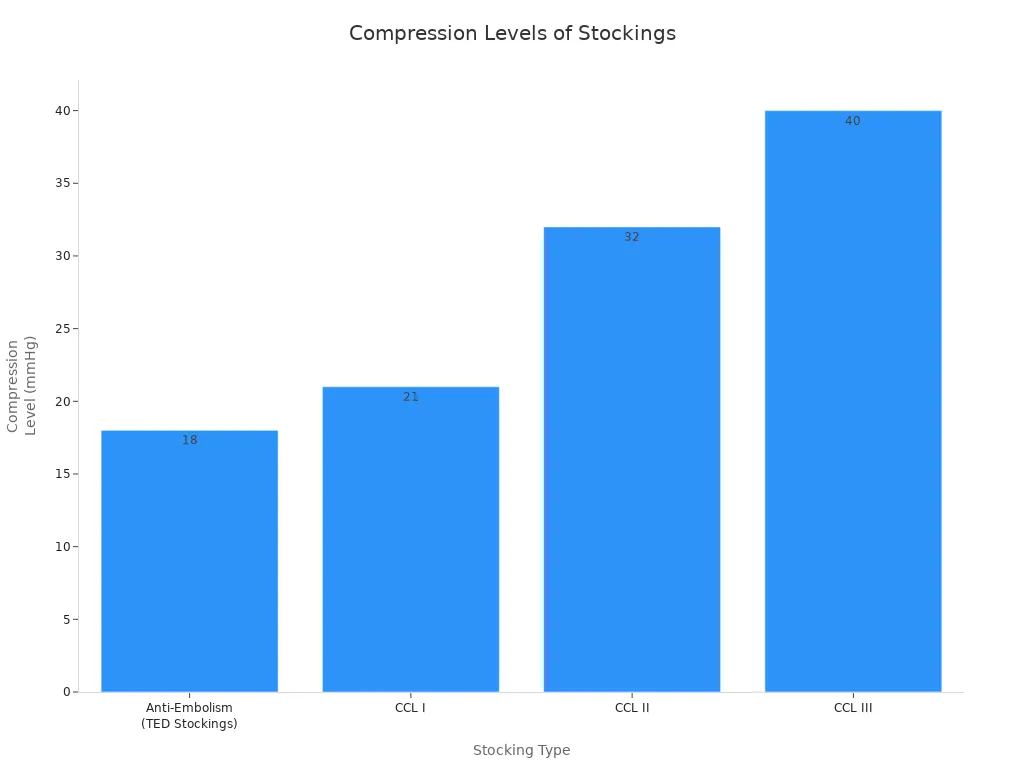
Here is a table that shows the main types of graduated compression stockings and their compression levels:
Compression Class | Compression Level (mmHg) | Description |
|---|---|---|
Anti-Embolism (TED Stockings) | Approximately 18 | Designed for post-surgical use |
CCL I | 15-21 | Ideal for mild vascular issues |
CCL II | 20-32 | For significant vascular issues |
CCL III | 30-40 | Strongest compression available |
Some people think only older adults wear compression stockings. That is not true. Athletes, nurses, and pregnant women use them too. You do not always need a prescription. You can buy lower compression stockings at stores. New materials make these socks easy to wear. They are comfortable even in summer.
Compression stockings have many helpful features. They give strong pressure to help blood move. This stops swelling. The fit is made for your leg shape. These socks help with medical problems like varicose veins. You can trust the quality because companies check them carefully. Compression stockings keep their shape and pressure for a long time.
Here are some features you should look for:
Strong pressure that helps blood flow
Good fit for comfort
Styles for different health needs
Tough materials that last
Fabrics that let your skin breathe
Cool designs and patterns
Compression stockings come in different lengths and thicknesses. You can pick ankle, mid-calf, knee-high, or thigh-high styles. Some use flat plate knitting. Others use terry knit for extra padding. Nylon is strong. Blends are soft.
Tip: Pick compression stockings that match your activity and health needs. If you stand all day, get extra support. If you travel a lot, knee-high stockings may be best.
MINGJUN Hosiery is a leader in making compression products. They have 25 years of experience and use advanced machines. The company uses good materials and safe dyes. MINGJUN Hosiery meets big standards like CE in Europe and FDA in the USA. These show the stockings give the right pressure and are safe.
You get products made with recycled and organic fibers. MINGJUN Hosiery uses green ways to make stockings and packs them in biodegradable boxes. They check every pair for quality and strength. You can order custom sizes and styles. MINGJUN Hosiery helps brands, athletes, and medical workers all over the world.
The market for compression stockings is getting bigger. More people learn about venous health and sports recovery. The market will grow from USD 3.2 billion in 2025 to USD 5 billion by 2035. You will see more choices and better prices because of this.
Note: MINGJUN Hosiery is a trusted partner for compression socks. You get products that are comfortable, work well, and help the planet.
Graduated compression stockings use a special pressure pattern. The tightest part is at your ankle. The pressure gets lighter as it goes up your leg. This helps blood move back to your heart. You might ask, how do gcs work? The answer is easy. The pressure pushes blood up, fighting gravity. This stops blood from staying in your lower legs.
You feel the most squeeze at your ankle. The pressure gets softer as it moves up. This helps your veins work better. Your veins get smaller, so blood moves faster. The stockings also help drain fluid from your legs. You get less swelling and feel more comfortable.
Graduated compression stockings squeeze hardest at the ankle, then less up the leg.
This helps blood move up to your heart and stops pooling.
The stockings make veins smaller, so blood moves faster and better.
Graduated compression can lower high vein pressure and help drain fluid.
Doctors and scientists use special tools to check compression. They use Laplace’s law to show how tension and leg size change pressure. The formula is P = T/r, where P means pressure, T means tension, and r means leg size. Machines like stocking testers check pressure at your ankle and calf. This makes sure you get the right support.
Compression stockings help blood move the right way. When you wear them, your veins and muscles get support. The stockings squeeze gently, so blood does not stay in your legs. You feel less tired and your legs do not swell as much. Compression socks also help athletes recover faster after exercise.
Tip: Put on your compression stockings in the morning before swelling starts. This helps you get the best results.
You get many good things from wearing compression stockings. They help blood flow and improve circulation. You can stop swelling, pain, and tired legs. Doctors tell people to use compression for varicose veins, after surgery, or during pregnancy. Using them often can lower your risk of problems after a blood clot.
Wearing compression stockings every day for two years can lower your chance of post-thrombotic syndrome after deep vein thrombosis (DVT).
Compression stockings help stop and treat swelling, help after varicose vein treatment, and keep legs healthy after ulcers heal.
You should wear compression stockings often, and get new ones every 3–6 months if you use them daily.
You help your veins work well when you wear compression. You make blood flow better and keep your legs healthy. Good circulation helps you feel good and stay active. Compression stockings support you if you stand all day or travel a lot.
Benefit | How Compression Helps |
|---|---|
Less swelling | Stops fluid from building up |
Better blood flow | Moves blood back to the heart |
More comfort | Reduces pain and tiredness |
Healthier veins | Prevents vein problems |
Compression stockings help you every day. You protect your legs and help blood flow with every step.
Compression socks help lots of people every day. You might need them if you have health issues or want to stay active. Doctors tell people to wear compression stockings for medical reasons. These are good if you have circulation problems or chronic venous disease. You can also use compression socks if you travel, play sports, or stand for many hours.
You should wear compression socks if you have venous disorders or deep vein thrombosis. These socks support your veins and help stop blood clots. People with dvt or varicose veins wear compression stockings to help blood move and lower swelling. Pregnant women use compression socks to help with leg pain and swelling. If you sit a lot or use a wheelchair, compression can help you avoid circulation problems.
Tip: Always make sure your compression stockings fit well. The right size helps stop skin problems and keeps your legs healthy.
Groups who benefit most from compression socks:
People with certain health conditions
Pregnant women
Athletes
People who stand for a long time
Airplane travelers or crew
People who use a wheelchair
Athletes wear compression socks to help muscles recover and feel less tired. You may feel less sore after you exercise. Compression helps blood move and lowers swelling on long trips. Travelers wear compression socks to stop blood clots and keep legs comfy. Nurses, store workers, and others who stand all day use compression socks for comfort and support.
Activity | How Compression Socks Help |
|---|---|
Sports | Help muscles recover, lower fatigue |
Travel | Stop blood clots, lower swelling |
Standing Jobs | Support veins, make legs feel better |
You get many good things from wearing compression socks often. Compression stockings help blood move from your feet to your heart. Your legs hurt less and feel better. Compression socks lower swelling in your legs, feet, and ankles. They support your veins and help with spider and varicose veins.
Primary health benefits include:
Lowers pain and discomfort
Reduces swelling in legs, feet, and ankles
Helps muscles recover and lowers strain
Stops blood clots when sitting or standing long
Less dizziness when you stand up
Supports veins to help with varicose veins
Compression stockings class 2 may lower the chance of leg ulcers coming back more than class 1. You might find class 2 works better for stopping ulcers. If you have chronic venous disease, compression socks help you feel better and stay active.
Note: Always wear compression socks the way your doctor says. Using them wrong can cause blood flow problems or skin issues. Pick the right size and material for your needs.
When you shop for compression socks, you see many choices. Each style helps with different problems. You can pick knee-high, thigh-high, or pantyhose styles. Some people need anti-embolism stockings for health reasons. Choose the style that matches your activity and health.
Knee-high socks cover your foot and calf. Thigh-high stockings go up to your thigh. Pantyhose support from your toes to your waist. Anti-embolism stockings are used in hospitals after surgery to stop blood clots.
Here is a table to compare the main styles:
Style | Best For | Benefits | Limitations |
|---|---|---|---|
Knee-High | Everyday tired legs, travel, sports | Easy to wear, hidden, not expensive | Stops at calf, may cause swelling above sock line |
Thigh-High | Swelling above calf, thigh varicose veins | More coverage, better for bad circulation | Can slip down, less cool |
Pantyhose | DVT, lymphedema, varicose veins | Full-leg support, covers hips | Warm, harder to put on, costs more |
“If your vein problem is in the lower leg, knee-high socks may be enough,” says Dr. Huang. “If it goes to the thigh, you may need thigh-high for full coverage.” –Dr. Robin Huang
Knee-high socks are good for long flights and sports recovery.
Thigh-high stockings help after surgery or with bad vein problems.
Pantyhose work best for people who need all-day support and want a smooth look.
Anti-embolism stockings are used in hospitals to stop blood clots when you cannot move.
Compression socks and stockings come in different pressure levels. The strongest squeeze is at your ankle and gets lighter up your leg. The right level depends on your needs. Anti-embolism stockings also have different pressure levels for medical use.
Here is a table showing the main compression levels:
Compression Level | mmHg Range | Suitable For |
|---|---|---|
Mild Compression | 15-20 mmHg | Everyday use, small swelling, tired legs, travel swelling, pregnant women with varicose veins. |
Moderate Compression | 20-30 mmHg | Medium swelling, varicose veins, DVT prevention during travel or after surgery. |
Firm Compression | 30-40 mmHg | Bad varicose veins, medium edema, recovery from vein surgery, chronic venous problems. |
Extra Firm Compression | 40-50 mmHg | Severe lymphedema, chronic venous problems, post-thrombotic syndrome. |
Pick the compression level that fits your activity and health. Mild compression is good for tired legs and travel. Moderate compression helps with varicose veins and standing jobs. Firm compression is best after surgery or for bad vein problems. Extra firm compression is only for serious conditions and needs a doctor’s order.
Mild compression socks help office workers who sit a lot.
Moderate compression works for nurses or store workers who stand all day.
Firm compression helps people after surgery or with chronic vein problems.
Extra firm compression is for people with lymphedema or very bad circulation.
Anti-embolism stockings are important for people who must stay in bed after surgery.
MINGJUN Hosiery gives you lots of choices for compression socks and stockings. You can find knee-high, thigh-high, pantyhose, and anti-embolism stockings in many pressure levels. The company uses recycled polyamide and organic cotton to make socks that are good for you and the earth. MINGJUN Hosiery follows GRS rules to make sure every product is high quality.
Here is a table showing how MINGJUN Hosiery uses green materials:
Evidence Type | Description |
|---|---|
Recycled Polyamide | Saves resources and lowers CO2, keeps same quality as regular polyamide. |
Organic Cotton | Grown without bad chemicals, helps keep nature healthy. |
GRS Certification | Tracks materials and follows eco and social rules in making socks. |
You can order special sizes and styles from MINGJUN Hosiery. The company has socks for athletes, pregnant women, and people with health needs. You can pick green options made with recycled fibers and safe dyes. This helps you care for your health and the planet.
Custom fit socks help athletes recover faster and feel good.
Pregnant women can wear special stockings for swelling and support.
Patients with special needs get anti-embolism stockings made just for them.
If you care about nature, you can pick socks made with recycled materials.
Tip: When you pick compression socks, think about why you need them. Choose the right style, pressure level, and material for your needs. Measure your leg for the best fit. Always check the sizing chart from the company.
You must measure your legs before buying compression stockings. Good measurements help you get the right fit. Measure your ankle, calf, and thigh. Do this in the morning when swelling is lowest. Trained staff can help you measure the right spots. If regular sizes do not fit, ask about custom options.
Measure your legs at certain spots for best results.
Take measurements in the morning for better accuracy.
Custom sizes are available if regular ones do not fit.
Getting the right fit is important for comfort and support. Compression works best when stockings match your leg shape. Stockings that fit well help blood flow and lower swelling. You feel more comfortable and get better support. Bad fit can cause pain or skin problems.
Tip: Always check the sizing chart from the company before you buy.
Many people make mistakes when picking compression socks. You can avoid problems by following these steps:
Measure your legs before you buy socks.
Take care of your stockings every day.
Wash with gentle soap and cold water.
Use gloves to prevent snags.
Put on stockings in the morning for easier use.
Replace stockings every 3 to 6 months.
Do not roll them up, as this can block blood flow.
Do not wear them at night unless your doctor says so.
Avoid strong chemicals like bleach.
Do not twist stockings to dry them.
Never cut or change stockings.
Do not use lotion before you put them on.
Compression socks use many different materials. Each type affects comfort and how long socks last. Here is a table showing popular choices:
Material | Impact on Comfort and Durability |
|---|---|
Merino wool | Feels soft like cashmere, adds comfort. |
Supima cotton | Stays soft and strong for longer wear. |
LYCRA® | Gives graduated compression, improves comfort. |
Innovative fibers | Wicks moisture, boosts performance and durability. |
You want stockings that feel good and last a long time. Breathable materials keep your skin cool and dry. Special knitting shapes stockings to your legs for better comfort. Non-slip yarns help stockings stay up. Light fabrics make it easy to wear stockings all day or night.
If you have sensitive skin, pick stockings with soft, gentle fibers. Some brands use silicone yarn in the top band to stop digging into your skin. Breathable and moisture-wicking materials help lower irritation. You can choose stockings with organic cotton or special blends for extra comfort.
Talk to your doctor if you have special health needs. Your doctor helps you pick the right type and level of compression. Medical advice makes sure you get the best support for your condition.
Ask your doctor for the correct compression level.
Pick stockings based on your health needs.
Use graduated compression stockings to help blood flow and prevent DVT.
During a fitting, a trained person measures your legs. You learn how to put on and care for your stockings. The fitter checks that stockings match your leg shape and size. You get advice on how long to wear them each day.
If you have chronic venous disease or other health problems, follow your doctor’s instructions. Some conditions need special wraps or multilayer stockings. Your doctor tells you how to use these products safely. Medical advice helps you get the most benefit from compression.
Note: Always follow your doctor’s advice for compression stockings, especially if you have health problems.
You want to start with clean, dry skin before you put on compression socks. Inspect your stockings for any damage or dirt. Smooth out wrinkles so the fabric sits flat. If your skin feels damp, use a little talcum powder. Elevate your feet for ten minutes to help reduce swelling. This makes it easier to put on your socks.
Many people ask how to wear compression stockings without struggle. You can follow these steps:
Turn the stocking inside out, leaving the foot part right side out.
Place your foot into the stocking, making sure your heel fits in the heel cup.
Slowly roll or pull the stocking up your leg. Smooth out any wrinkles as you go.
If you have limited mobility, you can use rubber gloves for better grip. Gloves help you hold the fabric and prevent snags. You may also find that keeping your skin moisturized helps, but avoid lotion right before you put on your socks.
Donning aids make it easier to put on compression socks. You can use a stocking donner or a sock aid device. These tools help you slide your foot into the sock without bending too much. Some people use a medical dressing stick to grip and remove stockings. These aids are helpful if you have trouble reaching your feet.
To take off compression socks, gently roll them down your leg. Avoid pulling hard, as this can stretch the fabric. If you need extra help, use a dressing stick or sock remover. Always check your skin after removing the socks for any redness or irritation.
You should put on compression socks in the morning before your legs start to swell. Most people wear them during waking hours. This helps you get the best support from compression.
Wear compression socks for 8 to 12 hours each day. If you are new to compression, start with a few hours and slowly increase the time. Remove them at night unless your doctor tells you otherwise.
Check your legs often for signs of irritation or discomfort. Make sure your socks fit snugly but do not pinch. Keep your skin clean and dry. Inspect for skin breakdown, especially around pressure points.
If you notice redness, pain, or numbness, take off your compression socks right away. Adjust the fit if the socks feel too tight or roll down. Always listen to your body and consult your healthcare provider if problems continue.
Wash your compression socks after every wear or at least every 3-5 wears. Hand wash in lukewarm water with mild detergent. Rinse thoroughly. If you use a washing machine, place the socks in a mesh bag and select the delicate cycle. Do not use bleach or fabric softeners.
Air dry your socks by hanging them up or laying them flat. Avoid tumble drying, as heat can damage the elastic fibers. Store your socks in a cool, dry place away from sunlight. Roll them gently instead of folding tightly.
Regular washing prevents odor and bacteria growth. Clean your socks daily if you wear them all day. This keeps them fresh and maintains their compression.
Replace your compression socks every 3 to 6 months. Look for signs like loss of elasticity, sagging, or stretched fabric. If the socks no longer provide firm support, it is time for a new pair.
Tip: Proper care helps your compression socks last longer and keeps your legs healthy.
Sometimes, your compression socks roll or slip down. This can happen if the socks do not fit well. If the top band is loose, socks will slide down. Sweat or lotion can also make socks slip. You should check your leg size before buying new socks. Always use the sizing chart to pick the right size. Socks with a silicone grip or wide top band may help. Washing socks often keeps the elastic strong.
Tip: Do not fold or roll the top band. This can block blood flow and make your legs hurt.
Many people feel discomfort when wearing compression stockings. You might feel pinching or tightness at your ankle or calf. This means the socks may be too small or too tight. The right fit is important for comfort. Measure your legs in the morning when swelling is low. If you feel pain, redness, or numbness, take off the socks and check your skin. Try a new size or style if you still feel discomfort.
Discomfort can cause skin problems or pressure sores.
Getting a custom fit helps you feel better.
If pain does not stop, talk to your doctor about changing compression.
Some people get skin irritation from compression stockings. You may see redness, itching, or blisters. This happens if socks are too tight or if you have sensitive skin. Some materials like nylon or latex can cause allergies. You can pick socks made with organic cotton or gentle fibers. Always keep your skin clean and dry before putting on socks. If irritation stays, stop using the socks and ask your doctor for help.
Problem | Solution |
|---|---|
Redness/Itching | Use socks with soft, breathable fibers |
Allergies | Pick socks with gentle or organic fibers |
Blisters | Make sure socks fit and avoid rubbing |
It can be hard to put on or take off compression socks. This is true if you have trouble moving or gripping things. Socks with strong compression are harder to handle. You can use sock tools or rubber gloves to help. Talcum powder can make socks slide on easier. If you struggle every day, ask someone to help you. You can also try socks with a zipper or open toe.
Trouble putting on socks can make people stop using them.
Sock tools help older people or those with weak hands.
Learning from a nurse or doctor can help you wear socks the right way.
Note: If you keep having problems, talk to your doctor. They can help you find the best solution and make sure your socks help without hurting you.
Compression stockings can help your legs feel good and healthy. Many people say they get benefits from wearing compression socks. Recent surveys found some interesting results:
25% of people feel better when they use compression often
33% say their symptoms get worse
42% have no change or mixed results
Picking good compression products, like ones from MINGJUN Hosiery, can give you better results. Compression helps blood move, lowers swelling, and makes blood clots less likely. You might feel less pain and tiredness after standing or sitting for a long time. Compression can also help you heal after surgery and support your veins if you are pregnant. If you have special health problems, talk to your doctor before you start using compression. You can make your legs healthier and feel sure about your choices every day.
You should ask your doctor or follow the advice on the package. Mild compression helps with tired legs. Stronger compression supports medical needs. Always check your health before you pick a level.
You can wear them during the day. Most people put them on in the morning and take them off before bed. If you feel pain or discomfort, remove them and check your skin.
Start with clean, dry skin. Turn the stocking inside out to the heel. Slide your foot in and pull the stocking up slowly. Smooth out wrinkles as you go. Use gloves or a sock aid if needed.
You benefit if you have tired legs, swelling, or vein problems. Athletes, travelers, and people who stand for long hours also see results. Compression helps blood move and lowers swelling.
You may feel discomfort if the stockings are too tight or the wrong size. Skin irritation can happen. Always measure your legs and follow instructions. Ask your doctor if you have health concerns.
Wash your stockings by hand or use a gentle cycle in the machine. Air dry them away from heat. Replace them every few months to keep compression strong.
You can use compression socks to help muscles recover and lower swelling after exercise. Many athletes wear them for better performance and comfort.
You find nylon, spandex, and cotton blends in most products. Breathable fabrics keep your skin cool. Soft fibers help if you have sensitive skin or allergies.
Tip: Always check the sizing chart before you buy new compression products.