Foshan Mingjun Textile Company Ltd.

Views: 0 Author: Site Editor Publish Time: 2025-07-02 Origin: Site
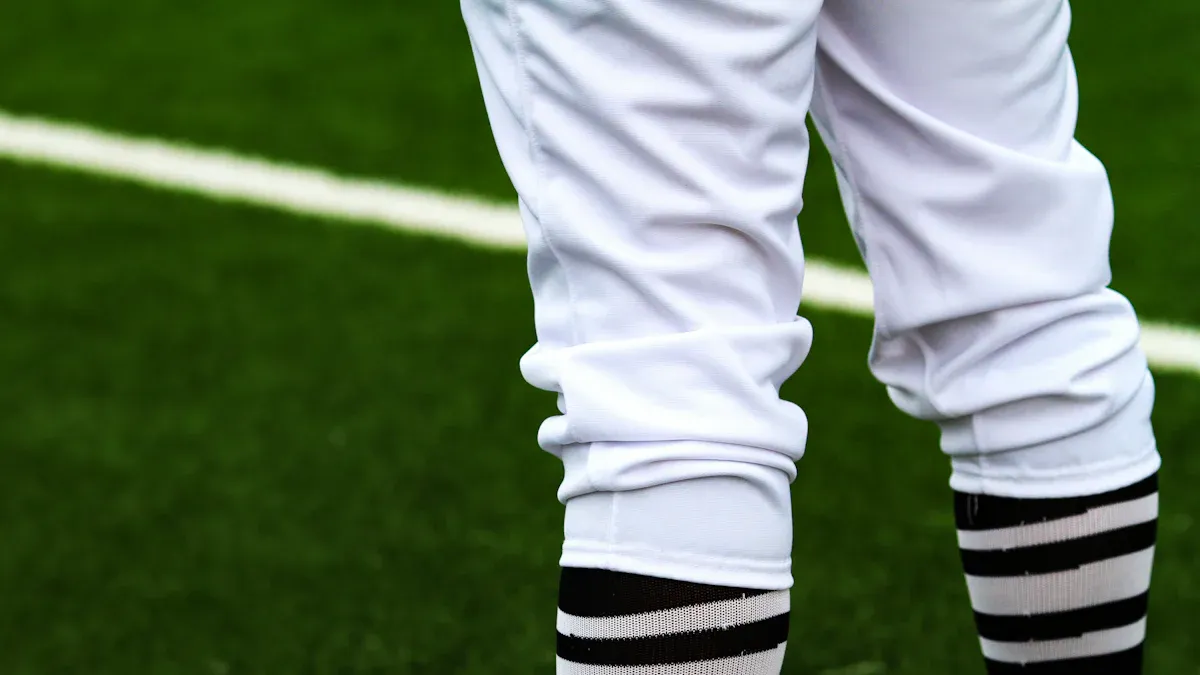
Football socks feel tight because you need support, stability, and optimal grip during every match. Research shows that tight football socks help increase muscle activation, reduce fatigue, and improve circulation.
When you wear tight football socks, you may notice less discomfort from muscle soreness or fatigue after play.
| Study | Performance Metric | Effect of Compression Socks |
|---|---|---|
| Moreno-Pérez et al., 2020 | Muscle activation | Increased muscle activation |
| Miyamoto & Kawakami, 2014 | Muscle fatigue | Reduced muscle fatigue |
| Zaleski et al., 2015 | Blood flow | Improved hemostatic balance |
Modern brands like MINGJUN Hosiery offer football socks designed to boost your performance while minimizing discomfort.
Tight football socks use compression to support muscles, improve blood flow, and reduce fatigue during play.
These socks help prevent injuries by keeping muscles steady and holding shin guards securely in place.
Anti-slip features and a snug fit improve traction, balance, and reduce the risk of blisters on the field.
Very tight socks can cause discomfort like numbness or cramping, so choosing the right size and fit is important.
Modern football socks include advanced materials and designs that boost comfort, durability, and performance.
When you pull on football socks before a match, you give your muscles more than just a layer of fabric. These socks use compression to help your legs perform better during intense play. Compression increases the pressure inside your muscles. This boost in pressure helps your blood flow faster and keeps your muscles supplied with oxygen. You feel less tired and recover faster between sprints.
Compression in football socks can also reduce lower leg pressure, which helps prevent swelling and discomfort during long games.
The science behind muscle compression is clear. Researchers have studied how compression garments affect your body during sports. Here is a summary of what they found:
| Biomechanical Effect | Description | Supporting Study/Mechanism |
|---|---|---|
| Increased intramuscular hydrostatic pressure | Compression raises pressure inside muscles, improving blood flow and reducing pooling | Ibegbuna et al., 2003; Maton et al., 2006 |
| Improved blood flow and muscle pump efficiency | Better circulation and muscle pump function help maintain ion balance and prevent fatigue | Sejersted & Sjøgaard, 2000; Kraemer et al., 2000 |
| Preservation of ion homeostasis | Keeps muscle contractions strong and prevents lasting fatigue | Chin et al., 1997; Garcia et al., 2018; Ortenblad et al., 2000 |
| Compression level dependency | Higher compression (20–30 mmHg) works better for reducing muscle fatigue | Miyamoto et al., 2011; Miyamoto & Kawakami, 2014 |
| Reduction of muscle fatigue and edema | Less muscle tiredness and swelling during long activity | Blazek et al., 2013; Quilici Belczak et al., 2012; Mosti et al., 2012 |
| Increased tactile stimulation and postural stability | Compression stimulates nerves and improves balance | Baige et al., 2024 |
You benefit from these effects every time you wear football socks that fit snugly. Your legs stay energized, and you can focus on your game instead of muscle pain.
Football puts a lot of stress on your legs and feet. You make quick turns, sudden stops, and powerful kicks. Football socks help protect you from injuries in several ways.
First, the compression in these socks supports your muscles and joints. This support keeps your muscles steady and reduces the risk of strains or pulls. When your muscles move less, you avoid small tears that can lead to bigger problems.
Second, football socks hold your shin guards in place. Shin guards protect your bones from hard impacts. If your socks slip, your shin guards can move out of position. Tight socks keep everything secure, so you stay protected during tackles and collisions.
Finally, these socks help you avoid swelling and bruising. By improving blood flow and reducing lower leg pressure, they keep your legs feeling fresh even after a tough match. You recover faster and lower your risk of overuse injuries.
Tip: Always choose football socks that fit well and offer the right level of compression for your needs. Proper support can make a big difference in your performance and safety.
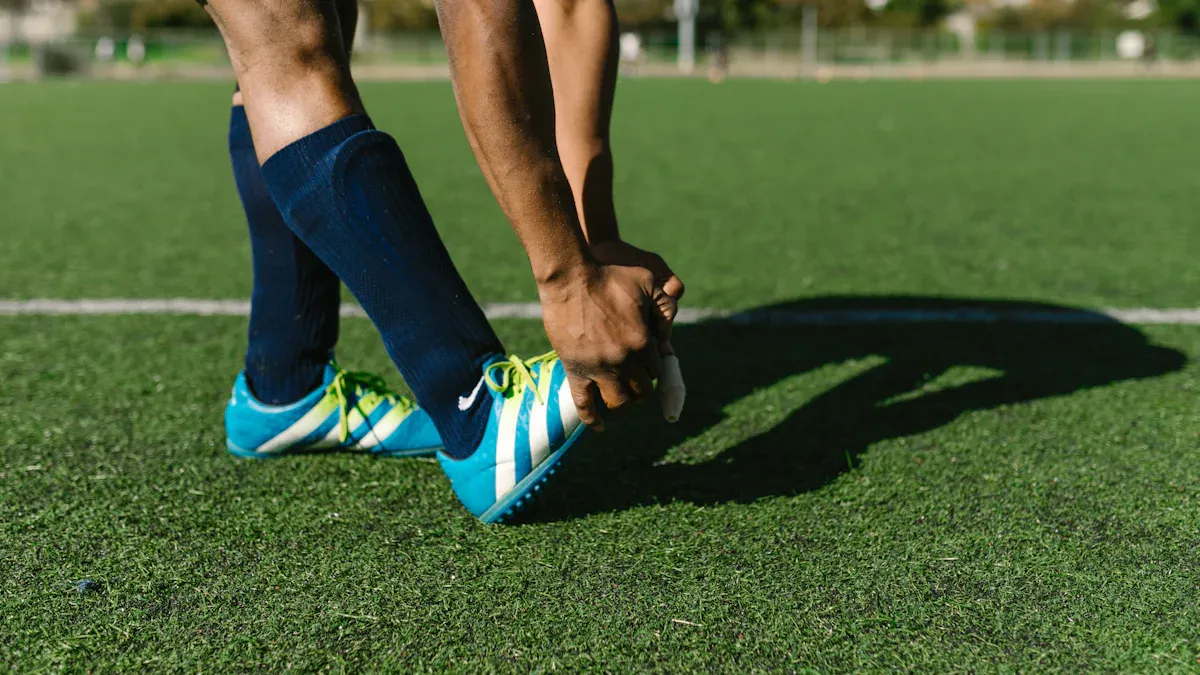
When you play soccer, you need your socks to stay in place. Soccer socks with anti-slip features help you keep your footing, even when the field gets wet or slippery. Many brands now add rubberized grip zones inside the socks. These zones stop your feet from sliding around in your shoes. You get better traction and can move quickly without worrying about slipping.
A tight fit is important for these anti-slip features to work. If your socks are too loose, the grips cannot hold your foot in place. When you wear soccer socks that fit snugly, you feel more stable during fast turns and sudden stops. This stability helps you keep your balance and react faster during the game.
Note: Anti-slip soccer socks can make a big difference on artificial turf or rainy days. You stay in control and avoid falls.
Here is a table that shows how grip and fit improve your performance:
| Performance Aspect | Description | Impact on Performance |
|---|---|---|
| Enhanced Traction | Rubberized grip zones inside socks improve traction within shoes, preventing slipping. | Better stability and footing during play, especially on slick or artificial turf. |
| Stability and Balance | Snug fit prevents sock movement inside the shoe, reducing slipping and bunching. | Maintains balance during quick directional changes, crucial for fast-paced positions. |
| Prevention of Blisters | Proper fit reduces friction and sock movement against skin. | Enhances comfort and reduces injury risk, allowing sustained performance. |
| Comfort and Flexibility | Stretchable materials like spandex provide a snug but flexible fit. | Supports range of motion and reduces distractions during play. |
| Muscle Support & Injury Prevention | Compression and stretchability support muscles and reduce fatigue. | Indirectly improves endurance and reduces injury risk. |
You can see that soccer socks with anti-slip features give you more than just comfort. They help you play better and safer.
Blisters can ruin your game. When your socks move around or bunch up, they rub against your skin. This friction causes painful blisters that can keep you off the field. Soccer socks solve this problem by fitting tightly and using special materials.
Most soccer socks use stretchable fibers like spandex. These fibers hug your foot and leg, so the socks do not slide down or twist. You get a smooth layer between your skin and your shoe. This smoothness stops friction and keeps your feet safe from blisters.
Some soccer socks also have extra padding in high-friction areas. You might notice thicker fabric around the heel or toe. This padding adds another layer of protection. When you run, jump, or change direction, your socks stay in place and protect your skin.
Tip: Always choose soccer socks that match your foot size. A good fit means less movement and fewer blisters.
Here is a table that compares different fit types and their benefits:
| Fit Type | Benefits | Considerations |
|---|---|---|
| Snug Fit | Prevents slipping, reduces blisters | Must not be too tight; allows flexibility |
| Stretchable Fit | Conforms to foot shape, increases comfort | Choose according to foot width |
| Loose Fit | N/A | May cause bunching or slipping; not recommended for high performance |
You should always pick soccer socks with a snug or stretchable fit. Loose socks can cause problems and lower your performance.
Soccer socks do more than just cover your legs. They protect your feet, help you move better, and keep you comfortable for the whole match. When you choose the right pair, you can focus on your game and not on your feet.
You may notice that soccer socks feel tight, especially during intense matches. This tightness can sometimes lead to discomfort, such as numbness or cramping in your legs. Many professional players have reported muscle swelling and discomfort when wearing very tight soccer socks that stretch from knee to toe. When your socks compress your calves too much, blood flow can slow down, which increases the risk of cramping. Some players even cut holes in their socks to relieve pressure and improve circulation.
Chris Hattersley, a physiotherapist for Premier League athletes, explains that new soccer socks often feel tighter as your blood flow increases during a game. This can make discomfort worse, causing numbness or cramps. Cutting holes in the socks helps reduce this pressure, especially for players who wear new pairs every match. If you play at an amateur level, your soccer socks may loosen over time, so you might not experience the same level of discomfort.
Tip: If you feel numbness or cramping, check your soccer socks for excessive tightness. Adjusting your socks can help prevent discomfort and keep you focused on your game.
Many soccer players have found creative ways to deal with discomfort from tight socks. One common modification is cutting holes in the calf area. This simple change reduces pressure on your muscles and allows better blood flow. Players say this leads to enhanced comfort and less distraction during play.
You might also see players cut the foot part off their soccer socks and wear a separate anti-slip grip sock underneath. This combination helps prevent bunching and blisters, while also improving fit. Modifications like these can make a big difference in how you feel on the field.
Cutting holes reduces calf muscle pressure and improves circulation.
Players report less discomfort and better focus during games.
Modifications help soccer socks fit better with shin pads, reducing pressure points.
Extra space from holes allows freer movement and better performance.
Many athletes believe these changes give them a competitive edge by minimizing muscle soreness.
Scientific studies also support the benefits of smart socks and other modifications. For example, smart socks can monitor your foot motion and pressure, helping you adjust for better comfort and performance. Players who make these changes often say they experience less discomfort and more confidence on the field.
Remember: Small changes to your soccer socks can prevent discomfort and help you play your best.
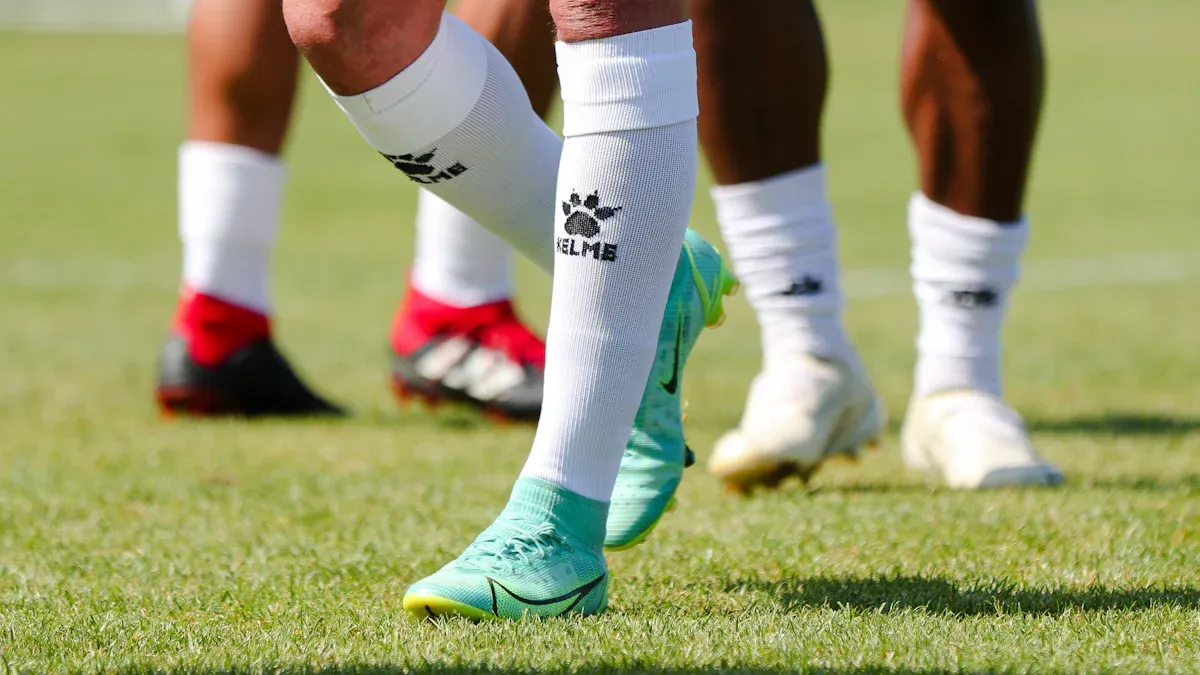
You can now find soccer socks that use the latest technology to boost your game. Brands like MINGJUN Hosiery lead the way with features designed for both comfort and performance. Their football socks include a 3D anti-slip cuff, which keeps your socks in place during quick moves. The built-in shin guard channel holds your protection steady, so you stay safe even in tough matches. A double-layer mesh structure wicks away moisture, keeping your feet dry and comfortable in any weather.
Many modern soccer socks use advanced materials and construction methods. Here are some of the most important innovations you will see:
Moisture-wicking fabrics keep your feet dry and help prevent blisters.
Graduated compression improves blood flow and reduces muscle fatigue.
Antimicrobial treatments fight odor and keep your socks fresh.
Seamless construction lowers the risk of irritation and blisters.
Ergonomic designs add cushioning and ventilation where you need it most.
Smart textiles can track your foot movement and pressure in real time.
Customization options let you choose the right fit, grip, and even eco-friendly materials.
Laboratory tests show that features like anti-slip grip zones, reinforced toes and heels, and mesh vent panels hold up under hundreds of cycles of stretching, washing, and abrasion. This means you get socks that last longer and perform better.
| Feature | Benefit | Test Results |
|---|---|---|
| Anti-slip grip zones | Better traction and quick movement | 400+ stretch cycles, strong grip |
| Moisture-wicking mesh | Dry feet, less blister risk | 80+ wash cycles, high durability |
| Reinforced toe/heel | More durability | 50+ wash cycles, abrasion resistant |
| Mesh vent panels | Improved breathability | Rapid moisture wicking |
Getting the right fit for your soccer socks is key to comfort and performance. Brands now use advanced sizing systems and materials that mold to your foot shape. For example, some socks use a 3D elastane band system that adapts to your foot’s contours, giving you a custom feel. Moisture-wicking polyester and spandex blends keep your socks flexible and dry, even during intense play.
You should always choose soccer socks that fit snugly without bunching or sliding. If you are between sizes, try sizing down for a compression fit. After a few uses, the socks will mold to your feet, giving you a secure and comfortable feel. Seamless designs and special coatings can also help reduce friction and prevent blisters.
Tip: Always check the size chart before buying new soccer socks. A proper fit helps you avoid discomfort and keeps you focused on your game.
You wear football socks for support, grip, and better performance. These socks help you move faster and recover quicker, but sometimes you may feel discomfort if they fit too tightly. Studies show that compression gear can boost recovery and reduce injury, but it may also affect your comfort and body temperature.
Medical compression socks give strong support but can feel tight and hard to wear.
Everyday socks offer more comfort and are easier to use. Brands like MINGJUN Hosiery keep improving designs, so you can find socks that fit your needs. Try different options to discover what works best for you.
Football socks use compression to support your muscles and improve blood flow. You feel more stability and less muscle fatigue during play. The snug fit also helps keep your shin guards and socks in place.
Yes, very tight socks can sometimes cause numbness or cramping. You should check the fit before playing. If you feel discomfort, try adjusting your socks or choosing a different size.
Check the brand’s size chart before buying. Your socks should fit snugly without bunching or sliding. If you are between sizes, try the smaller size for a better compression fit.
Look for moisture-wicking fabric, anti-slip grip zones, reinforced heels and toes, and a secure fit. Some socks, like MINGJUN Hosiery Football Socks, offer extra features such as shin guard channels and customizable options.
Yes! Tight football socks reduce friction and keep your feet dry. This helps prevent blisters during intense matches. Padding in key areas adds extra protection for your skin.


