Foshan Mingjun Textile Company Ltd.

Views: 0 Author: Site Editor Publish Time: 2025-09-30 Origin: Site
You work long hours and move a lot, which is why nurses should wear compression socks. These socks help blood flow better and can make you feel less tired. Compression socks also prevent swelling, which is important since many nurses experience leg pain and varicose veins.
About 72 out of 100 nurses have varicose veins, a condition that is more common among nurses who stand for over 8 hours each day.
Nurses working in the ER and ICU often experience increased swelling and pain.
Studies show that compression socks help with pain and swelling at work:
Study Title | Findings | Population |
|---|---|---|
Compression Stocking Length Effects on Oedema, Pain, and Satisfaction in Nursing Students | Compression socks lower leg pain and swelling in nursing students | Nursing students |
So, remember why nurses should wear compression socks to stay healthy and feel better at work.
Compression socks help blood move better. Nurses feel less tired after long work hours. Wearing compression socks can lower the chance of getting varicose veins. They also help stop other blood vessel problems. These socks can keep swelling and extra fluid away. This makes working long shifts more comfortable. Compression socks help muscles heal faster. This means nurses feel less tired and sore at work. Picking the right compression level is very important. It helps with comfort and how well the socks work. Taking good care of compression socks helps them last longer. It also keeps their benefits strong. Today’s compression socks come in many styles. They give comfort and support and still look nice. Doing easy stretches and wearing good shoes helps even more. This makes compression socks work better.
Image Source: pexels
Nurses walk a lot and stand for many hours. Compression socks for nurses gently squeeze your legs. This helps blood move back to your heart. It stops blood from pooling in your lower legs. Wearing nursing compression socks lowers your chance of getting varicose veins. It also helps prevent other vascular problems. Many nurses feel less heaviness and pain in their legs after work.
Tip: Compression socks can help you avoid soreness at the end of the day. They keep your legs feeling fresh.
Nurse compression socks also help muscles and stop injuries. They help you stay active and comfortable, even on busy days.
Enhanced blood circulation
Less fluid retention
Decreased muscle fatigue
Improved overall leg and foot health
Standing or walking for hours can make your legs and feet swell. Nursing compression socks use special pressure to help stop swelling. Studies show compression socks lower swelling for people who stand or sit a lot. Nurses who wear compression socks have less swelling and pain, even after long shifts.
Compression socks for nurses:
Reduce swelling and fluid retention
Decrease leg volume and heaviness
Make it easier to recover between shifts
Wearing compression socks can make your shift more comfortable. They help you manage pain and tired muscles. You can focus on your patients instead of your aching legs.
Nurses often work long hours on their feet. Nurse compression socks support your muscles and lower muscle fatigue. Many nurses say compression socks help their legs feel better after work. You will feel less pain, less heaviness, and have more energy.
Aspect | Details |
|---|---|
Problem | Nurses working 12-hour shifts face more problems with their legs. These problems include varicose veins, pain, and swelling from standing and walking too much. |
Purpose | Research shows wearing compression socks during long shifts helps lower these problems. It also improves health and comfort. |
Conclusion | Compression socks during long shifts lower pain, swelling, and muscle fatigue. This leads to better job satisfaction and well-being. |
Nursing compression socks help you recover faster between shifts. They lower your chance of burnout. They help with spider veins, soreness, and pain from standing all day.
You may not know it, but nurse compression socks can help with lower back pain. They improve blood flow and lower swelling in your legs. This takes pressure off your lower back. Less swelling means less strain on your muscles and joints. This support helps you stay comfortable and focused, even on hard days.
Key benefits for nurses:
Manage pain and muscle fatigue
Reduce risk of venous insufficiency
Improve overall leg and foot health
If you want to feel better, stay active, and protect your health, wearing compression socks for nurses is smart. You give your legs the support they need. This helps you care for your patients.
Graduated compression is what makes compression socks helpful for nurses. These socks squeeze your legs softly. The tightest squeeze is at your ankle. The pressure gets lighter as the sock goes up your leg. This helps blood move up your leg. It fights gravity and keeps your legs feeling good.
You need good blood flow to stay awake and active. Graduated compression socks help push blood back to your heart. When you wear them, your veins and muscles get support. Your legs pump blood better, so you feel less tired.
Graduated compression stockings squeeze hardest at the ankle. The squeeze gets lighter up the leg. This helps blood move back to your heart.
Better venous return means more blood for your muscles. This can lower stress on your heart and help it work better.
Studies show big improvements in how blood leaves the veins with these socks. There is a 30 mmHg increase in IPMIV and a 41-45% better emptying after thigh-cuff deflation.
Nurses who wear compression socks feel less heavy and sore in their legs after work. You give your body the help it needs to keep going.
Standing or walking for hours can make blood collect in your lower legs. Compression socks help stop this from happening. The gentle squeeze keeps blood moving. It does not gather in your veins. You lower your chance of swelling, pain, and blood clots.
Compression socks gently squeeze your lower legs. This helps keep blood moving.
They stop blood from pooling and help venous return. This is important for people who stand a lot.
The graduated compression design helps push used blood back to your heart. It improves blood flow and lowers the risk of blood clots.
If you are a nurse, you need socks that stop blood pooling. Compression socks keep your legs healthy and full of energy.
Compression socks do more than help you feel good. They protect your veins and arteries. Nurses who wear them lower their risk of blood clots and poor oxygen delivery.
Blood clots can be very dangerous for nurses who stand or walk all day. Compression socks help stop clots by keeping blood moving. Studies show nurses who wear graduated compression socks have a much lower chance of getting deep vein thrombosis (DVT).
Study Group | DVT Incidence | Control Group DVT Incidence | Odds Ratio (OR) | Confidence Interval (CI) |
|---|---|---|---|---|
GCS | 21% (290/1408) | 0.35 | 0.28 to 0.43 | |
Medical Patients | 0% (0/80) | 10% (8/80) | 0.12 | 0.03 to 0.51 |
Nurses who pick compression socks protect themselves from blood clots and other problems. You make a smart choice for your health.
Your muscles need oxygen to work well, especially during long shifts. Compression socks help bring more oxygen to your leg muscles. The gentle squeeze raises tissue pressure, lowers swelling, and keeps blood moving right. You get better blood flow, so your muscles get more oxygen and recover faster.
Mechanism | Effect on Blood Flow |
|---|---|
Graduated Compression | Tightest at the ankle, lighter up the leg |
Increases Blood Flow | More blood goes back to the heart |
Relaxation of Arteries | Lets oxygen-rich blood flow to muscles |
Boosts Vein Function | Helps stop blood pooling and clotting |
Compression socks may help muscles get more oxygen.
They could make blood flow better.
They might help remove lactic acid from muscles faster.
Nurses who wear compression socks feel more awake and recover faster. You give your legs the oxygen they need to keep moving.
Image Source: unsplash
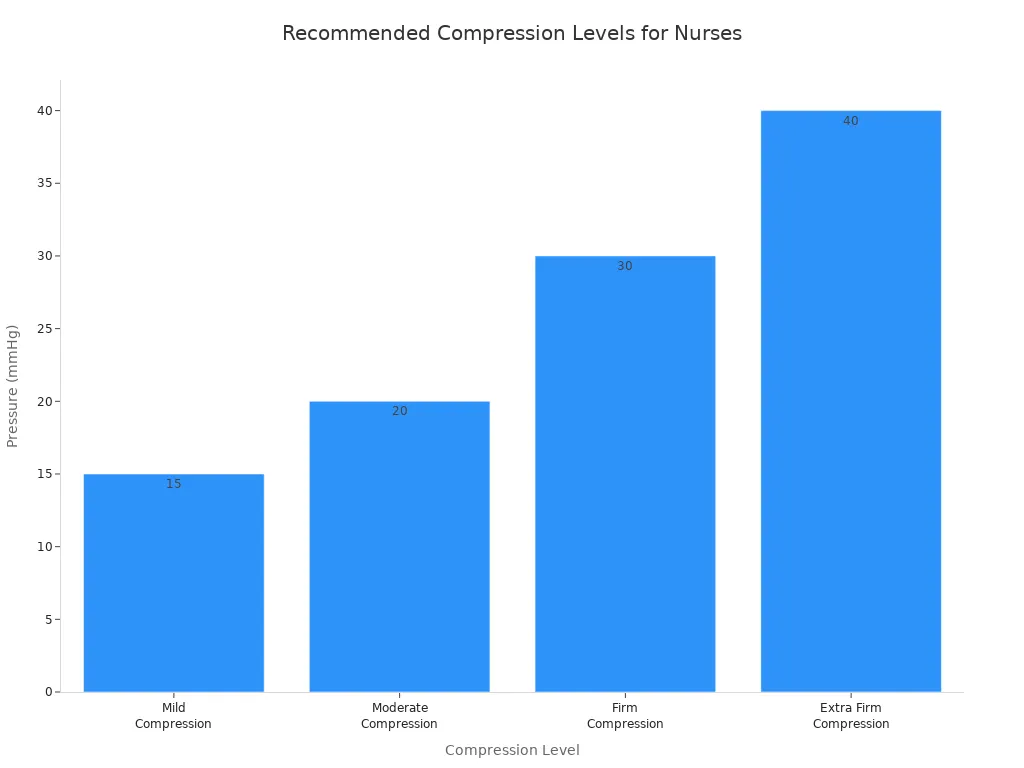
Picking the right compression level is important for comfort and health. Not all compression socks are made the same way. You need to choose the right pressure for your needs. Medical rules suggest different levels for different problems. Look at the table below to find what fits your day:
Compression Level | Pressure (mmHg) | Use Case |
|---|---|---|
Mild Compression | 15-20 | Alleviates tired legs and minor swelling; suitable for prolonged sitting/standing. |
Moderate Compression | 20-30 | Treats moderate swelling and varicose veins; prevents DVT during travel/post-surgery. |
Firm Compression | 30-40 | Manages severe conditions like pronounced varicose veins and lymphedema. |
Extra Firm Compression | 40-50 | Reserved for serious conditions such as severe lymphedema and chronic venous insufficiency. |
Start with mild compression if you want to stop tired legs or small swelling. Moderate compression is good if you already have varicose veins or need more support for long shifts. Firm compression is for serious problems and you should ask a doctor first. Always pick the level that matches what you need. This helps you get the best results from your compression socks.
Tip: If you have never worn compression socks, mild or moderate levels are usually the easiest for nurses to wear every day.
The right fit and material help your socks work well and feel good. Good compression socks should feel snug but not too tight. If your socks leave deep marks or hurt, you need a new size or style.
Measure your legs in the morning before they swell.
Use a tape measure to check your ankle and calf.
Pick a size that matches your measurements, not just your shoe size.
Your socks should stay up all day without slipping or bunching.
A good fit keeps your socks working and feeling nice. You will feel less pain and have more energy during your shifts.
You stand for hours, so your socks need to keep your feet dry and cool. Pick compression socks made from fabrics like nylon or spandex that pull sweat away. Some socks have mesh panels for more airflow. These things help stop sweaty feet and skin problems.
Pick socks with strong heels and toes so they last longer.
Breathable materials keep your feet fresh and healthy.
Moisture-wicking fabrics help you avoid blisters and pain.
Buying compression socks with the right fit and fabric gives you better support and comfort every day.
When you pick the right pair, you protect your health and make each shift easier. Nurses who wear good compression socks have healthier legs and more energy at work.
You want to get the most out of your compression socks. Timing matters. You should put them on before your shift starts. This helps stop swelling before it begins. Wear them during your entire shift to keep your legs feeling strong and supported. If you have a long break or need extra support, keep them on after your shift for a little while. This can help with better recovery and less soreness.
Put on your socks before your feet start to swell.
Wear them during long shifts to boost circulation and comfort.
Use graduated compression socks to help blood flow back to your heart.
Choose the right pressure level for your comfort and needs.
Tip: If you work a double shift or have a busy week, wearing your socks after work can speed up recovery and keep your legs healthy.
Taking care of your nursing socks keeps them working well. Clean socks last longer and feel better on your skin. You should always wash your socks in cool or cold water. This keeps the fabric strong and stretchy. Hand wash with mild soap to remove dirt and oils. If you use a washing machine, place them in a mesh bag for extra protection.
Wash your socks after each use or every 3-5 wears to keep them fresh.
Hang your socks to air dry. Avoid the dryer to protect their stretch.
Store your socks flat in a cool, dry place. This keeps their shape and support.
Replace your socks every 3-6 months for the best pressure and health benefits.
Note: Good care means your socks will always give you the support you need. Clean, well-kept socks help you stay focused on your patients, not your feet.
Nurses who follow these tips enjoy more comfort and better recovery after every shift. Make these habits part of your routine for long-lasting support and better health.
You may think compression socks feel tight or look boring. That is not true anymore. Modern designs focus on comfort and style, so you can wear them all day without problems. Many brands now offer features that make your socks feel great and look good.
SB Sox gives you many colors and patterns. You can show your personality while you get support for your legs.
Mojo Compression Elite Performance Socks have a cushioned footbed and seamless toe. Your feet stay comfortable, even during long nursing shifts.
Sockwell Circulator Compression Socks mix style and function. They use moderate compression and seamless toe closure for a smooth fit.
CompressionZ Compression Socks use moisture-wicking fabric. Your feet stay dry and fresh, even when you work hard.
You do not have to choose between comfort and health. Modern compression socks help nurses feel good and look professional.
If you worry about comfort, you can find socks with soft materials and smart designs. You will not feel pinching or itching. You can focus on your nursing job, not your feet.
Today’s compression socks use advanced technology. You get socks that fit well and last long. Seamless toes stop rubbing. Cushioned soles protect your feet. Breathable fabrics keep you cool. You can pick socks that match your scrubs or show your style. You do not have to settle for plain or uncomfortable socks.
Some people say compression socks do not help your health. That is a myth. Medical studies show real benefits for nurses who wear them. You get more than just comfort. You protect your legs and improve your performance at work.
Wearing compression stockings during exercise can boost your performance. Some studies show better muscle function.
You may feel less muscle soreness when you recover after a long shift.
Calf compression socks help your balance. They improve sensory feedback and make your steps steadier.
These socks can increase spinal cord excitability during walking. You may move better and feel stronger.
Nurses who use compression socks see real changes in their health. You get less pain, better balance, and more energy.
If you want to stay active and protect your legs, compression socks are a smart choice. You do not have to guess. Science supports their benefits for nursing professionals.
Peer-reviewed studies prove that compression socks work. You get better blood flow, less swelling, and faster recovery. You can trust these socks to help you feel your best during every shift.
Benefit | How It Helps Nurses |
|---|---|
Improved performance | You stay active and alert |
Less muscle soreness | You recover faster |
Better balance | You move safely and confidently |
Enhanced comfort | You feel good all day |
You deserve socks that support your health and your career. Choose compression socks and see the difference for yourself.
You spend hours on your feet. Your legs and feet need care to keep you moving. Simple stretches can make a big difference in how you feel during and after your shift. You can do ankle rolls while sitting at your station. Stand up and try calf raises when you get a break. These quick exercises boost blood flow and help prevent stiffness.
Tip: Set a reminder on your phone to stretch every few hours. You will notice less soreness and more energy.
You do not need a gym or special equipment. You can stretch in the break room or even at your desk. Regular movement keeps your muscles strong and helps you avoid injuries.
Try these easy exercises during your shift:
Exercise | How to Do It | Benefit |
|---|---|---|
Ankle Rolls | Rotate each ankle 10 times | Improves flexibility |
Calf Raises | Lift heels, hold, lower | Strengthens calves |
Toe Touches | Bend forward, touch toes | Stretches hamstrings |
Foot Pumps | Flex and point toes | Boosts circulation |
You can finish these exercises in less than five minutes. Make them part of your routine to keep your legs and feet feeling great.
Your shoes matter as much as your socks. Supportive shoes protect your feet from aches and pains. You should choose shoes with cushioned soles and good arch support. Slip-resistant soles help you stay safe on busy floors. Breathable materials keep your feet dry and comfortable.
Nurses who wear supportive shoes report less foot pain and fewer injuries.
You should replace your shoes every six months or when they show signs of wear. Try on new shoes at the end of the day when your feet are slightly swollen. This helps you find the best fit for your nursing shifts.
Look for these features in your next pair:
Cushioned insoles
Firm arch support
Wide toe box
Slip-resistant soles
Breathable fabric
You deserve shoes that help you stay active and comfortable all day.
You need time to recover after a long shift. Rest and recovery keep your legs and feet healthy. Elevate your feet when you get home. Soak them in warm Epsom saltwater to reduce swelling. Check your feet daily for skin issues. Apply lotion to keep your skin soft and prevent cracks.
You can use compression socks to improve circulation and prevent leg fatigue. This simple step supports your health and helps you feel better after work.
Here are the best rest and recovery practices for nurses:
Perform simple stretches like ankle rolls or calf raises during breaks.
Elevate and soak feet in warm Epsom saltwater after shifts to reduce swelling.
Use compression socks to improve circulation and prevent leg fatigue.
Check feet daily for skin issues and apply lotion regularly.
Elevate your feet above heart level for at least 15 minutes after your shift. Use a pillow or cushion to prop up your legs. This helps reduce swelling and improves blood flow. You can also massage your feet gently to relax your muscles.
Make rest and recovery a priority. You will feel stronger and ready for your next shift.
Compression socks are a smart choice for nurses. They help your blood move better. You feel less tired and your legs get stronger. Experts say compression socks stop swelling and pain. They also help with vein problems. If you wear them often, your veins stay healthy. You feel more comfortable at work.
Recommendation Type | Evidence Grade | Description |
|---|---|---|
Medical Compression Stockings | 1A, 1B, 1C, 2B, 2C | Good proof shows they help with vein symptoms and stop swelling. |
You notice less swelling and heaviness.
You can stay active and pay attention.
You keep your legs healthy for a long time.
Pick the right socks and take care of your legs. You should feel good and have energy every day.
You should wear compression socks for your entire shift. Put them on before work and keep them on until you finish. This gives your legs the best support and helps prevent swelling.
Yes! Compression socks improve blood flow and reduce pressure in your veins. You lower your risk of varicose veins and feel less pain. Nurses see real results when they wear them regularly.
Modern compression socks use soft, stretchy fabrics. You get a snug fit without pain. If your socks feel too tight or leave deep marks, try a different size or compression level.
Tip: Choose socks with seamless toes and cushioned soles for extra comfort.
Most nurses start with mild (15-20 mmHg) or moderate (20-30 mmHg) compression. You get enough support for long shifts. If you have severe swelling or vein issues, ask your doctor before using firm compression.
Wash your socks in cold water with mild soap. Air dry them to keep their stretch. Store them flat in a cool place. Good care helps your socks last longer and keeps your legs healthy.
Yes! Compression socks work with most nursing shoes. Pick shoes with cushioned insoles and good arch support. You get the best comfort and protection for your feet.
Supportive shoes and compression socks make a powerful team for your health.
Compression socks are safe for daily wear. You protect your legs and boost your energy every day. If you have circulation problems, talk to your doctor before starting.
Nurses who wear compression socks daily see less swelling and pain.