Foshan Mingjun Textile Company Ltd.

Views: 0 Author: Site Editor Publish Time: 2025-08-07 Origin: Site
If you have eczema on your feet, you need soft socks. The socks should not have rough seams. They should use natural fibers. These things help calm your skin. They keep your feet dry. They lower your chance of irritation or allergies. Studies show merino wool and organic cotton are good for sensitive skin. Synthetic fibers like polyester can cause problems. Do not wear socks with harsh dyes or chemicals. Choose hypoallergenic, breathable, and well-fitting socks for eczema on feet.
Pick socks made from soft, natural fibers like cotton, bamboo, or superfine merino wool. These help keep your feet comfy and dry.
Find seamless or flat-seam socks. This helps stop rubbing and irritation on eczema skin.
Choose socks that wick away moisture and let your feet breathe. This keeps sweat away and lowers flare-ups.
Stay away from socks with synthetic fibers, harsh dyes, or chemicals. These can make eczema worse.
Make sure your socks fit well. They should not be too tight or too loose. This helps stop pressure, rubbing, and skin damage.
Pick socks with gentle cuffs. They should stay up but not squeeze or leave marks on your ankles.
Wash new socks before you wear them. Use mild, fragrance-free detergent to get rid of irritants.
Change out old socks often and store them the right way. This keeps your feet healthy and comfy.

When you buy socks for eczema, the material is very important. The right fabric can help your skin feel better and more comfortable. Let’s see which materials are best and which ones you should not use.
Natural fibers are soft and gentle on your skin. They let your feet breathe and help keep them dry. Here are some of the best natural fibers for socks:
Cotton is a popular choice for people with eczema. It feels soft and soaks up sweat well. You can wash cotton socks in hot water. This helps get rid of skin flakes, creams, and things that cause allergies. If you choose organic cotton, you avoid pesticides and strong chemicals. Many eczema experts and the National Eczema Society say 100% cotton socks are best.
Bamboo socks feel smooth and soft. They help keep your feet cool and dry by moving sweat away from your skin. Some bamboo fabrics can fight germs naturally. This helps if your feet get itchy or sweaty. Eczema groups often say bamboo is a good choice after cotton.
Silk is smooth and gentle. It helps stop rubbing, which is good if your skin hurts or cracks. Silk also helps keep your feet at a nice temperature. Some silk socks made for eczema may help with symptoms, but results are not always the same.
You might think wool is scratchy, but superfine merino wool is not. The fibers are thin and bend easily, so they do not poke your skin. Studies show ultra-fine merino wool can help some people with eczema. Merino wool also keeps your feet dry by pulling sweat away.
Tip: Look for “superfine” or “ultra-fine” merino wool on the label. Regular wool can still bother your skin.
Here is a quick chart about these natural fibers:
| Natural Fiber | Why It’s Good for Eczema-Prone Feet |
|---|---|
| Cotton | Soft, soaks up sweat, easy to wash, hypoallergenic |
| Bamboo | Soft, keeps feet dry, controls temperature, sometimes fights germs |
| Merino Wool | Thin fibers, keeps feet dry, less irritation |
| Silk | Smooth, stops rubbing, keeps feet comfortable |
If your skin is very sensitive, pick hypoallergenic socks. Fabrics like organic cotton are great choices. It lets your skin breathe and holds moisture, which helps dry, cracked skin. Some socks mix TENCEL with zinc oxide. This helps fight germs and calm red skin. These socks do not use strong dyes or chemicals, so they are safe for eczema. Studies show TENCEL socks can help eczema and help you sleep better.
Do not use synthetic fabrics like polyester, Spandex, and nylon. These can trap heat and sweat, making your skin itch more. Polyester is known to cause allergies and rashes. Also, do not wear socks with strong dyes, latex, or chemicals like formaldehyde, parabens, and BPA. These can cause allergies and make eczema worse.
Chemicals to avoid in socks:
Formaldehyde
Parabens
BPA
Latex
Strong dyes
Picking the right material can really help your feet. Choose natural, hypoallergenic, and chemical-free socks to keep your skin healthy.
When you have eczema on your feet, even a small seam can feel huge. Raised stitching can rub against your skin and cause pain or itching. You want to avoid that at all costs. That’s why seamless socks make such a big difference. These socks remove the bumps and lumps that regular socks have. You get a smooth inside that feels soft every time you put them on.
Experts say that seamless clothing helps stop skin irritation from friction. They recommend sleepwear and socks with flat seams or covered seams. These designs keep rough stitching away from your eczema spots. Clinical studies show that socks with flat seams or seamless interiors lower the risk of irritation. This is very important for your feet, where rubbing happens all day. If you want to keep your skin calm, seamless socks are a smart choice.
Tip: Always check the inside of your socks before you buy them. Run your fingers along the toe and heel. If you feel a bump, try a different pair.
You want socks that feel gentle on skin. Scratchy or rough socks can make eczema worse. Softness matters, especially if your feet already hurt or feel dry. Look for socks made from natural fibers like cotton, bamboo, or silk. These materials feel smooth and cozy. They also help your feet breathe.
The thickness of your socks also matters. Thin socks may not protect your skin enough. Thick socks can get too hot and make you sweat. Try to find a pair that feels just right—not too thick, not too thin. Some brands make socks just for people with sensitive skin. These socks use special yarns and weaving methods to make sure every part feels soft.
Note: If you ever feel itchy or uncomfortable, switch to a softer pair. Your feet will thank you.
The cuff is the top part of your sock that holds it up. If it’s too tight, it can leave marks or even cut off your circulation. That’s not good for eczema. You want a cuff that stays up but does not squeeze your leg. Look for socks with gentle elastic. Some brands call these “comfort cuffs” or “non-binding tops.”
A good cuff will keep your socks in place without causing pressure. This helps you avoid red marks or sore spots around your ankles. If your feet or ankles swell, pick socks with extra stretch. You can also try socks made for people with diabetes. These often have soft cuffs and work well for sensitive skin.
Tip: After you take off your socks, check your legs. If you see deep lines or red marks, try a looser pair next time.
Finding socks that fit just right can make a big difference when you have eczema on your feet. You want socks that feel comfortable all day. If your socks are too tight or too loose, your skin can get worse. Let’s look at what you need to know about sizing, snugness, and caring for sensitive areas.
You might think any sock in your size will work, but that’s not always true. Socks that are too tight can squeeze your feet. This pressure can cut off blood flow and leave painful marks. When your skin already feels sore from eczema, tight socks can make things much worse. You may notice swelling, numbness, or even more itching. On the other hand, socks that are too loose can bunch up inside your shoes. This extra fabric rubs against your skin and causes blisters or calluses. For someone with eczema, even a small blister can turn into a big problem.
Tip: Always check the size chart before you buy new socks. Try them on at home and walk around. If they slip down or feel tight, try a different size.
You want your socks to stay in place, but you don’t want them to squeeze. A good sock hugs your foot gently. It should match the shape of your heel and arch. If your socks move around, your skin will rub against the fabric. This friction can cause irritation and trigger eczema flare-ups. Socks that are too tight can also press on nerves and tendons, making your feet feel even more sensitive.
Here’s what to look for:
Socks that fit close to your foot without pinching.
No extra fabric bunching up at the toes or heel.
Cuffs that hold the sock up but don’t leave deep lines on your skin.
If you notice red marks or feel sore after wearing socks, they might be too tight. If your socks slide down or twist inside your shoes, they’re probably too loose.
Eczema can make some spots on your feet extra tender. Swelling is also common, especially after a long day. You need socks that can handle these changes. Look for socks with gentle, stretchy fabric. Avoid socks with tight elastic bands. These can dig into your skin and make swelling worse. Some socks use special cuffs that stretch more and don’t squeeze. This helps if your ankles or feet swell during the day.
Choose socks made from soft, hypoallergenic materials like organic cotton or bamboo.
Pick seamless socks to avoid rubbing on sore spots.
Make sure the socks have a gentle fit so they don’t press on sensitive areas.
Note: If your feet swell often, you might want to keep a few different sizes of socks at home. That way, you always have a pair that feels comfortable.
Getting the right fit helps protect your skin and keeps your feet feeling good. When you find socks that fit well, you’ll notice less irritation and fewer eczema flare-ups.
Keeping your feet dry is one of the best ways to manage eczema. Wet or sweaty feet can make your skin itch and cause flare-ups. The right socks help you control moisture and keep your skin calm.
You want socks that pull sweat away from your skin. This is called having moisture-wicking properties. When socks move sweat to the outside, your feet stay dry. Dry skin means less itching and fewer problems with eczema.
The American Academy of Dermatology says you should wear moisture-wicking socks if you have dyshidrotic eczema. These socks help stop sweat from building up. Less sweat means less irritation. Merino wool and bamboo are two top choices. Both have strong moisture-wicking properties. They keep your feet dry and help prevent flare-ups.
Tip: Always check the label for "moisture-wicking" when you shop for socks. This small detail can make a big difference for your skin.
Socks need to let air flow around your feet. When socks are breathable, your skin feels cooler and less sweaty. This helps stop eczema from getting worse. Merino wool and bamboo both let your feet breathe. They do not trap heat or moisture. You can wear these socks all day and still feel comfortable.
A small study found that merino wool caused less irritation than cotton in babies with sensitive skin. This shows how important breathable socks are for people with eczema.
Sweat can make eczema worse. If your feet get hot or sweaty, you need socks that help manage this. Merino wool and bamboo both fight sweat in different ways:
Merino wool is soft, moisture-wicking, and helps control temperature. It keeps your feet dry and cool.
Bamboo is soft, moisture-wicking, and naturally fights germs. It helps stop skin infections and keeps your feet fresh.
Both materials help manage sweat, which is key for eczema care.
Here’s a quick table to compare:
| Material | Moisture-Wicking | Breathable | Antimicrobial | Good for Eczema? |
|---|---|---|---|---|
| Merino Wool | Yes | Yes | Yes | Yes |
| Bamboo | Yes | Yes | Yes | Yes |
If you pick socks made from merino wool or bamboo, you give your feet the best chance to stay dry and healthy.
If you have eczema on your feet, you must avoid things that make it worse. Socks can hide things that bother your skin. Dyes and chemicals in socks can cause itching or redness. Sometimes, they even cause a flare-up. Let’s see how to keep your socks as irritant-free as possible.
Many socks use dyes to look bright or dark. Some dyes can make eczema worse. You might not see the problem, but your skin will feel it. The most common dyes that cause trouble are azo dyes, disperse dyes, and sulphur dyes. Disperse blue 106 and 124 are known to cause skin problems.
Here’s a table to help you spot the main dye problems:
| Dye Type | Where You Find It | Allergy Risk |
|---|---|---|
| Azo dyes | Printing inks, pigments | High; not used much now |
| Disperse dyes | Polyester, acrylic socks | Common allergen (blue 106, 124) |
| Sulphur dyes | Cotton, black socks | Can leak out and cause eczema |
If you want to be safe, pick undyed socks or ones marked “dye-free.” Natural-colored socks are less likely to bother your skin.
Tip: White, cream, or light gray socks usually have fewer dyes. These colors are safer for sensitive feet.
It’s not just dyes that can hurt your skin. Many socks have chemicals left from making them. These can include:
Parabens (used to keep socks fresh)
Isothiazolinones (another kind of preservative)
Formaldehyde (keeps socks from wrinkling)
BPA (sometimes in fake fibers)
Latex (in stretchy bands)
Nickel (in snaps or decorations)
Even laundry soap and softeners can leave stuff behind that bothers eczema. Always wash new socks before you wear them. Use a gentle, no-scent detergent.
Note: If you see “hypoallergenic” or “chemical-free” on the label, that’s good. Still, check the list of materials for hidden irritants.
You do not have to guess if socks are safe. Many brands use certifications to show their socks are free from bad chemicals and dyes. Look for these labels when you shop:
OEKO-TEX: Tests for bad stuff in dyes and finishes.
bluesign: Checks chemical safety in how socks are made.
GOTS (Global Organic Textile Standard): Says fibers are organic and no bad chemicals are used.
Responsible Wool Standard (RWS): Makes sure wool is safe and not treated with toxins.
Fair Trade Certified: Supports safe and fair ways to make socks.
USDA Organic: Means the materials are grown without bad chemicals.
Certified Vegan and PETA Cruelty-Free: Show socks do not use animal products or harsh chemicals.
Some brands use special chemical-free fabric treatments or only use undyed, natural fibers. These choices help keep your feet safe and comfy.
Tip: Always look for these certifications on the package or website. They help you find socks that are gentle on your skin.
By picking dye-free, chemical-free socks with trusted certifications, you help your feet stay calm and healthy. Your skin will be happy!
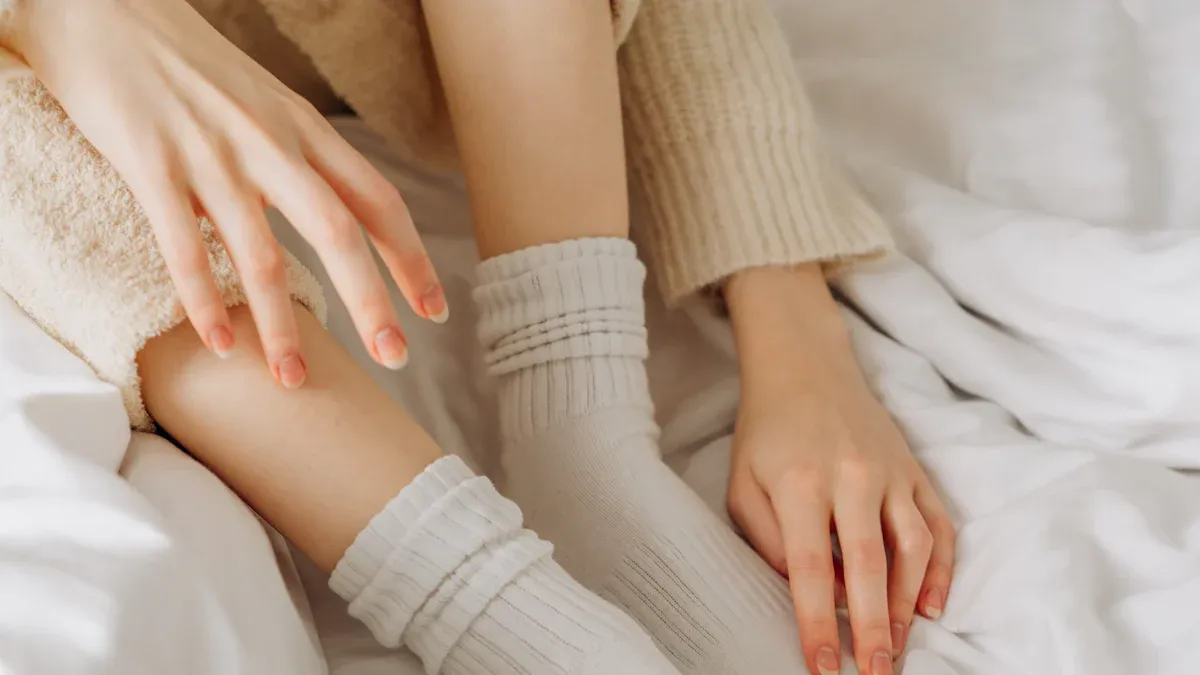
When you pick the best socks for eczema, think about comfort and skin health. The right socks help your feet feel better every day. Here are the most important things to look for:
Natural Fibers: Pick socks made from 100% organic cotton, merino wool, or bamboo. These feel soft and let your feet breathe. They also help keep sweat away. Many doctors say cotton socks are good because they let air in and stop sweating. This helps prevent irritation and infection.
Seamless or Flat Seams: Try to find socks with no seams or flat seams at the toes. These socks do not rub or cause pain. They help stop flare-ups and keep your feet comfy.
Moisture-Wicking: Choose socks that move sweat away from your skin. Merino wool and bamboo are good at this. They keep your feet dry and cool, which is important for eczema.
Hypoallergenic and Dye-Free: Pick socks without dyes or harsh chemicals. Hypoallergenic socks lower your chance of allergies and skin problems.
Soft Texture and Proper Thickness: You want socks that feel gentle and have enough thickness to protect your feet. But they should not be so thick that you get too hot.
Good Fit: Make sure your socks fit well. They should not be too tight or too loose. A good fit stops pressure and rubbing.
Special Features: Some socks have a soft lining with aloe vera gel. This can help keep your feet soft. You can also wear cotton socks at night after putting on lotion. This helps your skin stay moist. This is called wet wrap therapy and helps with eczema.
Tip: After you use lotion or ointment, put on cotton socks before bed. This easy step keeps your skin moist and can help your feet feel better by morning.
Here’s a simple table to help you remember what to look for:
| Feature | Why It Matters for Eczema-Prone Feet |
|---|---|
| Natural fibers | Soft, breathable, less likely to irritate |
| Seamless design | Reduces friction and rubbing |
| Moisture-wicking | Keeps feet dry, prevents flare-ups |
| Hypoallergenic/dye-free | Lowers risk of allergic reactions |
| Soft texture | Feels gentle on sensitive skin |
| Proper fit | Prevents pressure and bunching |
You can find these features in many brands. Some brands make special socks for eczema. Brands like Q for Quinn, Cottonique, and Albero Natur use organic cotton and merino wool. They do not use harmful chemicals. There are no big studies for these brands, but they are often on eczema-friendly lists. They use certifications like Oeko-Tex to show their socks are safe.
Some socks can make eczema worse. You should stay away from things that might bother your skin or cause allergies. Here’s what you should not use:
Synthetic Fibers: Polyester, nylon, and Spandex trap heat and sweat. They can make your eczema worse.
Bulky Toe Seams: Thick seams rub your skin and cause pain. Always check for smooth seams.
Dyes and Artificial Coloring: Bright socks often use dyes that can cause allergies or eczema. Disperse dyes, like Disperse Blue, Orange, and Red, are common problems.
Harmful Chemicals: Some socks have chemicals like formaldehyde, parabens, BPA, and latex. These can cause allergies and make your skin feel worse.
Leather, Rubber, and Adhesives: These can have things like chromium salts, biocides, or resins. If you have sensitive skin, it is best to avoid them.
Here’s a table of common things in socks and shoes that can cause problems:
| Material Type | Common Irritants and Allergens |
|---|---|
| Leather | Chromium salts, formaldehyde, biocides (e.g., octylisothiazolinone) |
| Rubber | Mercaptobenzothiazole, zinc diethyldithiocarbamate, IPPD |
| Adhesives | P-tert-butylphenol formaldehyde resin, colophony |
| Dyes | Disperse Orange 3, Disperse Red 17, Disperse Blue |
Poor Fit: Socks that are too tight can leave marks and stop blood flow. Loose socks bunch up and rub your skin, causing blisters or pain.
Note: Always wash new socks before you wear them. Use a gentle, no-scent soap to get rid of any leftover chemicals.
If you pick natural, seamless, moisture-wicking, and hypoallergenic socks, your feet will have the best chance to heal. The best socks for eczema protect your skin, keep you comfy, and help you feel better every day. When you choose the right socks for eczema on feet, you can feel more comfortable and have fewer problems.
You want your feet to feel comfortable all day, especially if you deal with eczema. For daily wear, pick socks for eczema on feet that use soft, natural fibers like cotton, bamboo, or merino wool. These materials let your skin breathe and help keep sweat away. Seamless socks work best because they don’t rub or cause extra irritation. Look for socks with gentle cuffs that stay up but don’t squeeze your ankles. If you walk a lot or spend time on your feet, make sure your socks fit well and don’t bunch up. Change your socks if they get damp or sweaty. This simple step helps prevent flare-ups and keeps your skin calm.
Tip: Keep an extra pair of socks in your bag or locker. If your feet get wet or sweaty, you can switch to a fresh pair and stay comfortable.
Nighttime is a great time to help your skin heal. Many people use special socks for eczema on feet at night to lock in moisture and ointments. After you wash and moisturize your feet, you can try a method called wet wrap therapy. Here’s how it works:
Soak your feet in warm water and gently pat them dry.
Apply your eczema cream or ointment.
Put on a pair of damp cotton socks as the first layer.
Add a dry pair of socks over the wet ones to keep everything in place.
Wear these layers overnight or for several hours.
This method helps your skin soak up the medicine, keeps it moist, and stops you from scratching while you sleep. Studies show that wet wrap therapy can reduce itching and pain, and it helps your skin heal faster. Some people also use socks made from silk or other special fabrics for extra comfort at night.
Note: Always use clean socks for this therapy. If you have questions about wet wraps, ask your doctor or dermatologist.
Choosing socks for a child with eczema takes a little extra care. Kids have sensitive skin and move around a lot, so comfort and safety matter. Here’s what you should look for:
| Consideration | What to Look For |
|---|---|
| Material | Soft, breathable fabrics like cotton, bamboo, or silk blends. |
| Chemicals and Dyes | Socks should be free from harsh dyes and chemicals that can make eczema worse. |
| Seams | Seamless or soft seams help prevent rubbing and blisters. |
| Elastic Cuffs | Gentle cuffs keep socks in place without leaving marks on the skin. |
| Non-slip Soles | Grippy bottoms help prevent slipping, which protects sensitive feet. |
| Fit | Socks should fit well and not bunch up or slide down. |
Kids often need to change socks more than once a day, especially if their feet get sweaty. Let your child’s feet breathe when possible by giving them some sock-free time at home. If you use ointments or creams, you can use cotton socks to help keep the medicine on their skin and off the sheets.
Tip: Let your child help pick out their socks. When they like the way their socks feel, they’re more likely to wear them without a fuss.
Taking care of your socks is just as important as picking the right pair. If you want your socks to stay soft, hypoallergenic, and comfortable, you need to wash, replace, and store them the right way. Here’s how you can keep your socks—and your skin—in top shape.
You might think tossing your socks in the washer with everything else is fine. For eczema-prone feet, though, a little extra care goes a long way. Always use lukewarm or cold water. Hot water can shrink socks and damage the fibers, especially if you have merino wool or bamboo pairs. Pick a mild detergent or one made for wool. Harsh soaps can strip away natural oils and leave behind chemicals that bother your skin.
Hand washing works best for delicate socks. If you use a washing machine, put your socks in a mesh laundry bag. This helps prevent stretching and keeps them from rubbing against rougher clothes. Choose a gentle or delicate cycle. Skip the spin cycle if you can. Too much spinning can stretch out your socks and make them lose their shape.
After washing, don’t wring or twist your socks. Instead, press out extra water by rolling them in a towel. Lay them flat on a drying rack and reshape them while they’re still damp. Let them air dry in a cool, well-ventilated spot. Keep them away from direct sunlight or heaters. Heat can make fibers brittle and cause socks to shrink.
Tip: Always remove socks from the washer right away. This helps prevent odors and keeps them looking fresh.
Even the best socks wear out over time. If you notice holes, thinning fabric, or stretched-out cuffs, it’s time for a new pair. Worn socks can bunch up, rub your skin, or lose their softness. These problems can trigger eczema flare-ups. Try to check your socks every few months. If you see signs of wear, replace them before they cause trouble.
A good rule is to invest in quality socks from the start. High-quality socks last longer and feel better on your skin. You might spend a little more, but your feet will thank you.
How you store your socks matters, too. Always pair your socks together so you don’t lose one. Give them enough space in your drawer so they can breathe. Crowded socks can wrinkle and wear out faster. Keep your socks away from direct sunlight to prevent fading and fiber damage.
You can sort your socks by use—everyday, sports, or nighttime. This helps you grab the right pair when you need it. If you have special socks for eczema, keep them in a separate spot so you always know where they are.
Note: A little care goes a long way. When you wash, replace, and store your socks properly, you help your feet stay healthy and comfortable every day.
When you pick socks for eczema, go for natural fibers like cotton or merino wool. Look for seamless, moisture-wicking, and dye-free options. These choices help keep your feet cool, dry, and less itchy. Try different socks and see what feels best for your skin. If your eczema sticks around or gets worse, talk to your doctor. The right socks and good care can make a big difference for your feet!
You should pick socks made from soft, natural fibers like cotton, bamboo, or merino wool. Look for seamless, dye-free, and hypoallergenic options. These socks help keep your skin calm and comfortable.
Yes, you can wear superfine or ultra-fine merino wool socks. They feel soft and do not itch like regular wool. Always check the label for “merino” and avoid thick, scratchy wool.
Change your socks at least once a day. If your feet get sweaty or wet, switch to a fresh pair right away. Dry socks help prevent irritation and keep your skin healthy.
Compression socks can be too tight and may cause irritation. If you need them, choose ones made for sensitive skin. Make sure they fit well and do not leave deep marks on your legs.
Yes! Always wash new socks before you wear them. This removes any leftover chemicals or dyes from the factory. Use a gentle, fragrance-free detergent.
You can use ointment or cream before putting on socks. This helps lock in moisture and protects your skin. Cotton socks work best for this. Try it at night for extra comfort.
If your socks still bother your skin, try a different material or brand. Look for socks with fewer seams and no dyes. If itching continues, talk to your doctor for more help.
Yes, some brands make socks just for kids with eczema. These socks use soft, natural fibers and have gentle seams. Look for socks labeled “eczema-friendly” or “hypoallergenic” for children.


