Foshan Mingjun Textile Company Ltd.

Views: 0 Author: Site Editor Publish Time: 2025-08-07 Origin: Site
When you shop for socks for toddler, focus on a few key things. You want socks that fit well, stay put, and feel soft. Look for non-slip grips to help prevent slips, especially on wood or tile floors. Pick breathable materials to keep little feet cool and dry. Durable socks last longer and save you money.
Tip: The right socks can stop blisters, irritation, and even accidents. A little attention now means happy, safe feet later!
Pick non-slip socks with strong grips. This helps keep toddlers safe on slick floors. Measure your toddler’s feet often. Choose socks that fit well to stop discomfort and falls. Choose soft and airy materials like organic cotton or bamboo. These help keep feet cool and dry. Find socks with strong heels and toes. This makes them last longer during play. Pick seamless socks or ones with soft cuffs. This stops irritation and makes them more comfy. Match socks to the weather. Use warm socks in winter and light ones in summer. Wash socks gently and let them air dry. This helps them last longer and keep their shape. Use a checklist when you shop. This helps you find socks that are safe, comfy, and stylish for your toddler.
You know how active toddlers can be. They love to run, climb, and explore every corner of your home. Their balance and coordination are still developing, so they fall easily—especially on smooth floors. Regular socks with smooth soles can make things worse by turning hardwood or tile into a slippery slide. Non-slip socks, also called gripper socks, add extra traction. These socks help your child stay steady on their feet and avoid painful tumbles. Keeping your toddler safe as they learn to walk and play builds their confidence and supports healthy movement.
Here are some common hazards you might find at home:
Toddlers slip and fall often on hard, slick surfaces like tile and wood.
Smooth-soled socks increase the risk of slipping.
Non-slip socks provide better traction and stability.
Slips near cleaning products or kitchen areas can lead to more serious accidents.
Storing cleaning products out of reach and cleaning up spills right away helps reduce risks.
Tip: Use non-slip socks in rooms with hard floors to help prevent falls and keep your toddler safe.
The grip on the bottom of the sock makes all the difference. These grips create friction between the sock and the floor, so your child can walk, run, and play without sliding.
You will find two main types of grips:
Rubberized grips: These feel soft and flexible. They stick well to most surfaces and last through many washes.
Silicone grips: These offer strong traction and hold up well over time. They are gentle on sensitive skin.
Both types work well, but you want to check that the grips cover enough of the sole and do not peel off easily.
Look for these signs of good grips:
Evenly spaced patterns that cover the main pressure points of the foot.
Grips that stay attached after washing.
No rough edges or loose pieces that could irritate skin.
If you notice grips peeling or falling off, it is time for new socks.
Non-slip socks are most important when your toddler plays indoors on hard floors. You might not need them as much on carpet, but they are a must for tile, laminate, or hardwood.
Indoor playtime
Daycare or preschool
Visiting friends or family with hard floors
Trips to indoor playgrounds
Daycares and playrooms often have slick floors. Non-slip socks help your child move freely and safely. You can pack an extra pair in your child’s bag for daycare or playdates.
When you shop for socks for toddler, check for safety certifications. The OEKO-TEX Standard 100 label means the socks have passed strict tests for harmful chemicals. GOTS certification also ensures the socks are made from organic fibers and are free from toxins like BPA, parabens, and formaldehyde.
Look for labels like OEKO-TEX or GOTS on the packaging.
Choose socks made from organic cotton or ethical wool.
Avoid socks with antibacterial treatments or synthetic dyes.
Make sure the socks feel soft and do not irritate your child’s skin.
Note: Certified socks protect your child’s sensitive skin and help you avoid hidden chemical risks.
Getting the right fit starts with measuring your toddler’s feet. Don’t just guess or go by age. Every child grows at their own pace, and feet can change quickly. Here’s a simple way to measure at home:
Gather a blank piece of paper, a pen, and a ruler or tape measure.
Place the paper on a hard floor against a wall.
Have your toddler stand on the paper with their heel touching the wall and weight evenly spread.
Trace around each foot with the pen held straight up.
Mark the tip of the longest toe and the back of the heel.
Measure the distance between these marks for foot length.
Measure across the widest part for foot width.
Repeat for both feet and use the larger measurement.
Add about half a centimeter to one centimeter for comfort and growth.
Tip: Measure your child’s feet in the afternoon or evening. Feet swell a bit during the day, so you’ll get a more accurate size.
Once you have the measurements, check the size chart for socks for toddler. Don’t rely on age ranges. Many parents make the mistake of picking socks based on age, but this often leads to socks that are too tight or too loose. Always match the actual foot size to the brand’s chart. If your child wears braces or has unique foot shapes, avoid sizing up too much. Oversized socks can bunch up, slip off, or cause the heel to sit in the wrong spot. This can lead to discomfort, skin irritation, or even tripping.
Common sizing mistakes include:
Picking socks by age, not foot size.
Buying bigger socks to fit over braces, which causes poor alignment.
Using generic socks that don’t match your child’s foot shape.
Check the fit every three months. Toddlers’ feet grow fast—sometimes up to nine shoe sizes by age three! Regular checks help you avoid socks that are too small or too big.
Stretchy cuffs make a big difference in comfort and fit. You want cuffs that hold the sock up but don’t squeeze your toddler’s legs. Good cuffs stretch easily and stay in place, even during active play. They shouldn’t leave red marks or cause discomfort. Some brands offer size guides to help you pick the right fit and avoid cuffs that are too tight.
Look for socks with soft, flexible cuffs.
Make sure the cuffs don’t dig into the skin.
The right cuffs move with your child and keep socks from slipping down.
Note: Socks that fit well and stay up help your toddler move freely and comfortably all day.
Getting the heel alignment right is one of the most important parts of finding socks that truly fit your toddler. When you slip a sock onto your child’s foot, check where the heel pocket sits. The heel pocket is the little curve or bulge you see on the back of most socks. It should line up with your toddler’s actual heel, not ride up the ankle or bunch under the foot.
Why does this matter? Socks that don’t line up at the heel can cause a lot of problems. If the heel pocket sits too high, the sock will slide down during play. If it sits too low, the fabric can bunch up under the foot. Both situations can lead to blisters, red marks, or even tripping. You want your toddler to move freely and safely, so heel alignment is key.
Here’s how you can check for good heel alignment every time you put on socks:
Lay the sock flat before putting it on your child’s foot. Find the heel pocket.
Slide the sock on so the heel pocket matches up with your child’s heel.
Smooth out any wrinkles along the sole and top of the foot.
Check the toes. The sock should not pull tightly or leave extra fabric at the tip.
Watch your toddler walk. If the sock twists or slips, the heel pocket may not be in the right spot.
Tip: If you notice the heel pocket creeping up the ankle or bunching under the foot, try a different size or brand. Every child’s feet are unique, and some brands fit better than others.
Poor heel alignment can also affect how long socks last. When the heel sits in the wrong place, the fabric stretches in odd ways. This can cause holes or thinning, especially if your toddler is active. Well-aligned socks cradle the foot and move with your child, so they last longer and feel better.
Some socks have colored or reinforced heels. These features make it easier to spot the heel pocket and line it up correctly. If your toddler is learning to dress themselves, these visual cues can help them put socks on the right way.
Remember to check heel alignment every time you buy new socks. Toddlers’ feet grow quickly, so what fit last month might not work today. A quick check can save you from discomfort and wasted money.
Note: Socks that fit well at the heel help your toddler stay comfortable, safe, and happy during every adventure.
Cotton is a classic choice for toddler socks. You probably love how soft and gentle it feels on your child’s skin. Cotton lets air flow, so your toddler’s feet stay cool and comfortable. It works well for everyday wear, especially if your child has sensitive skin. Cotton is also easy to wash and usually affordable.
However, cotton does have some downsides. It soaks up moisture and holds onto it. If your toddler sweats a lot or steps in water, cotton socks can get soggy and take a long time to dry. Wet socks can cause blisters or make your child’s feet feel cold. Cotton can also lose its shape after many washes.
Tip: Choose cotton socks for toddler if you want softness and breathability, but change them if they get wet.
Blended socks combine the best features of different fibers. You might see socks made with cotton and a bit of spandex, polyester, or nylon. These blends help socks last longer and fit better. Spandex gives socks stretch, so they stay snug and don’t slip down. Polyester and nylon add strength and help socks dry faster.
Here’s a quick look at what blends can offer:
Cotton + Spandex: Soft, stretchy, and holds shape.
Cotton + Polyester: Breathable, durable, and dries faster than pure cotton.
Wool + Nylon: Warm, strong, and resists wear.
Bamboo + Spandex: Silky soft, stretchy, and gentle on skin.
Blends are a smart pick if you want socks that handle lots of play and washing. They keep their shape and comfort, even after many wears.
Breathability matters a lot for active toddlers. You want socks that let air move in and out, so feet stay dry and fresh. Cotton, bamboo, and wool all offer good breathability. Bamboo feels extra soft and helps control odor, but it may not last as long as other materials. Wool, especially merino wool, keeps feet warm and dry, even if they get damp. Synthetic fibers like polyester and nylon wick away moisture and dry quickly, but they don’t breathe as well as natural fibers.
Here’s a table to help you compare:
| Material | Breathability | Moisture Control | Best For |
|---|---|---|---|
| Cotton | High | Absorbs moisture | Everyday, sensitive skin |
| Bamboo | High | Wicks moisture | Softness, odor control |
| Merino Wool | Excellent | Wicks moisture | Warmth, odor control, all year |
| Polyester/Nylon | Lower | Wicks moisture | Durability, quick drying |
Note: Look for socks with mesh zones or ventilation panels for even better breathability.
If your toddler’s feet sweat a lot, avoid socks made only from synthetic fibers. These can trap heat and cause odor. Always check the label and pick socks that match your child’s needs and the season.
If your toddler has sensitive skin, you know how tricky it can be to find socks that don’t cause itching or redness. Some kids even have eczema, which makes their skin extra delicate. The good news? You can make a big difference just by picking the right socks.
Start by looking for socks made from soft, natural fibers. Organic cotton, bamboo, and silk blends work best. These materials feel gentle against the skin and let air flow, so your child’s feet stay cool and dry. When socks breathe well, they help prevent sweat and moisture from building up. That’s important because dampness can trigger eczema or make irritation worse.
You should always check the label before you buy. Look for socks that say “organic cotton” or “bamboo.” If you see certifications like GOTS or OEKO-TEX, that’s even better. These labels mean the socks are free from harsh chemicals and dyes. Many regular socks use dyes or treatments that can bother sensitive skin. Choosing certified socks helps you avoid those hidden irritants.
Tip: Socks with seamless toes or minimal seams are a game-changer for sensitive feet. Seams can rub and cause red marks, especially around the toes. Seamless socks feel smoother and reduce the risk of irritation.
Synthetic fibers like polyester or nylon might seem soft at first, but they can trap heat and moisture. This can make your toddler’s skin itchy or sweaty. If your child has eczema, synthetic-only socks can make flare-ups worse. Stick with natural fibers as much as possible.
Here’s a quick checklist for choosing socks for sensitive skin:
Pick socks made from organic cotton, bamboo, or silk blends.
Avoid socks with bright dyes, antibacterial treatments, or strong fragrances.
Look for seamless or low-seam designs.
Choose socks with safety certifications like GOTS or OEKO-TEX.
Change socks often, especially after play or if they get damp.
If your toddler reacts to even the softest socks, try switching to a different brand or style. Some kids do better with plain socks that have no grips or fancy patterns. Grips and extra threads can sometimes cause itching or leave marks.
Note: Keeping your child’s feet dry and cool helps prevent irritation. Make sure shoes are breathable, too, and change socks if they get sweaty.
When you pay attention to these details, you help your toddler stay comfortable and happy. No more scratching, fussing, or red marks—just soft, healthy feet ready for play.
If your toddler hates putting on socks, seams might be the problem. Many kids, especially those with sensory processing issues, feel every bump and ridge. Seams can rub against toes and cause irritation or even meltdowns. Seamless socks solve this problem by removing those annoying lumps. You get a smooth, irritation-free experience for your child.
Seamless socks for toddler use soft, breathable fabrics like cotton or bamboo. These materials keep feet cool and dry, which helps prevent skin irritation. The tube-like design means no wrinkling or bunching, so your toddler stays comfortable all day. Non-binding tops also stop tightness and red marks around the ankles.
Here’s why seamless socks make a difference:
No seams to cause discomfort or sensory overload.
Super soft and moisture-wicking materials.
Form-fitting design that reduces bunching.
Non-binding tops for gentle support.
Easier dressing routines and fewer struggles.
Many parents notice fewer tears and tantrums when they switch to seamless socks. Your child may even start putting on their own socks without a fuss. If your toddler has autism, ADHD, or just hates the feel of regular socks, seamless options can make mornings much smoother.
Tip: Let your child pick their favorite colors or patterns. Fun choices can make wearing socks more enjoyable and help with independence.
You might see some socks for toddler that claim to offer arch support. At this age, your child’s foot arch is still developing. Most experts agree that you don’t need strong arch support in socks or shoes for toddlers. Instead, focus on socks that fit well and allow natural movement.
Socks with grips can help your toddler move safely on slippery floors. These grips give traction, so your child can run and play without slipping. Safe movement lets your toddler build muscle strength and improve balance. This active play supports healthy foot development and natural arch formation.
Encourage your child to walk, jump, and climb. These activities help strengthen foot muscles and promote a healthy arch. Choose socks that don’t restrict movement and let your toddler’s feet grow naturally.
Note: Avoid socks that feel stiff or tight around the arch. Flexibility is key for growing feet.
Nobody likes socks that leave deep marks on their legs. Toddlers feel this discomfort even more. Soft bands at the top of the sock keep socks in place without squeezing. Look for socks with gentle, stretchy cuffs. These bands hold up the sock but don’t dig into your child’s skin.
Soft bands also help if your toddler has sensitive skin or dislikes tight clothing. They prevent red marks and make socks easier to put on and take off. If your child pulls off their socks during the day, tight bands might be the reason.
Choose socks with wide, soft cuffs.
Make sure the band stretches easily.
Check for red marks after wearing socks.
Comfortable bands mean your toddler can play, run, and nap without fussing about their feet. Happy feet make for a happier day!
When you pick socks for your toddler, flexibility matters more than you might think. Flexible socks move with your child’s feet. They let your toddler run, jump, and climb without feeling squeezed or restricted. If socks feel stiff or tight, your child might not want to wear them at all. You want socks that stretch easily but still bounce back to their original shape.
Why does flexibility make such a difference? Toddlers are always on the go. Their feet bend and flex with every step. Socks that move with the foot help your child balance and explore. If socks are too tight, they can press on growing feet and even slow down natural development. On the other hand, socks that are too loose can bunch up and cause trips or blisters.
The best toddler socks use materials like cotton blends, bamboo, or merino wool mixed with a little spandex or elastane. These fibers give the sock a gentle stretch. The sock hugs the foot but never squeezes. This kind of fit supports healthy foot growth and keeps your child comfortable all day.
Tip: Gently pull on the sock before you buy. If it stretches and snaps back, it’s likely a good choice for active play.
Grip design also plays a role in flexibility. Some socks have grip patterns that cover the whole sole. These give steady traction for new walkers who need extra stability. Other socks use smaller grip patches. These allow a bit of sliding, which can help older toddlers practice more dynamic moves, like spinning or dancing. The right balance between grip and flexibility lets your child move naturally and safely.
Here’s what to look for in flexible socks:
Elasticity: The sock should stretch easily in all directions.
Snug fit: It should hug the foot without leaving marks.
No bunching: The sock stays smooth, even during active play.
Balanced grip: Grips should not make the sock stiff or heavy.
A flexible sock also helps keep grip elements in the right place. If the sock stretches well, the grips stay under the foot where they belong. This means better stability and fewer slips.
Note: Avoid socks that feel stiff or have thick, bulky grips. These can make it hard for your toddler to bend their feet or walk comfortably.
You want your toddler to feel free to move, play, and explore. Flexible socks support every step, jump, and tumble. They help your child build confidence and enjoy every adventure, indoors or out. When you choose socks that bend and stretch with your child, you set them up for happy, healthy feet and lots of fun.
Color can turn a simple pair of socks into your toddler’s favorite accessory. Bright shades like red, yellow, or blue often catch a child’s eye and make getting dressed more fun. You might notice your toddler reaching for socks in their favorite color again and again. Pastel colors work well for a softer look, especially for special occasions or family photos. Neutral tones like white, gray, or beige match almost anything, so you can grab a pair in a hurry and know it will work.
Tip: Let your toddler help pick out colors. This small choice can make them feel independent and excited to get dressed.
Patterns add personality to your toddler’s outfit. Stripes, polka dots, and animal prints are always popular. Some socks feature fun characters, cars, or flowers. These playful designs can help your child learn about colors and shapes. You might even use patterned socks to teach matching skills—ask your toddler to find two socks with the same pattern.
Patterned socks also make it easier to spot your child’s feet in a busy room or at daycare. If your toddler loves dinosaurs or unicorns, themed socks can turn a regular day into something special. Patterns can also hide stains or wear, so socks look newer for longer.
Stripes and polka dots for a classic look
Animal prints and cartoon characters for fun
Seasonal patterns like snowflakes or pumpkins for holidays
Note: Choose patterns that won’t fade quickly. High-quality dyes keep socks looking bright after many washes.
Matching socks to outfits can be both practical and stylish. Many parents use socks as accessories to coordinate and complement their toddler’s clothes. You might pick socks that match the main color of a shirt or dress, or choose a contrasting color for a bold look. For special events, matching socks to shoes or hats can pull the whole outfit together.
Safety and comfort should always come first. Pick socks made from quality materials that feel good on your child’s skin. Accessories like socks should never be too tight or itchy. When you shop, look for socks that coordinate well with most of your toddler’s wardrobe. This way, you get more use out of each pair.
Here’s a quick guide to matching socks with outfits and seasons:
| Season | Sock/Footwear Recommendations |
|---|---|
| Summer | Open sandals or breathable shoes ideal for warm weather |
| Winter | Closed-toe shoes or boots paired with thick, warm socks |
| Wet/Snow | Waterproof and insulated boots with thick, warm socks |
Lightweight socks work best for spring and summer.
Layer with warm socks, gloves, and scarves in winter.
Socks and booties add both warmth and style in cold or changing weather.
Tip: Keep a few pairs of neutral or solid-colored socks on hand. They match almost any outfit and save time on busy mornings.
When you pick socks for your toddler, think about the season. The right socks help your child stay comfortable, no matter the weather. Some socks keep little feet warm in winter. Others let feet breathe in the summer. Let’s break it down so you know what to look for all year long.
Cold weather means you need socks that keep your toddler’s toes toasty. Thick, cozy socks work best in fall and winter. Wool and thermal blends trap heat and wick away moisture. Merino wool is a favorite for many parents. It feels soft, never itchy, and keeps feet warm even if they get a little damp.
You might want to try double-layer socks for extra warmth. These have a soft inner layer and a thicker outer layer. They work well for outdoor play or chilly mornings. If your child wears boots, pick socks that rise above the boot top. This stops rubbing and keeps ankles warm.
Here are some tips for picking warm socks:
Choose socks made from wool, merino wool, or thick cotton blends.
Look for cushioned soles for extra comfort.
Pick longer socks for boots or snow days.
Avoid socks that feel tight or stiff.
Tip: Always check your toddler’s feet after playing outside. If socks feel damp, swap them for a dry pair to prevent chills.
Hot weather calls for socks that let air flow. Breathable socks keep your toddler’s feet cool and dry. Cotton, bamboo, and lightweight blends work best in spring and summer. These materials pull sweat away from the skin and dry quickly.
Mesh panels or ventilation zones add even more airflow. You can spot these by looking for tiny holes or a lighter weave on the top of the sock. These features help prevent sweaty feet and blisters.
Here’s what to look for in breathable socks:
Lightweight cotton or bamboo fabric
Mesh or ventilated panels
Low-cut or ankle styles for sandals or sneakers
Moisture-wicking labels
Note: Change socks often in hot weather. Fresh, dry socks help prevent odor and keep your toddler happy.
A quick table can help you choose the right socks for each season:
| Season | Best Sock Materials | Features to Look For |
|---|---|---|
| Winter | Merino wool, thick blends | Cushioned, long, thermal |
| Summer | Cotton, bamboo, mesh | Lightweight, breathable |
Picking the right socks for the season keeps your toddler’s feet comfy and healthy. You’ll see fewer complaints and more smiles, no matter the weather.
You want socks that last through every adventure. Toddlers run, jump, and crawl all day. This puts a lot of stress on their socks, especially at the heels and toes. Socks with reinforced heels and toes stand up to this challenge. These areas use extra stitching and thicker fabric. The tight knitting helps the socks resist holes and thinning. You get more wear out of each pair, and you don’t have to replace them as often.
Reinforced heels and toes add strength where your child needs it most.
Special weaving techniques make the fabric tougher.
Extra cushioning in these spots keeps little feet comfortable.
Reinforced heels and toes increase durability by strengthening the areas most prone to wear, reducing the frequency of replacement.
Some brands even add a deep heel pocket. This design keeps the sock in place and cuts down on friction. Less friction means fewer holes and a longer sock life.
Busy parents need socks that are easy to care for. Look for socks made from materials that hold up well in the wash. Blends with polyester, nylon, or a touch of elastane keep their shape and color. These fibers also dry quickly and resist shrinking.
You can spot durable socks by checking for seamless toes and strong elastic bands. Seamless designs prevent blisters and reduce wear. Elastic bands help the socks stay up without stretching out.
Here’s a quick checklist for easy-care socks:
Machine washable on gentle cycles
Colorfast and shrink-resistant
Quick-drying materials
No special washing instructions needed
A little extra care goes a long way. Turn socks inside out before washing to protect the fabric and any grips. Use cold water and a mild detergent. Skip the bleach and fabric softeners. These steps help keep socks looking and feeling new.
Toddlers get dirty fast. Their socks need frequent washing to stay clean and safe. But washing can wear out socks if you’re not careful. High heat and harsh chemicals break down fibers. This leads to holes, fading, and loss of stretch.
Follow these tips to make socks last longer:
Turn socks inside out before washing. This protects the outside and any grip material.
Use a gentle cycle with cold water and a mild, hypoallergenic detergent.
Avoid bleach and fabric softeners. These can damage the fabric and irritate skin.
Air dry socks flat whenever possible. Tumble dryers can shrink or deform socks, especially those with elastane or grips.
Tip: Wash toddler socks separately from adult laundry to prevent dye transfer and keep them extra clean.
Washing at low temperatures (around 30°C) helps preserve elasticity and color. Air drying keeps socks from shrinking or losing their shape. If you need to use a dryer, choose the lowest heat setting.
Socks made from synthetic blends like polyester or nylon resist wear better than pure cotton or wool. Proper construction, like reinforced stitching and seamless toes, also helps socks survive many wash cycles. With the right care, you can keep your toddler’s socks soft, strong, and ready for every day.
Buying socks for toddler can seem hard at first. A simple checklist makes it much easier. You want socks that keep your child safe and happy. Here’s a quick table to help you remember what is important:
| Feature | Importance for Toddler Socks |
|---|---|
| Lightweight | Makes moving around easy and comfortable |
| Stretchy | Helps socks fit well as feet grow |
| Gentle | Stops irritation on sensitive skin |
| Moisture-wicking | Keeps feet dry and helps stop discomfort or infection |
| Hypoallergenic | Lowers the chance of allergies or skin problems |
| Anti-bacterial | Helps keep feet clean |
| Irritant-free | Avoids things that could cause rashes or discomfort |
| Grippy pads | Gives better grip on slippery floors, making play safer |
Tip: Keep this table close when you shop. It helps you pick socks that meet all your toddler’s needs.
You want great socks for your child but need to watch your spending. Many parents try to balance cost and quality. Good materials like silicone or rubber grips cost more but last longer and keep kids safer. Natural fibers like organic cotton or merino wool feel nice and let feet breathe, so many families think they are worth the price.
See how different parents buy socks:
| Consumer Segment | Priorities | Buying Behavior and Preferences | Price Range (per pair) |
|---|---|---|---|
| Safety-Driven Parents (45–55%) | Want non-slip socks, strong fabric, and safety labels | Look for fair prices, care about safety and quality | Mid-range: $8–15 |
| Style-Conscious Shoppers (25–35%) | Care about looks, packaging, and brand style | Worry less about price, will pay more for style | Premium: $12–20 |
| Budget-Oriented Consumers (15–20%) | Want good socks for less money | Like buying multi-packs and bigger bundles | Value: $5–10 |
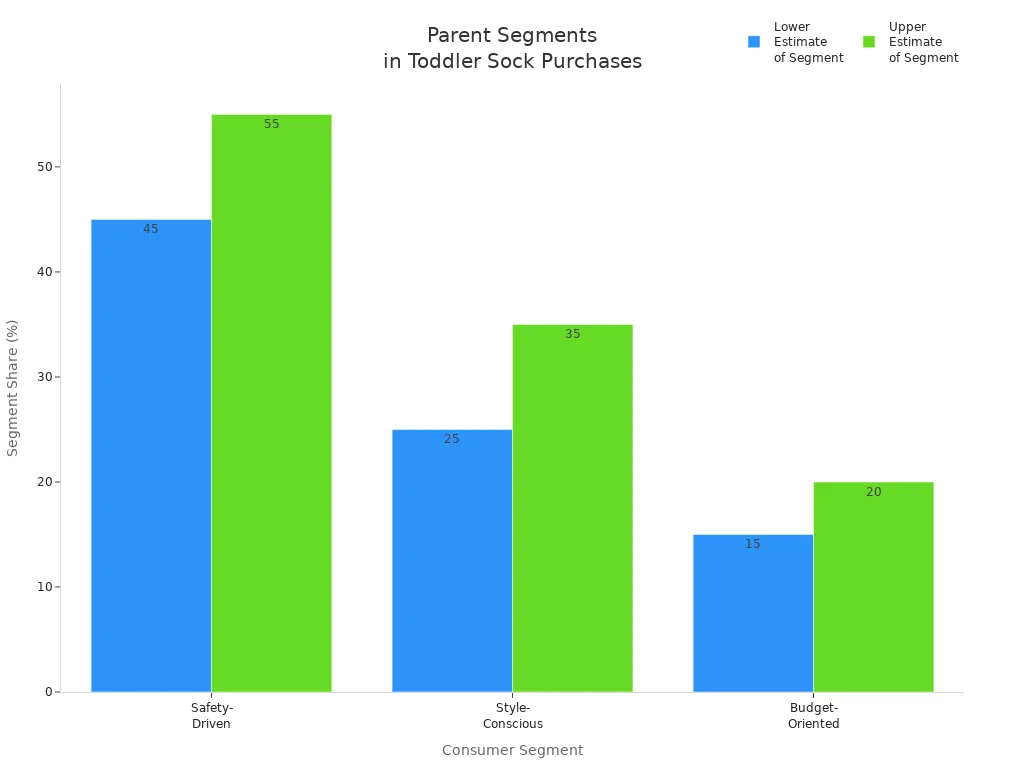
You can save money by buying socks in packs or bundles. If you want special features like organic fabric or seamless toes, you may pay more. Many parents buy basic socks for every day and a few nicer pairs for special times or sensitive skin.
Tip: Watch for sales and bundle deals from trusted brands. This helps you get good socks for toddler without spending too much.
Choosing socks for toddler gets easier when you know what matters most. Keep these tips in mind:
Pick non-slip socks for safety and better traction.
Make sure socks fit well and cradle the foot without bunching.
Go for soft, breathable fabrics that keep feet comfy all day.
Look for reinforced heels and toes for extra durability.
Use a checklist to shop with confidence and find the right style for every season.
When you focus on comfort, fit, and safety, you help your child play, explore, and have fun—one happy step at a time!
You should check socks every few months. If you see holes, stretched-out cuffs, or worn grips, it’s time for new ones. Toddlers grow fast, so socks that fit last month might feel tight now.
Yes, you can. Use a low heat setting to keep socks from shrinking or losing shape. Air drying works best for socks with grips or special materials.
Look for socks made from organic cotton, bamboo, or merino wool. These materials feel soft and rarely cause irritation. Always check for OEKO-TEX or GOTS labels to avoid harsh chemicals.
Pick socks with stretchy cuffs and the right size for your child’s feet. If socks still slip, try brands with deep heel pockets or extra elastic around the ankle.
Non-slip socks work best indoors. The grips can wear down quickly outside. For outdoor play, use shoes or booties over socks to protect your child’s feet.
Most families find that 7 to 10 pairs work well. This gives you enough for daily changes and a few extras for daycare or travel.
Let your child pick fun colors or patterns. Try seamless socks for extra comfort. Sometimes, switching to a softer material or a different brand helps.
No, they don’t. Choose socks that feel comfortable and fit well. Neutral colors go with most shoes, but bright socks can add a fun touch to any outfit.


