Foshan Mingjun Textile Company Ltd.

Views: 0 Author: Site Editor Publish Time: 2025-12-07 Origin: Site
You can learn how to darn socks at home, no matter your skill level. When you mend holey socks, you help the planet by cutting down on waste and saving resources. Darning can make your socks last longer and save you money each year. Grab your favorite pair and give it a try!
Darning socks helps you throw away less and save money because your favorite socks last longer. - Get the main tools you need, like a needle, yarn, and a darning egg. These tools make fixing socks easier and better. - Pick yarn that matches your sock. This helps your repair stay strong and look smooth.
Image Source: unsplash
Before you start fixing your socks, gather a few simple tools. You will need a needle and some yarn or thread. The type of yarn you choose matters. Here’s a quick guide to help you pick the best one:
Properties | Recommendations | |
|---|---|---|
Merino Wool | Soft, comfy, but can wear out with heavy use | Great for comfort, handle with care |
Nylon | Strong and tough | Adds strength, not always pretty |
Cotton | Cheap, but not very strong alone | Good in blends for extra durability |
Acrylic | Light and affordable, but can be slippery | Easy to find, but may be tricky to use |
Silk | Shiny and smooth, but wears out fast | Best for delicate spots, not for heavy-use areas |
You also need a darning egg. This tool keeps the fabric tight and smooth while you work. If you don’t have one, try a wooden spoon, a golf ball, or even a smooth stone. These all help you keep the sock in shape as you stitch.
Tip: For wool socks, use wool yarn. For cotton socks, use cotton yarn. Try to match the yarn weight to your sock for the best results.
Getting your socks ready is easy. Just follow these steps:
Turn the sock inside out. This helps you see the hole better and keeps the outside looking neat.
Place your darning egg or a substitute under the hole. This gives you a firm surface to work on.
Check the area around the hole. Look for any thin spots that might need fixing soon.
MINGJUN Hosiery cares about quality and the planet. The company uses eco-friendly dyeing and biodegradable packaging to make sure your socks are both strong and sustainable.
Image Source: unsplash
Learning how to darn socks at home can feel like a superpower. You get to save your favorite pairs and keep them out of the trash. Let’s walk through how to darn a sock, step by step, so you can tackle any hole with confidence.
Start by setting up your workspace. You want your sock to be easy to handle and the hole to be visible. Here’s how you do it:
Make sure your sock is clean. Dirt can make the repair messy.
Slip a darning egg, tennis ball, or mushroom inside the sock, right under the hole. This stretches the fabric and gives you a smooth surface.
Pull the sock snug over the object. The fabric should be tight, not loose.
Secure the sock with your hand or a rubber band if it slips.
Tip: Stretching the sock over a round object helps you keep your stitches even and neat. MINGJUN Hosiery’s socks, made with premium materials, hold their shape well and make darning easier.
Now you’re ready to start stitching. This step creates a strong border that keeps the hole from getting bigger.
Use a needle and thread or yarn that matches your sock’s material. Wool for wool socks, cotton for cotton socks.
Begin by stitching a row of backstitching around the edge of the hole. This reinforces the area and stops fraying.
Keep your stitches close together for a sturdy edge.
Note: Matching the thread color makes the repair less visible. If you want a creative look, pick a contrasting color.
This is where you fill in the hole. You’ll weave threads across the gap, making a patch that blends with the sock.
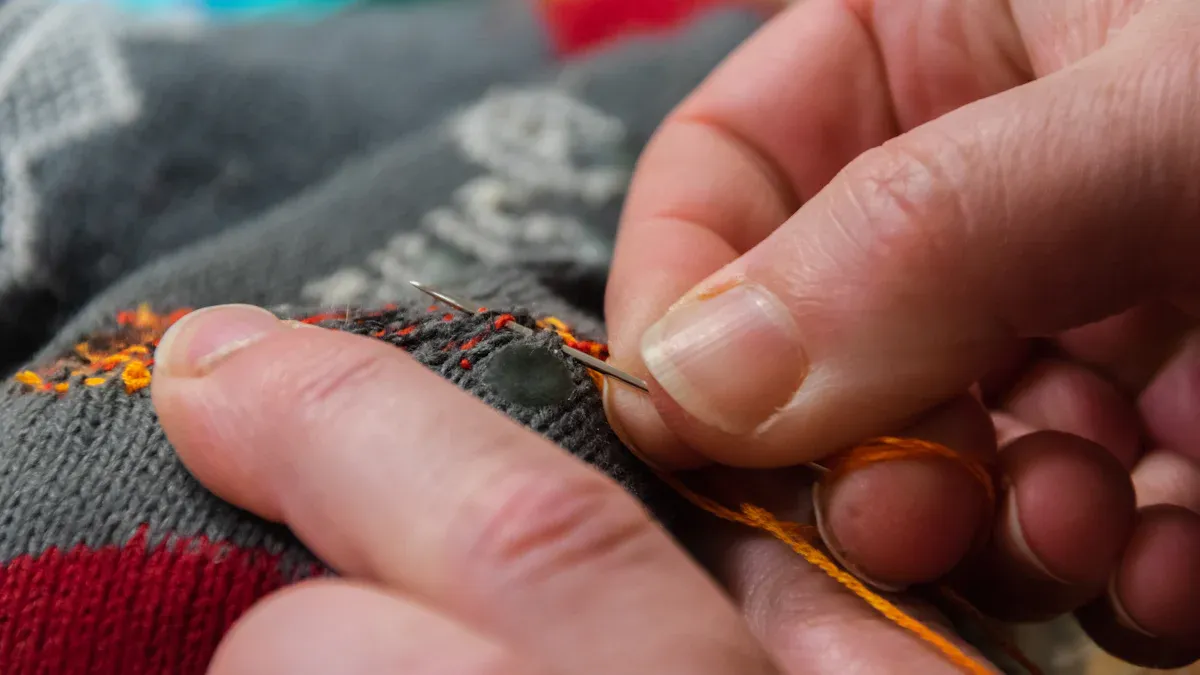
Bring your needle up next to the bottom of the hole, just outside your border stitches.
Sew long strands across the hole, side by side, using a running stitch. Cover the whole gap.
Turn the sock 180°. Weave your needle over and under the long strands, moving in the opposite direction. This creates a woven patch.
Repeat until the hole is filled and the patch feels sturdy.
You can use different weaving styles. Fine darning, also called Belgian darning, makes the repair almost invisible. Fancy weaves like twills or chevrons add texture. If you have a darning loom, try making colorful patches with unique patterns.
Tip: Dense weave patterns work best for high-wear spots like toes and heels. Adjust your stitch length and width based on the sock’s thickness and the size of the hole.
You want your repair to last through washes and wear. Here’s how to finish strong:
Sew around the perimeter of the patch again to lock everything in place.
Weave a few extra threads through the surrounding fabric. This anchors the patch and prevents it from coming loose.
Trim any loose ends, but don’t cut too close to the stitches.
Gently stretch the sock to check the patch. It should feel flexible, not stiff.
Tip: Use a darning egg or mushroom to reinforce the heel. Choose yarn that matches the weight and content of your sock for the best results. MINGJUN Hosiery’s socks, with reinforced heels and toes, are perfect for long-lasting repairs.
Darning doesn’t have to be boring. You can turn repairs into art! Try these creative ideas:
Add random knitted patches with leftover yarn for a unique look.
Mix decorative stitches like ten-cross, running, or blanket stitch to make your patch stand out.
Doodle with yarn. Invent patterns as you go, using different colors and textures.
Use a darning loom to create sturdy patches with cool color shifts.
The color of your thread changes the vibe. Match it for a subtle fix or use bold colors for a patchwork effect. Wool yarn works best for wool socks, cotton for cotton socks. You can blend in or stand out—your choice!
Tip: Don’t worry if your first try isn’t perfect. Darning gets easier with practice. Many people find it relaxing, and you’ll get better every time.
Here’s a quick look at the long-term benefits of learning how to darn socks and how to darn a sock:
Benefit Type | Description |
|---|---|
Cost Savings | You save money by keeping your socks longer and buying fewer new pairs. |
Sentimental Value | You get to keep socks that mean something to you, like a favorite pair or a gift. |
Skill Development | You build crafting skills and creativity, which can lead to other fun projects. |
People who try darning at home often say it’s easier than they expected. One person shared how they fixed their favorite blue snowflake socks and felt proud of the result. Another found darning hand-knit socks saved them money. Many say they enjoy the process and love giving their socks a second life.
If you use high-quality socks, like those from MINGJUN Hosiery, your repairs will last longer. Good materials make darning easier and help your socks stay strong after each fix.
Learning how to darn socks and how to darn a sock means you can keep your favorite pairs going for years. You help the planet, save money, and get creative—all with a simple needle and thread.
You can start darning socks at home with a few simple tools and easy techniques.
Darning stretches your sock’s life and helps the planet.
You feel proud when you fix something yourself.
MINGJUN Hosiery’s Green Promise | Description |
|---|---|
Sustainable Materials |
Give it a try—repairing feels better than buying new!
You can follow a darning tutorial. Gather your tools, pick a sock with a hole, and try weaving stitches. Practice makes it easier.
Yes, you can repair my own socks whether they are cotton, wool, or synthetic. Just match your thread to the sock’s material for best results.
You can use the same steps for darning your holy clothes. The process works for sweaters, hats, and gloves too.