Foshan Mingjun Textile Company Ltd.

Views: 0 Author: Site Editor Publish Time: 2025-06-22 Origin: Site

No, football socks and rugby socks are not the same. You will find that football socks support the fast-paced demands of football, while rugby socks must withstand the physical intensity of rugby. Both types have evolved with new materials, making them appear more alike. However, rugby socks offer specific features for rugby’s unique challenges. You should always consider your comfort, performance, and official requirements before choosing between rugby socks, football socks, or even performance running socks.
Football socks are lightweight and snug to support speed and keep shin guards in place, while rugby socks are thicker and more durable to protect against tackles and scrapes.
Both types use advanced materials like moisture-wicking fabrics and elastic support to keep feet dry, comfortable, and secure during play.
Rugby socks must meet strict rules for length and color and stay up during intense contact, unlike football socks that focus more on breathability and quick movements.
Choosing the right socks improves comfort, safety, and performance by matching the specific demands of football or rugby.
Always check your league’s rules before buying socks to ensure compliance and get the best fit for your sport.
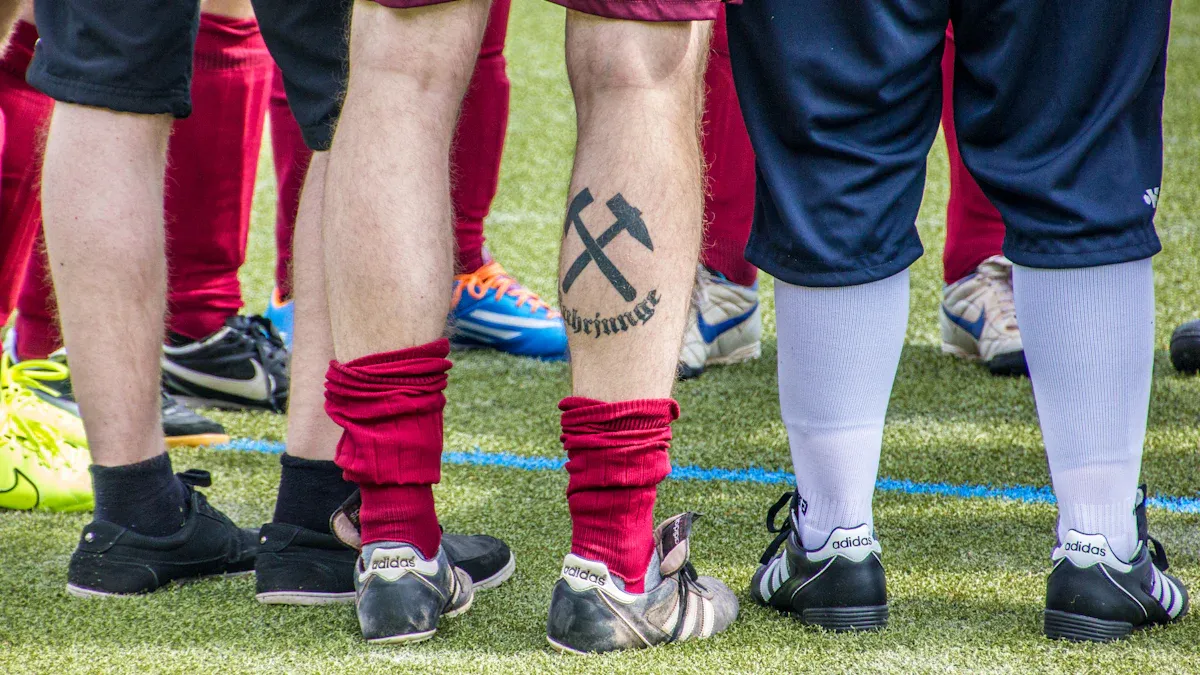
You will notice that football socks focus on supporting your speed and agility on the field. These socks use lightweight, stretchy fabrics that hug your calves and feet. The fit stays snug, which helps prevent blisters and keeps your shin guards in place. Many football socks use mesh panels for breathability, so your feet stay cool and dry during intense matches.
Modern football socks, like those from MINGJUN Hosiery Co., Ltd., offer advanced features. You get 3D anti-slip cuffs that stop the socks from sliding down. The built-in shin guard channel keeps your protection secure, even when you sprint or change direction quickly. Moisture-wicking mesh helps your feet stay dry, even in rainy conditions. High-elastic fibers add durability and allow for sudden stops and quick turns. These features make football socks a top choice for players who want comfort and performance.
Rugby socks must handle the rough and physical nature of rugby. You need socks that can withstand tackles, scrums, and long periods of play. Rugby socks use thicker, more durable yarns than football socks. The extra thickness protects your legs from scrapes and bruises during contact. The fit is firm but not as tight as football socks, so you get comfort without restricting blood flow.
Quality rugby socks often use reinforced heels and toes. This design prevents holes and extends the life of your socks. Many rugby socks include ribbed cuffs that keep them up during the most intense moments of a match. Some players prefer rugby grip socks, which have special grips on the sole to stop your feet from sliding inside your boots. The best materials for rugby socks include blends of cotton, nylon, and elastane for strength, stretch, and moisture control. You will find that rugby socks must meet strict standards for durability and comfort, making them essential for every rugby player.
Both football socks and rugby socks now use advanced materials and design features. You will see moisture-wicking fabrics in both types, which help keep your feet dry and reduce the risk of blisters. Seamless toe construction appears in many modern socks, so you avoid irritation during long matches. Elastic support bands around the arch and ankle give you a secure fit and help prevent injuries.
You can also find mesh ventilation zones in both football and rugby socks. These zones improve airflow and keep your feet cool. Some brands use digital design and 3D rendering to create socks that match the shape of your foot. This technology ensures a better fit and more comfort, no matter which sport you play. Both types of socks now focus on durability, comfort, and performance, thanks to innovations in textile engineering.
Tip: Always choose socks that match your sport’s demands. The right pair can boost your comfort and help you perform at your best, whether you play football or rugby.
You face different challenges when you play football or rugby. Football requires quick sprints, sharp turns, and constant movement. Rugby demands strength, endurance, and frequent physical contact. Studies show that even small changes in game format, like moving from 4-a-side to 5-a-side football, change how much you run and how fast you move. These differences affect your heart rate and muscle fatigue. Because of this, sock designers create rugby socks to handle the heavy impacts and long periods of play in rugby. You need rugby socks that protect your legs and stay in place during scrums and tackles. Football socks focus more on speed, agility, and keeping your feet cool. The unique demands of rugby mean that rugby socks must offer extra durability and support.
You must follow strict rules when you play rugby or football. Each sport has its own standards for uniforms, including socks. Rugby rules often require socks to cover the calf and stay up during the entire match. Rugby socks must meet guidelines for color and length, especially in official games. Football also has rules, but they focus more on matching team colors and covering shin guards. You cannot wear socks that slip down or expose your shin guards in football. Rugby socks must stay up even during intense scrums and tackles. These rules shape how manufacturers design rugby socks, making them thicker and more secure than most football socks.
You want socks that help you perform your best. Rugby players need socks that protect against scrapes and bruises. You spend a lot of time on the ground in rugby, so rugby socks use thicker yarns and reinforced areas. You also need socks that do not bunch up or slide down during a match. Football players look for socks that fit tightly and wick away sweat. You want to avoid blisters and keep your shin guards in place. Rugby socks focus on comfort and protection, while football socks focus on speed and breathability. When you choose rugby socks, you get gear built for the demands of rugby. The right rugby socks can make a big difference in your comfort and safety on the field.
Note: Always check your league’s rules before buying new socks. The right pair of rugby socks can help you meet official standards and boost your performance.
You want socks that feel comfortable and fit well during every match. The right rugby socks can make a big difference in how you move and perform. Scientific research published in Scientific Reports (2025) shows that the blend of fibers, yarn types, and fabric construction in socks directly affects softness, smoothness, and moisture control. When you choose rugby socks with hybrid yarns and stretch fabrics, you get better thermal insulation and moisture management. This means your feet stay dry, cool, and free from irritation. The fit of rugby socks also matters for pressure distribution on your legs. Socks with good stretch let you move freely and avoid tight spots that can cause discomfort. If you play in wet or muddy conditions, anti-blister rugby socks help prevent chafing and blisters, keeping you focused on the game.
Safety should always be your top priority on the field. Rugby socks protect your legs from scrapes and bruises during tackles and scrums. The thicker yarns and reinforced areas in rugby socks add a layer of defense against impacts. Anti-blister rugby socks also reduce the risk of skin injuries, especially during long matches. You need socks that stay up and do not bunch, so you avoid distractions and keep your focus on the action. Choosing the right sock height for your sport ensures that your legs get the coverage and support needed for rugby. Well-designed rugby socks help you stay safe and comfortable, no matter how intense the match becomes.
You must follow official guidelines when selecting rugby socks for matches. Most leagues require socks that cover the calf and stay in place throughout the game. Rugby socks must meet color and length standards set by your team or league. If your socks slip down or expose your skin, you may face penalties or be asked to change. Always check your league’s rules before buying new rugby socks. Proper socks not only help you meet requirements but also boost your confidence and performance on the field.

You need socks that support your speed, agility, and comfort on the pitch. When you follow a football socks guide, focus on features that keep your feet dry and your shin guards secure. Look for socks with moisture-wicking mesh, targeted compression, and anti-slip cuffs. These features help you avoid blisters and keep your socks in place during quick sprints. Advanced football socks, such as those from MINGJUN Hosiery, use 3D anti-slip cuffs and embedded shin guard channels. These innovations ensure your gear stays put, even in wet conditions. You will notice less foot fatigue and better energy conservation when you choose socks with engineered fabrics and arch support.
Rugby demands socks that can handle intense contact and long matches. When you read a rugby socks guide, pay attention to what to look for in rugby socks: thickness, durability, and reinforced heels and toes. High-quality rugby socks protect your legs from scrapes and bruises during tackles and scrums. You want socks that stay up and do not bunch, so ribbed cuffs and elastic support are essential. What to look for in rugby socks also includes breathability and moisture control, which keep your feet comfortable throughout the game. Advanced features like graduated compression and anatomical fit improve your stability and reduce injury risk.
| Sock Feature | Sensory or Physiological Effect | Performance or Injury Prevention Benefit |
|---|---|---|
| Graduated compression | Increased foot security | Faster reflex stabilization |
| Anatomical fit | Enhanced skin contact | Improved balance and coordination |
| Seamless construction | Reduced distractions | Lower risk of foot misalignment |
| Arch support band | Consistent midfoot feel | Better foot positioning |
| Heel tab stability | Secure Achilles area | Reduced tendon irritation risk |
If you play both football and rugby, you need socks that adapt to different demands. Choose socks with advanced engineering, such as targeted compression and moisture-wicking mesh. These features support muscle groups, enhance proprioception, and reduce micro-movements that can slow you down. Biomechanical studies show that engineered socks improve blood circulation, reduce fatigue, and speed up recovery. You will experience fewer blisters and more comfort across sports.

Tip: Always select socks that match your sport’s needs. Advanced features can give you a biomechanical edge, whether you are on the football field or the rugby pitch.
Football socks and rugby socks serve different purposes, but modern designs have made them more similar than ever. You should always select socks that match your sport’s demands, comfort preferences, and official requirements. If you want high-performance options, consider innovative brands like MINGJUN Hosiery. Trying different types can help you find the best fit, especially if you play multiple sports.
Remember: Always follow your league’s guidelines to stay compliant and perform at your best.
You should not use football socks for rugby matches. Rugby socks offer extra thickness and durability for intense contact. Football socks focus on speed and breathability. Always choose socks designed for your sport to ensure comfort and safety.
Wash your sports socks in cold water with mild detergent. Avoid bleach and fabric softeners. Air dry them to maintain elasticity and shape. Proper care extends the life of your socks and keeps them performing at their best.
Tip: Turn your socks inside out before washing to protect advanced features like anti-slip cuffs.
You can wear rugby socks for other sports, but you may not get the best performance. Rugby socks provide extra padding and support, which may feel bulky in sports like football or running. Choose socks that match your activity for optimal comfort.
Look for moisture-wicking fabrics, reinforced heels and toes, and anti-slip cuffs. Advanced socks often include arch support and mesh ventilation. These features help you stay comfortable, reduce blisters, and improve your performance on the field.
Moisture-wicking
Reinforced areas
Arch support
Yes, most leagues require socks that meet color, length, and fit standards. You must cover your shin guards in football and keep your socks up in rugby. Always check your league’s guidelines before purchasing new socks.


