Foshan Mingjun Textile Company Ltd.

Views: 0 Author: Site Editor Publish Time: 2025-10-30 Origin: Site
Are merino wool socks good for skiing? Yes, you’ll love how they keep your feet cozy on the slopes. Merino wool socks offer warmth even when wet, wick away sweat, and let your feet breathe. You get comfort, plus they fight odors so your boots stay fresh.
Warmth in cold and wet conditions
Moisture-wicking for dry feet
Breathable and comfortable
Odor resistance for all-day freshness
Merino wool socks keep your feet warm and soft. They still work well even if they get wet. This makes them great for skiing in the cold.
These socks pull sweat away from your skin. This keeps your feet dry. Dry feet help stop blisters on long ski days.
Merino wool does not hold bad smells. You can wear these socks for many days. You do not have to worry about stinky feet.
Merino wool socks fit tightly and have soft padding. This makes your feet feel good and supported. You can think about skiing, not sore feet.
Good merino wool socks last a long time and work well. They are a smart buy for people who ski a lot.

When you hit the slopes, you want socks that keep your feet warm, even if they get a little wet. Merino wool does just that. It can soak up to 30% of its weight in water and still feel dry. As it absorbs moisture, it actually releases a bit of heat, which helps keep your toes toasty. The natural crimp in the fibers creates tiny air pockets that trap warmth. You stay comfortable, even on the coldest days.
No one likes sweaty feet in ski boots. Merino wool socks pull sweat away from your skin and help it evaporate quickly. This keeps your feet dry and helps prevent blisters. Some top socks, like the Darn Tough Light Hiker or Farm to Feet Damascus, use special blends and ventilation zones to boost breathability. You get great moisture management, which is key for long days on the mountain.
You want socks that feel soft and fit well. Many skiers love the plush feel of merino wool. Brands like Smartwool make socks with a snug, articulated fit that stays in place and doesn’t bunch up. Targeted cushioning adds extra comfort and warmth, so your feet feel good all day. You can focus on skiing, not on your socks.
Merino wool naturally fights odors. Its fibers wick away sweat and stop bacteria from growing, so your socks stay fresher longer. You can wear them for several days without worrying about bad smells. Wool locks away odors until you wash the socks, making them perfect for multi-day trips.
You want socks that last. Merino wool socks hold up better than cotton, especially when you’re active. They resist wear and tear, manage moisture, and keep their shape. While cotton socks can get soggy and wear out fast, merino wool socks stay warm and dry, making them a smart investment for skiers. Top brands like Icebreaker, Darn Tough, and Smartwool are known for their high-quality merino wool ski socks.
You might wonder, are merino wool socks good for skiing? Most skiers say yes, and for good reason. When you spend hours on the mountain, you want socks that do more than just cover your feet. You want socks that help you stay comfortable, dry, and focused on the fun.
Here’s why so many skiers reach for merino wool:
Merino wool ski socks give you natural temperature control. Your feet stay warm when it’s cold and cool when you start to heat up.
These socks flex with your movements. You get comfort and support, even during long days.
You don’t have to worry about smelly boots. Merino wool controls odor and bacteria better than most other materials.
Your feet stay dry. Merino wool wicks away sweat, which helps stop blisters before they start.
Unlike cotton, merino wool socks keep moisture away from your skin. This means less rubbing and fewer sore spots.
Pro tip: The moisture-wicking power of merino wool also helps stop odor-causing bacteria from growing. That means your socks stay fresher, even after a full day on the slopes.
Professional skiers and instructors trust merino wool, too. Griffin Post, a well-known skier from Jackson Hole, says his Smartwool socks fit perfectly and keep his feet warm. He can focus on skiing, not on cold toes. Chris Benchetler, another pro, likes that his Smartwool socks never slip down and always keep his feet dry. He even points out how breathable they feel during ski tours.
So, are merino wool socks good for skiing? You can see why so many skiers say yes. They offer comfort, warmth, and dryness, all in one package.
When you look for the best ski socks, you want more than just warmth. You want socks that help you ski better and feel better all day. Are merino wool socks good for skiing? Let’s check the features that matter most.
Experts say the best ski socks should have:
Moisture-wicking fabric to keep your feet dry
A snug fit that won’t bunch up or slide down
Cushioning in the right spots, like the shin and heel
Durability for many days on the mountain
Merino wool socks check all these boxes. The fibers feel soft and gentle on your skin. They pull sweat away fast, so your feet stay dry. The fit hugs your foot, so you don’t get blisters or hot spots. You also get just the right amount of padding, which helps with comfort and warmth.
Here’s a quick look at how merino wool stacks up against other materials:
| Feature | Merino Wool | Cotton | Synthetics |
|---|---|---|---|
| Warmth | Yes | No | Sometimes |
| Moisture Wicking | Yes | No | Yes |
| Odor Control | Yes | No | No |
| Comfort | Yes | Sometimes | Sometimes |
| Durability | Yes | No | Yes |
You might also want a lightweight ski sock for warmer days or tight-fitting boots. Merino wool works well here, too. It gives you breathability and comfort without extra bulk.
So, are merino wool socks good for skiing? The answer is clear. They meet all the needs of skiers, from warmth to fit to odor control. If you want the best ski socks, merino wool is a smart choice.
You might notice that merino wool socks cost more than regular socks. High-quality brands use fine wool and special knitting, which raises the price. If you compare them to a basic cotton pair, you could pay two or three times as much. Some skiers feel the extra comfort and warmth are worth it. Others prefer to save money and choose a synthetic or compression ski sock instead. Still, if you ski often, investing in a good pair can pay off over time.
| Complaint Type | Description |
|---|---|
| Moisture Retention | Merino wool absorbs more moisture and takes longer to dry, making it unsuitable for heavy sweaters. |
| Durability | Merino wool is prone to pilling and holes due to its fragile fibers, especially in high-friction areas. |
| Comfort | Users report discomfort from chafing when the fabric holds moisture, particularly for those who sweat a lot. |
Merino wool socks need a little extra care to last. You can’t just toss them in with your regular laundry and forget about them. Here’s how you can keep your socks in top shape:
Turn your socks inside out to prevent pilling and protect cushioning.
Wash in cold water on the gentle cycle to avoid heat damage.
Use a mild detergent with a neutral pH to protect fibers.
Tumble dry on low or air dry to minimize heat exposure.
If you follow these steps, your socks will stay soft and strong. Many users say merino wool socks can get holes or thin spots if you skip these steps. Taking care of them helps you get the most out of your investment.
Choosing the right thickness matters when you pick ski socks. Thick socks might seem warmer, but they can actually restrict blood flow. This can make your feet feel colder, not warmer. A thinner sock, like a compression ski sock, gives you a better fit in your boots and helps you ski with more control.
Thicker socks can restrict blood flow, which is crucial for maintaining warmth in the feet.
A precise fit is better achieved with thinner socks, enhancing overall skiing performance.
Comfort and support are essential when wearing socks for extended periods.
You want your socks to feel snug but not tight. If your socks bunch up or feel bulky, you might get blisters or sore spots. Many skiers find that a thinner merino wool or compression ski sock works best for all-day comfort and performance. Remember, the right fit can make a big difference on the slopes.
Getting the right fit makes a huge difference when you pick ski socks. You want socks that hug your feet without feeling too tight. Most brands, like Smartwool, use shoe sizes to help you choose. For example, women’s sizes go from XS to L, and men’s from M to XL. Always check the size chart from the brand. If you fall between sizes, go for the smaller one. A snug fit keeps your socks from bunching up, which helps prevent blisters. Remember, socks that are too loose or too tight can ruin your day on the slopes.
Most ski socks come in general sizes (small, medium, large).
Always match your sock size to your shoe size.
A good fit means no bunching and no slipping.
Cushioning can change how your feet feel after a long day of skiing. You have a few options:
| Cushion Level | Description |
|---|---|
| Zero Cushion | No padding, best for a close fit in new or tight boots. |
| Targeted Cushion | Light padding in key spots like the shin for comfort and fit. |
| Full Cushion | Thick padding for warmth and impact protection. |
If you like a close fit, try an ultralight ski sock. For extra warmth, go for more cushion. Your choice depends on your boots and how much padding you want.
Not all ski socks use 100% merino wool. Many brands blend wool with nylon, polyester, or elastane. These blends help the socks last longer, dry faster, and fit better. For example, Smartwool PhD Ski Light mixes merino wool with nylon and elastane for warmth and less bunching. TEKO uses organic merino wool and recycled synthetics for durability. If you want a soft feel and warmth, look for socks with a high merino content. If you want a sock that dries fast, try a blend with more synthetics. An ultralight ski sock often uses blends for a thinner, performance fit.
You might wonder if you can use snowboard socks for skiing. Both types wick moisture and fight odor, but they have some differences:
| Feature | Ski Socks | Snowboard Socks |
|---|---|---|
| Thickness | Usually thinner | Thicker with more cushioning |
| Padding | More on the shin | Extra around calf and ankle |
| Design Purpose | For ski boot pressure | For snowboard boot pressure |
Snowboard socks often feel bulkier and have more padding in different areas. Ski socks focus on a snug fit and shin protection. If you want the best performance, pick the sock made for your sport.
Tip: Always try on your socks with your boots before you hit the slopes. This simple step can save you from discomfort later.
If you follow this ski sock buying advice, you’ll find the right pair for your needs and enjoy every run.
When you compare ski socks, you see two main choices. Merino wool and synthetic fibers are the most popular. Each one has its own benefits. Merino wool keeps your feet warm, even if they get wet. Synthetic socks dry fast and last a long time. You might wonder which is best for your ski trip.
Here’s a quick ski sock comparison:
| Material | Warmth | Moisture Management | Durability |
|---|---|---|---|
| Merino Wool | Excellent thermal properties | Great moisture-wicking capabilities | Less durable than synthetics |
| Synthetic | Good, but less insulating | Quick-drying and good moisture control | More durable and lighter |
Let’s look at the details: Synthetic socks dry quickly and handle sweat well. Your feet won’t stay wet after skiing all day. Merino wool socks keep your feet warm, even if they get damp. They also help stop bad smells, so your boots stay fresh. Synthetic socks last longer and are lighter, but they don’t keep you as warm if they get wet. Merino wool socks take more time to dry and might wear out sooner, but they don’t make microplastics.
Tip: For trips with lots of days, synthetics dry fast. For warmth and less odor, pick merino wool.
Now let’s compare merino wool and cotton socks. Cotton socks might feel soft, but they are not good for skiing. Merino wool can soak up a lot of water and still feel dry. Cotton holds water and makes your feet cold and uncomfortable.
Merino wool has a special shape that traps air. This helps keep your feet warm and lets them breathe. Its lanolin coating helps stop bacteria, so your socks smell better. Cotton socks do not pull sweat away from your skin. That’s why ski resorts say no to cotton socks. Wearing cotton can give you cold, wet feet and blisters.
Cotton socks soak up water and keep it, which feels bad.
Merino wool socks help your feet stay warm and dry, even in very cold weather.
If you care about animals and the planet, look for merino wool socks with special certifications. These include Responsible Wool Standard (RWS), NATIVA™, ZQ Certification, or SustainaWOOL. These show the wool comes from healthy sheep and good farms.
Note: For the best ski socks, pick merino wool or good synthetics. Cotton socks are not good for skiing.
You want ski socks that keep your feet warm, dry, and comfortable. Merino wool socks do all that. Expert reviews say these socks stay warm in cold weather and last a long time. You get a seamless design for comfort and a super-lightweight feel for tight boots.
| Feature | Description |
|---|---|
| Warmth | Keeps feet cozy in cold conditions |
| Comfort | Seamless design fits well in ski boots |
| Durability | Holds up after many uses |
Smartwool and Stance lead the way for quality merino wool ski socks. You can see how often skiers recommend these brands:
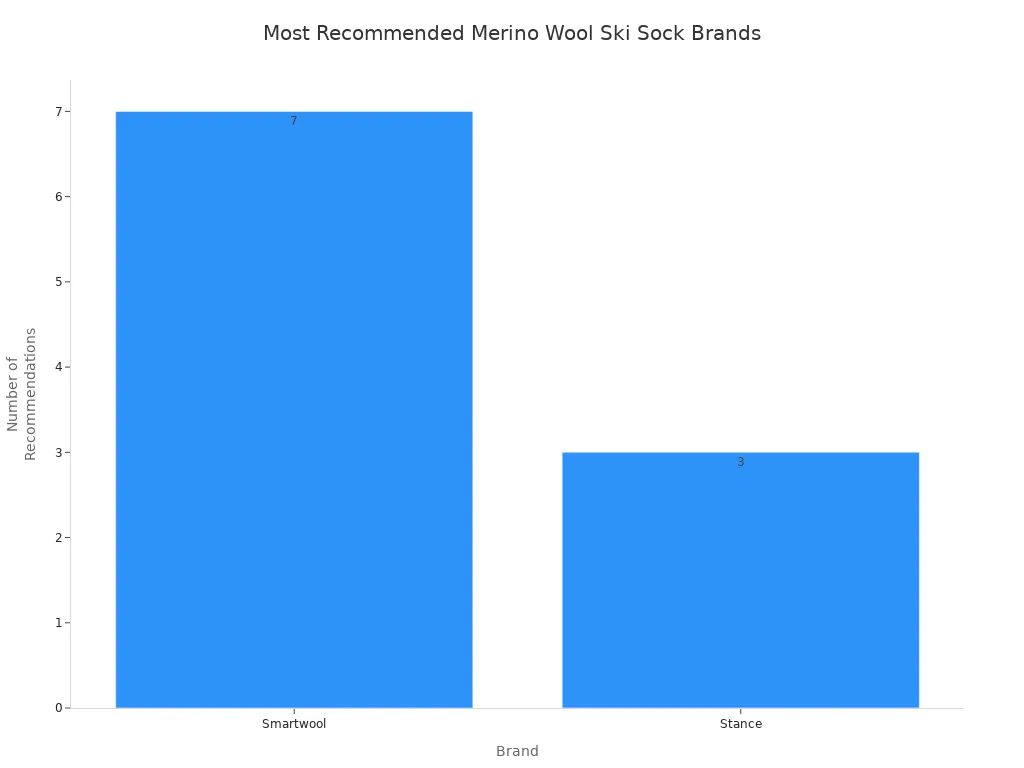
Pick socks that match your needs. Try trusted brands for the best experience on the slopes.
You can wear merino wool socks for several days before washing. They resist odor well. If your socks smell or feel dirty, wash them. Always follow the care label for best results.
Yes, you can. Merino wool breathes well and wicks moisture. Your feet stay cool and dry, even on sunny spring ski days. You won’t feel too hot.
Merino wool can shrink if you use hot water or high heat. Wash your socks in cold water and air dry them. This keeps the fit and softness.
No, most people find merino wool soft and comfortable. The fibers are much finer than regular wool. If you have sensitive skin, try a pair from a trusted brand.


