Foshan Mingjun Textile Company Ltd.

Views: 0 Author: Site Editor Publish Time: 2025-10-29 Origin: Site
Yes, polyester socks can be a good choice for skiing, and here's why. You want socks that keep your feet dry, feel soft, and fit well inside your boots. Polyester does a great job at pulling sweat away from your skin. This helps your feet stay warm and comfortable all day. If you wonder, are polyester socks good for skiing, the answer is simple—you get moisture control, a snug fit, and less chance of blisters. That means more fun on the slopes!
Polyester socks pull sweat away from your feet. This keeps your feet dry and warm when you ski. - Polyester socks fit tightly and are light. This stops blisters and makes ski boots feel better. - Pick socks that are thin or medium thick. This helps blood flow and keeps feet dry on the slopes. - Find socks with seamless toes and air holes. These features make socks more comfy and help you ski better. - Take care of your socks by washing them in cold water. Let them air dry to keep them working well.

You might wonder, are polyester socks good for skiing? The answer is yes, and here’s why so many skiers pick them for their time on the slopes.
When you ski, your feet sweat, even in cold weather. If your socks trap that sweat, your feet get cold and uncomfortable. Polyester socks solve this problem with their moisture-wicking properties. They pull sweat away from your skin and move it to the outside of the sock, where it can evaporate. This keeps your feet dry and helps you stay warm.
Moisture-wicking socks use special fabric channels to move sweat away from your skin.
Polyester is hydrophobic, so it does not soak up water. Instead, it lets moisture escape fast.
These socks dry quicker than wool or cotton, which is great if you get snow in your boots.
You get better moisture control with polyester than with most other materials. That’s a big reason why ski socks made from polyester are so popular.
You want your ski socks to feel good all day. Polyester socks are soft and lightweight, so they don’t feel bulky inside your boots. They also keep their shape, even after many washes. This means you get a snug fit every time you put them on.
Here’s a quick look at some cool features you might find in modern polyester ski socks:
| Feature | Description |
|---|---|
| Memory Stretch™ | Adapts to your foot shape for a comfy, secure fit. |
| Definitive Fit System™ | Stops the sock from bunching up, so you don’t have to adjust it all day. |
| Ventilation panels | Let your feet breathe, which helps with moisture-wicking properties. |
These features help you focus on skiing, not on your socks. You get comfort, support, and a fit that lasts all day.
Blisters can ruin your day on the mountain. Polyester ski socks help prevent blisters in a few ways:
They keep your feet dry, which stops skin from getting soft and rubbing.
The snug fit means less movement inside your boot, so there’s less friction.
Many polyester socks have smooth seams or seamless toes, so you don’t get pressure points.
Tip: Always choose socks that fit well. Loose socks bunch up and cause blisters, while tight socks cut off circulation.
So, are polyester socks good for skiing? Yes! Their moisture-wicking properties, comfort, and fit all work together to keep your feet happy and blister-free. That’s why so many skiers trust polyester ski socks for their adventures.
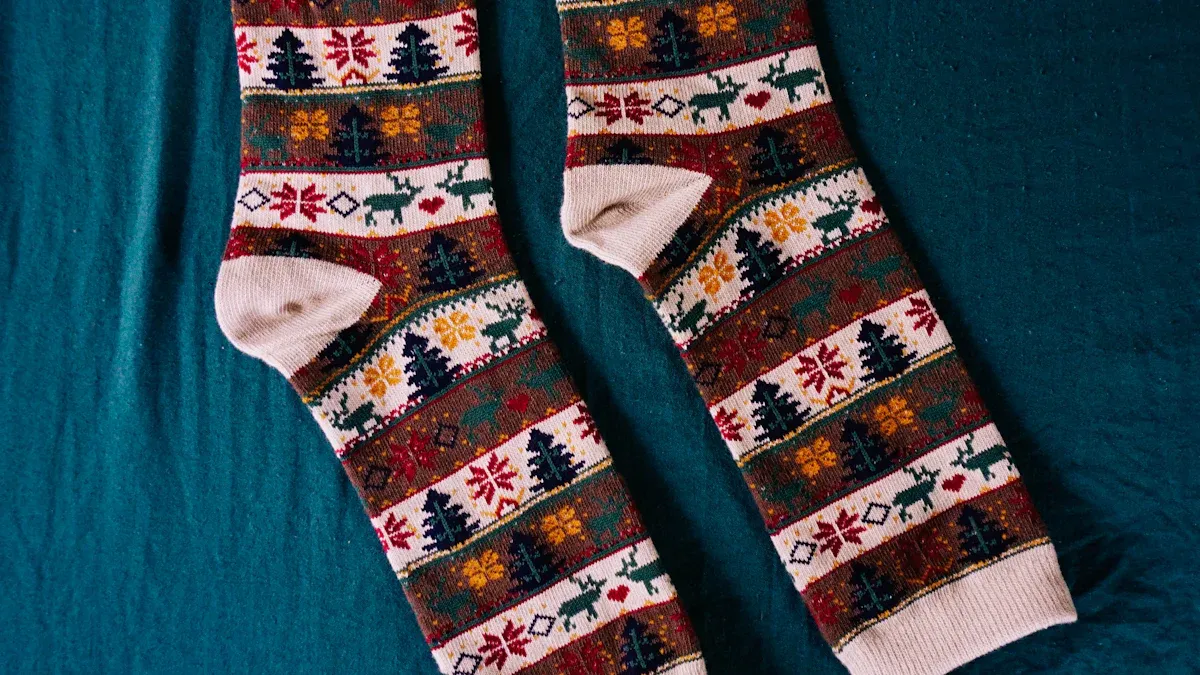
You might wonder if polyester or merino wool socks work better for skiing. Both have their fans, but they offer different benefits. Merino wool feels soft and keeps your feet warm, even when wet. It also fights odors naturally, so your socks smell fresher after a long day.
Merino wool has natural antibacterial qualities that prevent odor buildup.
Polyester may have antimicrobial coatings, but it usually does not stop odors as well as merino wool.
Merino wool socks wick moisture and breathe better than most synthetics.
Polyester socks dry faster and often cost less. They hold their shape and last through many washes. If you want socks that stay fresh longer, merino wool is a great pick. If you want quick-drying socks with a snug fit, polyester is a solid choice.
Cotton socks might seem comfy, but they are not good for skiing. Cotton soaks up sweat and holds onto it. This makes your feet cold and damp, which can ruin your day on the slopes.
High-quality polyester socks wick moisture away, but lower-quality ones may keep sweat in, causing dampness.
Cotton is breathable, but it holds moisture when wet.
Polyester socks, especially blends, keep your feet warm and dry in cold weather.
Tip: Avoid cotton socks for skiing. They do not have the moisture-wicking properties you need to stay comfortable.
You will find many ski socks made from blends of polyester and other fibers. These blends give you the best of both worlds. Polyester blends keep your feet warm, dry, and comfortable.
Thermal socks made from polyester blends offer great insulation and warmth.
They have high heat retention, moisture-wicking properties, and dry quickly.
Reinforced stitching in these socks makes them durable for tough ski days.
Check the label when you shop. Blended socks often combine polyester with wool or nylon for extra comfort and performance. You get socks that last longer and keep your feet happy all day.
When you pick out ski socks, thickness matters more than you might think. You might feel tempted to grab the thickest pair for extra warmth, but that can actually backfire. Thicker socks can make your boots feel tight, which cuts off circulation and makes your feet colder.
Ski experts recommend thin to medium-thickness socks for optimal skiing performance. Thicker socks can compromise circulation and lead to cold feet, while a proper fit is crucial to avoid blisters.
Here’s how thickness affects your comfort on the slopes:
Thin Socks: These wick moisture better and keep your feet dry. They work best with snug ski boots and help you avoid pain from compression.
Thick Socks: These offer more warmth and cushioning. They can act as shock absorbers, but if they’re too thick, they might restrict blood flow and make your feet cold.
If you want to stay comfortable all day, go for thin or medium ski socks. Your feet will thank you!
Cushioning in polyester ski socks can make a big difference in how your feet feel after a long day. The right amount of padding helps absorb shocks and protects your shins and feet from bumps.
| Cushioning Type | Description |
|---|---|
| Ultra Light Cushioning | Targeted cushion pad over the shin for impact protection, no extra padding under the foot. |
| Light Cushioning | Shin padding and some underfoot cushioning for comfort and performance. |
| Medium Cushioning | Even padding around the foot and leg, often preferred by snowboarders. |
Think about how much support you want. If you ski hard or for long hours, a little extra padding can help.
Sock height is easy to overlook, but it’s super important for skiing. You want your socks to match the height of your boots. This helps protect your feet, ankles, and calves from rubbing and chafing.
Most ski socks come up just below your knee. This gives you plenty of coverage and keeps snow out if it sneaks into your boots or pants. Tall socks also help keep you warm and supported all day.
Ski socks should be tall enough to extend above your boot line to prevent chafing.
Most ski-specific socks come up to just below the knee, providing ample coverage and protection.
This height helps to keep snow out if it happens to get inside your pants or boots.
Pick socks that fit well, have the right thickness, and reach high enough for your boots. You’ll feel the difference every run!
Picking the right ski socks can make your day on the mountain much better. You want socks that fit well, feel comfortable, and match your needs. Start by checking the size. Socks that are too big will bunch up and cause blisters. Socks that are too small can squeeze your feet and cut off circulation.
Look for socks with features like extra padding in the shin or heel. Some socks have ventilation panels to help your feet breathe. If you ski in very cold places, you might want a little more thickness for warmth. For most people, thin or medium socks work best because they fit snugly in ski boots.
Here’s a quick checklist to help you choose:
Check the size for a snug, not tight, fit.
Pick the right thickness for your boots and the weather.
Look for smooth seams to avoid rubbing.
Choose socks with moisture-wicking fabric to keep your feet dry.
Tip: Try on your socks with your ski boots before you hit the slopes. This helps you find the best fit and comfort.
Taking care of your socks helps them last longer and keeps them working well. Polyester socks need a little extra attention to stay in good shape.
Wash your socks in cold water. Hot water can break down the fibers and make them lose their shape.
Use gentle detergent. Harsh soaps can weaken the fabric over time.
Skip the fabric softener. It can coat the fibers and stop them from wicking moisture.
Dry your socks on a low-heat setting in the dryer. High heat can melt or misshape the fibers.
Air drying works best. Lay your socks flat on a towel or hang them on a rack away from direct sunlight.
If you care for your socks the right way, they keep their stretch, wick away sweat, and stay comfy. Improper care can make them lose their fit and moisture control. That means less comfort and more chance of blisters.
Remember: Good care keeps your ski socks ready for every adventure!
Are polyester socks good for skiing? Yes, they are a smart choice. You get many good things when you wear them on your trip. Here’s why people like them:
They dry fast.
They pull sweat away from your skin.
Think about what you need most in ski socks before you buy. This table can help you pick the best pair:
| Factor | Description |
|---|---|
| Material | Pick merino wool for warmth and moisture-wicking, or synthetic for socks that last longer. |
| Thickness and Fit | Thin or medium socks help your feet feel better and keep blood moving; thick socks can be too tight. |
| Moisture Management | Get socks that wick away sweat; wearing two pairs can help stop blisters. |
| Height Considerations | Socks should go above your boots to stop rubbing and keep snow out. |
| Special Features | Extra padding, seamless toes, and antimicrobial treatments make socks more comfy and work better. |
| Care and Maintenance | Wash socks the right way and air dry them to keep them working well. |
Are polyester socks good for skiing? Yes! You can find a pair that fits well and feels good, so you have fun every time you ski.
Yes, polyester ski socks help keep your feet warm. They trap heat close to your skin and wick away sweat. Dry feet stay warmer, so you feel comfortable on the slopes.
You can, but you usually do not need extra layers. Polyester ski socks work best alone. If you double up, your boots might feel tight and cause blisters.
Wash your socks after each day of skiing. This keeps them fresh and helps them last longer. Use cold water and skip fabric softener for best results.
Polyester socks can hold onto odors more than wool. Wool has natural odor-fighting properties. If you want less smell, look for polyester socks with antimicrobial treatments.
Tip: Let your socks air out after skiing. This helps reduce odors and keeps them fresh for your next trip!


