Foshan Mingjun Textile Company Ltd.

Views: 0 Author: Site Editor Publish Time: 2025-08-07 Origin: Site
If you struggle with sweaty feet, you might wonder if cotton socks are the right choice. Cotton socks feel soft and allow some air to reach your skin. However, they soak up sweat and hold onto moisture, which can cause blisters and even fungal infections for about 3% to 4.8% of people who sweat a lot. Experts suggest looking for the best cotton socks for sweaty feet in blends that help wick moisture away, instead of using 100% cotton.
Cotton socks are soft and let some air reach your skin. This makes them comfy for daily use.
Cotton soaks up sweat but keeps it for a long time. This can cause blisters, bad smells, and infections.
Socks made from moisture-wicking materials keep feet dry and comfy. These materials include merino wool, bamboo, or synthetic blends.
Cotton blends with moisture-wicking fibers control sweat better. They still feel soft and let your feet breathe. Taking care of socks helps them last longer and stay fresh. Wash socks inside out and let them air dry.
Good foot hygiene is important for sweaty feet. Wash your feet every day and change socks often. This helps lower sweat and bad smells. Look for socks with mesh panels or antimicrobial treatment.
Seamless toes and arch support are also good for sweaty feet. Do not use 100% cotton socks for sports or hard activity. Pick moisture-wicking socks to stop blisters and discomfort.
When picking socks for sweaty feet, breathability is very important. Cotton socks let some air get to your skin. This helps keep your feet cool. Cotton is a natural fiber, so air can move through it. This means less sweat builds up on your feet. Cotton socks feel more comfortable than many synthetic socks. Synthetic socks often trap heat and sweat.
But, tests in labs show cotton socks are not the most breathable. Socks made from lyocell and viscose let even more air pass through. Lyocell socks have a smooth surface and special fibers. This lets more air flow around your feet. How socks are made also changes how much air gets in. Socks made with open-end rotor yarns let in more air. After washing, all socks lose some breathability. Cotton socks lose less breathability than viscose or lyocell socks.
Tip: If you want socks that breathe best, try lyocell or modal blends. Cotton is better than polyester, but not the best at letting air in.
Cotton socks are also hypoallergenic and gentle on sensitive skin. They let more air in than polyester socks. Polyester can trap sweat and cause bad smells. Doctors say cotton socks are good in warm weather. They help your feet stay cool and dry.
Cotton soaks up moisture very well. When your feet sweat, cotton socks pull in the sweat. The sweat stays in the fibers. This can be good and bad. At first, your feet may feel dry. The socks pull sweat away from your skin. But cotton holds onto the sweat and dries slowly. If your feet sweat a lot, your socks can stay wet for a long time. This can cause blisters or make your skin sore.
Here is a table that shows how much moisture different sock fibers soak up:
| Fiber Type | Relative Moisture Absorption | Swelling When Wet (%) | Additional Notes |
|---|---|---|---|
| Cotton | Absorbs 3x moisture of acrylic; 14x of CoolMax | 44-49% | Hydrophilic; holds a lot of water; 10x longer drying time than synthetics |
| Wool | Most hygroscopic; holds more moisture than cotton | 35% | Both hydrophilic and hydrophobic; air pockets aid moisture transport |
| Synthetic Acrylic | Baseline for comparison | 5% | Hydrophobic; repels water; CoolMax is a hydrophobic synthetic with 20% more surface area |
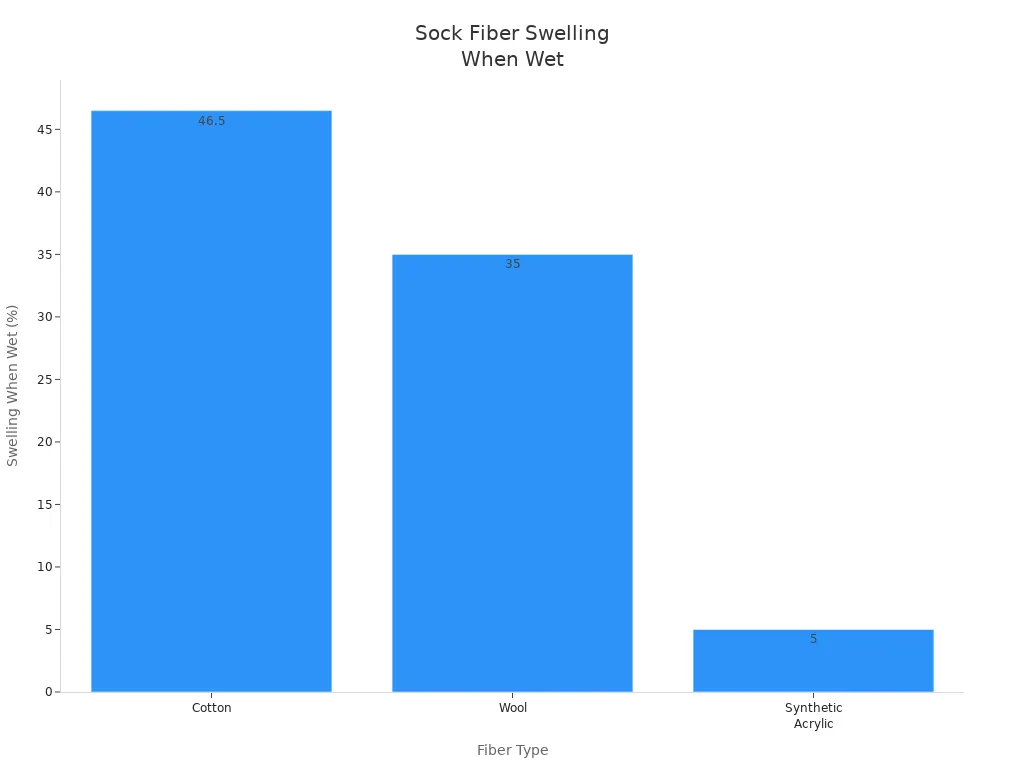
You can see cotton soaks up more moisture than synthetic socks. Wool soaks up even more, but it dries faster than cotton. Synthetic socks dry the fastest because they do not hold much water. If you wear cotton socks and your feet sweat, your socks may stay wet for a long time. This can make your feet feel cold and not comfortable.
Foot doctors warn that cotton is not good at moving sweat away. Cotton keeps sweat close to your skin. This can cause blisters, bad smells, and even fungal infections. Many people with sweaty feet say cotton socks leave their feet damp and not comfortable for hours.
Cotton socks can keep your feet warm if they are dry. The fibers trap air and help keep heat in. But when cotton gets wet, it cannot keep your feet warm. Studies show cotton socks lose their warmth when you sweat. Your feet may feel warmer and wetter, but this is because the socks hold sweat. They do not really keep your feet at a higher temperature.
Cotton socks soak up sweat, which makes them less warm and less comfy.
Cotton socks can feel warm at first, but sweat makes them lose warmth.
People with sweaty feet often feel wet and cold after moving around, even if the socks felt warm when dry.
Wet cotton socks can make your feet feel colder, especially outside or in cool places.
Note: The best socks for sweaty feet use materials that let air in and dry fast. Cotton soaks up sweat but dries slowly. This can make your feet feel cold and damp after sweating.
If your feet sweat a lot, you may notice cotton socks do not help control foot temperature well. They hold onto sweat, which can make your feet feel sticky and not comfortable. This is why many experts say to pick socks made from materials that handle sweat better and dry faster.
Cotton socks offer several advantages if you deal with sweaty feet. You will notice that cotton feels soft and gentle on your skin. Many people choose cotton because it allows your feet to breathe. The natural fibers let air move in and out, which helps keep your feet cooler during the day. Clinical studies and expert reviews show that cotton socks absorb moisture from your skin. This means that, at first, your feet may feel dry when you start to sweat. Cotton socks also work well for everyday wear, especially if you do not plan to do heavy exercise.
Cotton socks are a good choice for people with sensitive skin. They rarely cause irritation or allergic reactions. You can wear them comfortably for long hours at school or work.
Some experts recommend cotton or wool socks for their breathability and moisture absorption. If you want extra comfort, you can look for cushioned socks that use cotton blends. These blends often add synthetic fibers, which help wick moisture away and provide more pressure relief. For daily activities, cotton socks can keep your feet feeling fresh and comfortable.
Cotton socks also have some important drawbacks, especially if you have sweaty feet or plan to be active. Medical and textile research points out several problems:
Cotton absorbs much more moisture than synthetic fibers, so your feet can stay damp for a long time.
When cotton gets wet, the fibers swell by about 44-49%. This swelling reduces the space for air and makes it harder for sweat to move away from your skin.
Cotton dries very slowly. It can take up to ten times longer to dry than synthetic socks.
Wet cotton socks lose their shape and become loose. This leads to more friction and discomfort, especially if you walk or run.
The extra moisture and friction increase your risk of blisters and sore spots.
You may notice that cotton socks trap sweat instead of moving it away. Your feet can feel damp and uncomfortable for hours. If you wear cotton socks during sports or exercise, you might get blisters or even fungal infections. Synthetic fibers like polyester or polypropylene do a better job of keeping your feet dry. Cotton socks alone may not be the best choice for managing sweat during physical activity.
Note: If you have sweaty feet and need socks for sports or long walks, look for cotton blends with moisture-wicking materials. These blends help keep your feet drier and more comfortable.

You might ask if organic cotton socks help sweaty feet. Organic cotton feels softer and lets more air in than regular cotton. These socks come from cotton grown without bad chemicals or pesticides. This makes them safer for your skin and better for the earth. Organic cotton socks break down faster in landfills. They do not add to plastic waste like synthetic socks.
When you want the best cotton socks for sweaty feet, look for blends with organic cotton and moisture-wicking fibers. Fitness experts suggest socks like Quince Crew Socks. These socks use mostly organic cotton but also have fibers that move sweat away from your skin. You get cushioned footbeds and arch support for comfort and sweat control. These features make Quince Crew Socks a top pick for people who want comfort and less sweat.
Choosing organic cotton socks helps the planet. You help save water and stop chemicals from getting into soil and water.
If you care about nature and want gentle socks, organic cotton blends are a smart pick. You avoid the problems of 100% cotton socks, which hold sweat and dry slowly. Instead, you get socks that balance comfort, breathability, and moisture control.
Cotton blend socks are good for sweaty feet. They mix natural comfort with new technology. You should not pick 100% cotton socks if you sweat a lot. Look for socks that mix cotton with polyester, nylon, or Merino wool. These blends help move sweat away and let it dry fast.
Podiatrists say you should pick socks with these features:
Moisture-wicking materials like polyester, nylon, or Merino wool
Antimicrobial features to fight odor and infections
Open-knit or mesh panels for more airflow
Seamless toes to stop blisters
Arch support and heel tabs for a snug fit
Thin design to stop heat from building up
Cushioning for extra comfort
Many people say combed cotton blends feel softer and last longer than regular cotton. The combing process takes out rough fibers, so the socks feel smooth and gentle. When you pick the best cotton socks for sweaty feet, you get socks that keep your feet dry and comfy all day. Balega Silver No Show Running Socks and Lululemon Power Stride No Show Socks are good choices for sweat control.
Tip: Always check the label. The best socks for sweaty feet use blends, not 100% cotton. Blends give you both comfort and moisture control.
There are many types of socks, but cotton blends are great for softness, breathability, and sweat control. These socks help you stay comfy at school, work, or when playing sports.
When you want to keep your feet dry, you need socks made from moisture-wicking materials. These materials pull sweat away from your skin and help it evaporate quickly. You can find several types of moisture-wicking fabrics in socks today. Each type works in a different way to keep your feet comfortable and healthy.
Synthetic socks use fibers like polyester, nylon, and acrylic. These materials work hard to move sweat away from your skin. You stay dry because the socks push moisture to the outer layer, where it can evaporate. Synthetic socks dry much faster than cotton socks. They also last longer and keep their shape after many washes.
Synthetic socks often have mesh panels or special zones for better airflow.
Many brands add anti-microbial treatments to fight odor.
You get less risk of blisters, odor, and fungal infections because your feet stay dry.
Synthetic socks feel light and comfortable, even during sports or long walks.
Tip: If you play sports or spend a lot of time on your feet, synthetic socks with moisture-wicking fabrics can help you avoid dampness and discomfort.
Recent studies show that the best moisture-wicking materials use a dual-layer design. The inside layer pushes sweat out, and the outside layer pulls it away. This push-pull system keeps your feet dry and helps prevent blisters.
Merino wool socks offer natural moisture wicking. The fibers pull sweat away from your skin and hold it inside the core of the fiber. Your feet stay dry because the socks do not feel wet, even when they hold a lot of moisture. Merino wool can absorb up to 30% of its weight in water without feeling damp.
Merino wool keeps your feet cool in summer and warm in winter.
The fibers stretch and bounce back, so the socks keep their shape.
Merino wool fights odor because it stops bacteria from growing.
You get comfort and dryness all day, even if you sweat a lot.
Note: Merino wool socks work well for both everyday use and sports. They manage sweat better than cotton and help control foot temperature.
Bamboo socks use fibers that have tiny gaps for air and moisture. These socks pull sweat away from your skin and let it evaporate fast. Bamboo fabric can absorb up to three times its weight in water. Your feet stay dry and cool, even on hot days.
Bamboo fibers have a natural agent called "bamboo kun" that stops bacteria and reduces odor.
The fabric feels soft and smooth, which is good for sensitive skin.
Bamboo socks help prevent blisters and irritation by keeping your feet dry.
You get good temperature control, so your feet feel comfortable in any season.
Bamboo socks are a smart choice if you want comfort, dryness, and less odor. They also help the environment because bamboo grows quickly and needs less water.
When you pick socks made from moisture-wicking materials, you protect your feet from sweat, odor, and blisters. You can enjoy dry, comfortable feet all day.
You want socks that keep your feet dry and comfy. Cotton socks soak up sweat fast, but they hold it for a long time. This makes your feet feel wet and can cause blisters. Moisture-wicking socks use fibers like polyester, nylon, or merino wool. These fibers pull sweat away from your skin and help it dry faster. You stay drier and more comfy, even if you sweat a lot.
Here is a table that compares how cotton and moisture-wicking socks handle sweat:
| Sock Material | Moisture Absorption | Drying Time | Blister Risk | Sweat Control Mechanism |
|---|---|---|---|---|
| Cotton | High (swells 44-49%) | Very slow (10x longer) | High | Absorbs and retains sweat |
| Moisture-Wicking (synthetic) | Low | Very fast | Low | Moves sweat away from skin |
| Wool Blends | Moderate-High | Moderate | Low | Absorbs but feels dry, wicks well |
Cotton socks make your feet damp, especially when you exercise. Moisture-wicking socks are made to move sweat away and lower friction. This helps keep your feet healthy.
Foot odor happens when bacteria grow in wet places. Cotton socks trap sweat, so bacteria can grow more. This can make your feet smell bad and even cause infections. Moisture-wicking socks, like those with merino wool or synthetic blends, help stop this.
Tests show people with sweaty feet feel drier and have less odor with moisture-wicking socks.
Merino wool socks fight bacteria and help your feet smell fresh.
Polyester and nylon blends dry fast, so bacteria have less time to grow.
Cotton socks are soft, but they do not move sweat away. They hold sweat, which can make odor worse.
If you switch to socks that wick moisture, you will notice a big change. Your feet will feel fresher, and you will have less odor by the end of the day.
Comfort is very important when picking socks for sweaty feet. Many people say cotton socks feel soft and let air in when dry. You might like how light and airy they feel at first. But cotton holds sweat, so your feet can feel damp and not comfy after a while. Wet socks can cause blisters and sore spots.
Moisture-wicking socks keep your feet dry and comfy for longer. People say merino wool socks stay comfy even when a little wet. These socks dry faster and lower friction, so you get fewer blisters. Synthetic blends keep their shape and stay light, even after hours of wear.
Here is a table that shows how comfort compares:
| Aspect | Cotton Socks Impact | Moisture-Wicking Socks Benefit |
|---|---|---|
| Comfort | Breathable and soft when dry | Stay comfortable even when damp, dry faster |
| Moisture Retention | Absorbs and holds sweat, causing dampness | Wicks moisture away, reducing dampness |
| Blister Risk | Higher due to trapped moisture and friction | Lower due to less friction and better moisture control |
| Odor | More odor from trapped sweat | Less odor due to quick drying and antimicrobial fibers |
If you need socks for sports, hiking, or long days, moisture-wicking socks help you stay dry and comfy. Cotton socks are fine for short, light use, but moisture-wicking socks are better for all-day comfort and sweat control.
Taking care of your socks helps you manage sweaty feet and keeps your socks in good shape. You can follow these steps to make sure your socks stay fresh and last longer:
Wash your socks inside out on a gentle cycle. Use cold or warm water, but keep the temperature below 30°C. This protects the fabric and helps remove sweat and odor.
Choose mild or enzyme-based detergents. These clean your socks without harming the fibers.
Avoid bleach and high heat. Bleach can damage the fabric, and high heat can shrink your socks or make them lose their stretch.
Air dry your socks by hanging or laying them flat. This keeps them soft and helps them keep their shape. Avoid direct sunlight, which can fade colors.
If you use a dryer, pick a low heat or delicate setting.
Store your socks in a dry, airy place. Fold them instead of rolling to prevent stretching. You can add lavender or cedar balls to keep them smelling fresh.
Wash your socks after every use, especially if you sweat a lot. This stops odor from building up.
Use mesh laundry bags when washing to protect your socks from tangling.
Add a little white vinegar to the wash to kill germs and boost freshness.
Place baking soda inside your shoes overnight. This absorbs moisture and keeps your socks smelling clean.
Rotate your socks. Having several pairs and not wearing the same pair every day helps them last longer.
Tip: Good sock care is a big step toward keeping feet dry and comfortable all day.
Practicing good foot hygiene is just as important as caring for your socks. You can lower sweat and odor by following these simple habits:
Wash your feet every day with antibacterial soap. Pay close attention to the spaces between your toes.
Dry your feet well after washing, especially between the toes. This helps stop bacteria and fungus from growing.
Change your socks at least once a day. If your feet sweat a lot, change them more often.
Rotate your shoes. Try not to wear the same pair two days in a row. This gives them time to dry out.
Use foot powders like cornstarch or baking soda. Sprinkle them on your feet or inside your shoes to absorb moisture and reduce odor.
Apply antiperspirant or special foot deodorant to your feet. This can help control sweating.
Exfoliate your feet once a week with a pumice stone or foot file. Removing dead skin makes it harder for bacteria to grow.
Pick shoes made from natural materials like leather or mesh. These let air flow and help with keeping feet dry.
Remove your shoes when you can. This gives your feet a break and helps prevent odor.
For extra protection, look for socks with moisture-wicking or antimicrobial features.
Note: Most foot care specialists recommend moisture-wicking socks made from synthetic blends, merino wool, or bamboo. Cotton socks are not the best choice for sweaty feet because they hold moisture.
By following these tips, you can keep your feet healthy, fresh, and comfortable every day.
You want the best socks for sweaty feet, so you should avoid pure cotton. Cotton holds moisture, which can lead to discomfort and odor. Experts and podiatrists agree that the best socks use moisture-wicking materials like merino wool, bamboo, or blends with organic cotton. These socks help keep your feet dry and healthy. Look for the best socks with features such as mesh panels and antimicrobial treatments. Choosing the right socks makes a big difference for sweaty feet.
You should avoid 100% cotton socks if your feet sweat a lot. Cotton holds moisture and dries slowly. This can make your feet feel wet and increase the risk of blisters or odor.
You get the best results with moisture-wicking materials. Try socks made from merino wool, bamboo, or synthetic blends like polyester and nylon. These materials pull sweat away and dry quickly.
Cotton socks do not help much with odor. They trap sweat, which lets bacteria grow. You should pick socks with antimicrobial features or moisture-wicking fibers to keep your feet smelling fresh.
You should change your socks at least once a day. If your feet sweat a lot, change them more often. Fresh socks help keep your feet dry and lower the risk of odor or infection.
Yes, cotton blends work better. Blends mix cotton with moisture-wicking fibers. You get softness and better sweat control. Look for socks with polyester, nylon, or merino wool added to the cotton.
Organic cotton feels softer and is better for sensitive skin. However, it still holds moisture like regular cotton. You should look for organic cotton blended with moisture-wicking fibers for better sweat control.
You should avoid pure cotton socks for sports. They soak up sweat and dry slowly. This can cause blisters. Choose socks made for sports with moisture-wicking materials for better comfort and dryness.
Look for these features:
Moisture-wicking fibers
Mesh panels for airflow
Antimicrobial treatment
Seamless toes
Snug fit with arch support
These features help keep your feet dry and comfortable all day.


