Foshan Mingjun Textile Company Ltd.

Views: 0 Author: Site Editor Publish Time: 2025-08-01 Origin: Site
Yes, the right socks can help you prevent toenail fungus. Socks control how much moisture stays on your feet. Dry feet make it harder for fungus to grow. Warm, damp socks create a perfect place for fungus. You can lower your risk by picking the best socks for toenail fungus. If you choose wisely, you keep your feet healthier and more comfortable every day.
Pick socks made from moisture-wicking materials like merino wool, bamboo, or synthetic blends. These help keep your feet dry and stop fungus from growing.
Do not wear cotton socks because they hold sweat and stay wet. This makes it easy for fungus to grow.
Wear socks that fit well. They should not be too tight or too loose. This helps stop moisture from building up and keeps your skin safe from damage that can cause infections.
Change your socks at least once a day. If your feet sweat a lot, change them more often. This keeps your feet clean and dry.
Try antimicrobial socks or socks with copper or silver for extra protection against fungi and bacteria.
Let your shoes dry out between uses. Do not walk barefoot in public places like locker rooms. This lowers your risk of getting an infection.
Wash your socks after every use with warm water. Dry them all the way to kill germs and stop fungus.
Check your feet and toenails often. Go to a doctor if you see signs of infection like color changes or pain.
Your feet are inside shoes and socks for many hours. This makes a warm and closed space. When your feet sweat, the moisture builds up fast. Fungus likes these warm and wet places. It grows well in places like showers and locker rooms. If your socks stay wet, fungus can grow easily.
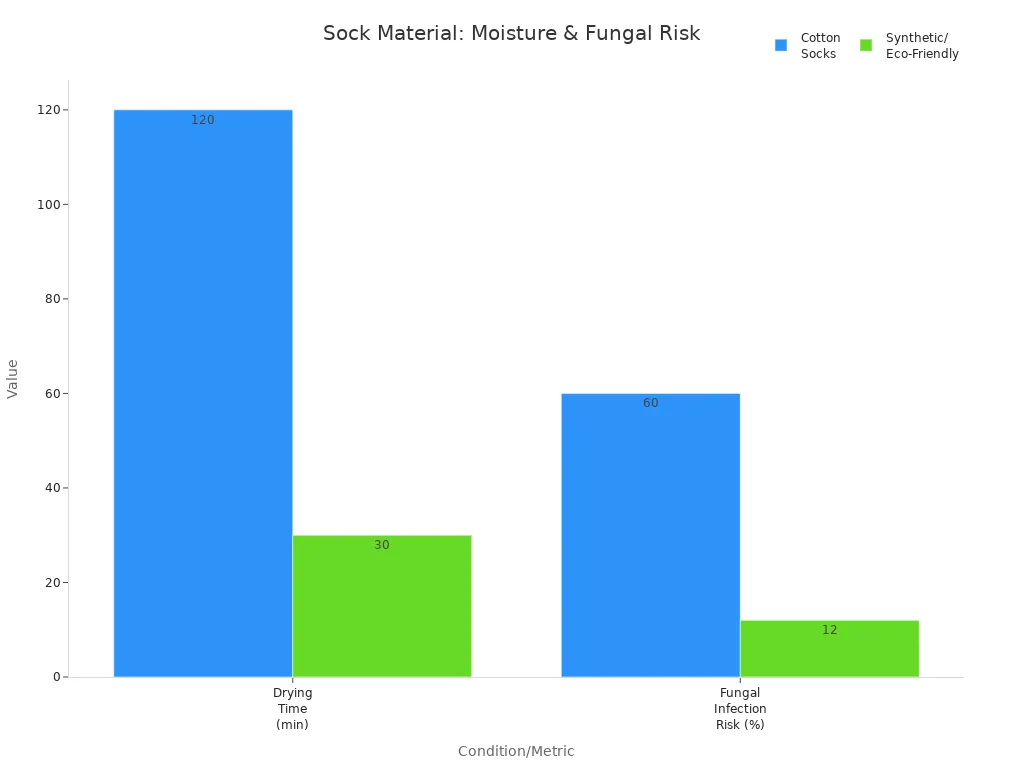
Studies show that sock material matters a lot. Cotton socks keep sweat and dry very slowly. This means your feet stay wet for a long time. In humid weather, cotton socks can stay wet for more than two hours. Synthetic blends and eco-friendly socks like bamboo or TENCEL™ dry much faster. These socks help keep your feet dry and lower your chance of getting a fungal infection.
| Condition/Metric | Cotton Socks Impact | Synthetic/Eco-Friendly Alternative Impact |
|---|---|---|
| Drying Time (80% Humidity) | >120 minutes (slow drying) | ~30 minutes (quick drying) |
| Fungal Infection Risk | Up to 60% higher (e.g., athlete's foot) | Reduced by up to 80% with antimicrobial synthetics |
| Moisture Management | Poor moisture wicking, retains sweat | Moisture-wicking, maintains drier microclimate |
| Antimicrobial Properties | None inherent | Present in bamboo, and treated synthetics |
You have a bigger chance of toenail fungus if your socks trap sweat. Wet socks and shoes without air let fungus grow. Tight shoes that do not breathe also trap heat and sweat. This makes things worse. Keeping your feet dry is very important for healthy feet.
Picking the right socks can help protect your feet. Moisture-wicking socks pull sweat away from your skin. This keeps your feet dry and less friendly to fungus. Merino wool and bamboo socks are good because they manage sweat and fight germs. Some socks use copper or special treatments to stop germs.
Here are some ways socks help stop toenail fungus:
Moisture-wicking fabrics keep your feet dry.
Antimicrobial socks lower the number of fungi and bacteria.
Breathable socks let air move and keep feet cooler and drier.
Seamless socks and a good fit stop skin damage, which can let fungus in.
Changing socks often and washing them well keeps your feet clean.
Tip: Always pick socks that fit well and dry fast. Do not wear cotton if you want the best protection.
Sock choice is very important for stopping toenail fungus. Controlling sweat and picking the right socks can lower your risk by up to 80%. Make smart choices to keep your feet healthy and comfortable every day.
Moisture-wicking socks help keep your feet healthy. They pull sweat away from your skin. This keeps your feet dry. Dry feet make it harder for fungus to grow. Fungus likes warm and wet places. These socks move sweat away fast and let it dry. That helps stop fungus from growing.
You can get moisture-wicking socks made from special fibers. Some are made with merino wool or synthetic blends. These materials work better than cotton. Merino wool soaks up sweat but still feels dry. Synthetic blends dry even faster and help cool your feet.
Tip: Pick moisture-wicking socks if you sweat a lot. They help stop fungal infections and keep your feet comfy.
Here are the main benefits of moisture-wicking socks:
Pull sweat away from your skin to keep feet dry.
Make it harder for fungus to grow.
Help control foot odor and bacteria.
Lower your chance of blisters and chafing.
Antimicrobial socks give extra protection from toenail fungus. These socks use special fibers or treatments. Some use copper or silver to kill fungi and bacteria. Studies show antimicrobial socks can help stop fungal infections. One study showed a 72.9% success rate for stopping fungus.
You should pick socks with strong antimicrobial properties if you have had fungus before. They are also good if you want to be extra safe. Merino wool has natural antibacterial and antimicrobial powers. This is because of something called lanolin. It is a smart choice for healthy feet.
Here is why antimicrobial socks are a good pick:
Kill or stop fungi and bacteria on your feet.
Lower your risk of infection, even with cuts or blisters.
Help keep your feet fresh and odor-free.
Give extra protection in public showers or locker rooms.
Note: Antimicrobial socks work best if you change and wash them every day.
Breathable socks help your feet stay cool and dry. Breathable means air can move through the fabric. This stops heat and sweat from building up. When socks let air flow, your feet sweat less. This keeps your feet drier and makes it harder for fungus to grow.
Natural fibers like merino wool and organic cotton breathe well. Mesh panels in socks also help air move. Synthetic fibers like polyester and nylon do not breathe well. They can trap sweat and raise your risk of toenail fungus.
A quick look at sock materials and breathability:
| Material | Breathability | Moisture Control | Antimicrobial Properties |
|---|---|---|---|
| Merino Wool | Excellent | Excellent | Yes |
| Organic Cotton | Good | Moderate | No |
| Synthetic Blends | Poor-Moderate | Good | Sometimes (if treated) |
Remember: Pick breathable socks that fit well. This helps keep your feet healthy and lowers your risk of toenail fungus.
You might think any sock will do, but the proper fit makes a big difference for your feet. Socks that fit well help you avoid problems like blisters, chafing, and even toenail fungus. When socks are too tight, they squeeze your toes and trap moisture. This creates a warm, damp space where fungus can grow. Loose socks bunch up and rub against your skin. This causes friction and small cuts, which let germs and fungus enter.
A proper fit means your socks hug your feet without feeling tight. Your toes should move easily, and the heel should sit in place. You want socks that stay up but do not leave marks on your skin. If you choose socks with antibacterial fibers, a good fit helps these fibers work better. The material stays close to your skin and fights germs right where you need it.
Here are some signs you have the proper fit:
No bunching or slipping inside your shoes
Toes can wiggle, but fabric does not sag
No deep marks on your ankles after wearing
Heel pocket lines up with your heel
Tip: Try on new socks with the shoes you wear most. Walk around to check for comfort and fit.
| Sock Fit Problem | What Happens | Risk for Toenail Fungus |
|---|---|---|
| Too Tight | Traps sweat, restricts blood flow | High |
| Too Loose | Causes friction, blisters | Moderate |
| Proper Fit | Controls moisture, reduces rubbing | Low |
You should also remember that socks with antibacterial properties work best when they fit well. The fibers need to touch your skin to stop bacteria and fungus from spreading. Always check the size chart before you buy new socks. If you have wide feet or high arches, look for brands that offer different shapes and sizes.
Choosing the proper fit keeps your feet dry, comfortable, and healthy. You lower your risk of toenail fungus and enjoy better foot hygiene every day.
Picking the best socks for toenail fungus really helps your feet. There are lots of choices, but some materials work better. Let’s see what makes some socks special.
You can find many synthetic blends in stores. Some common ones are polyester, nylon, polypropylene, CoolMax®, and DryMax®. These blends move sweat away from your skin fast. Some brands mix fibers to make socks last longer and control sweat better.
Synthetic blends dry quickly and help keep feet dry. CoolMax® fibers have a shape that moves sweat away fast. DryMax® socks use layers to push sweat out to your shoe. Polypropylene does not soak up water but lets it pass through. This helps keep your feet dry. These socks are good for sports or long days.
When you shop, check the label for moisture-wicking features. Look for words like “quick-dry” or “performance.” Make sure the socks fit well and do not have tight bands. A good fit stops blisters and keeps your feet comfy.
Tip: Pick synthetic socks with antimicrobial treatments for extra protection.
Merino wool is one of the best socks for toenail fungus. It can hold up to 30% of its weight in sweat and still feel dry. This keeps your feet dry and lowers your chance of fungus. Merino wool has lanolin, which fights germs and fungus. You can wear merino wool socks in any season. They keep your feet warm in winter and cool in summer.
Bamboo socks are also a smart pick for fungus. Bamboo fibers pull sweat away and let it dry fast. Bamboo has a natural thing called “bamboo kun” that stops germs and fungus. These socks feel soft and help your feet stay fresh.
Here’s a quick look at how these two natural fibers compare:
| Feature | Merino Wool | Bamboo |
|---|---|---|
| Moisture Control | Excellent | Very Good |
| Antimicrobial | Yes (lanolin) | Yes (bamboo kun) |
| Breathability | High | High |
| Comfort | Soft, temperature control | Soft, lightweight |
| Odor Resistance | Strong | Good |
Both merino wool and bamboo socks help stop toenail fungus. They keep your feet dry and fight germs.
Copper or titanium-infused socks are great for toenail fungus. Scientists found that copper socks kill germs and fungus on contact. These socks give you extra protection if you get fungal infections a lot.
Pick copper or titanium-infused socks if you have had toenail fungus before. They are also good if you want extra safety. These socks work well in gyms, locker rooms, or places where you might walk barefoot.
Infused socks can cost more than regular socks. Some people think they are less soft than natural fibers. Always check for a comfy fit and make sure you do not have skin problems.
Note: The best socks for toenail fungus control sweat, let your feet breathe, and fight germs. Try different types to see which works best for you.
You might think cotton socks feel soft and comfortable. However, cotton can cause problems for your feet. Cotton absorbs sweat and holds onto moisture. When your feet sweat, cotton socks get wet and stay damp for a long time. This creates a warm, moist place where fungus can grow easily. Wet cotton socks also rub against your skin and can cause blisters. If you wear cotton socks all day, your feet may feel cold and clammy. Fungus loves this kind of environment.
Tip: If you want to keep your feet dry, avoid cotton socks, especially during exercise or in hot weather.
Not all synthetic socks are good for your feet. Some synthetic fibers trap heat and moisture. This makes your feet sweat more and stay damp. When you choose socks, watch out for these materials:
Polyester, acrylic, and nylon can trap heat and moisture against your skin.
Lower-quality synthetic socks often do not let your feet breathe.
These materials can hold onto odor and may irritate your skin.
Tight elastic bands can cause small cuts or restrict blood flow, making it easier for fungus to enter.
If you wear socks made from these materials, your feet may stay wet for hours. This increases your risk of toenail fungus. You should also avoid socks with very tight bands at the top. These can leave marks on your skin and make your feet less healthy.
Here is a quick table to help you see which materials to avoid:
| Material | Problem for Feet | Fungal Risk |
|---|---|---|
| Cotton | Holds moisture, slow drying | High |
| Polyester | Traps heat and sweat | High |
| Acrylic | Poor breathability | High |
| Nylon | Retains odor, irritates skin | High |
You can find the right socks by checking the label before you buy. Look for socks that say "moisture-wicking," "breathable," or "antimicrobial." These words mean the socks help keep your feet dry and healthy. Avoid socks that list cotton, polyester, acrylic, or nylon as the main material. Instead, choose socks made from merino wool, bamboo, or high-quality synthetic blends designed for moisture control.
When you shop, try these steps:
Read the fabric content on the label.
Pick socks with a blend of merino wool, bamboo, or advanced synthetics.
Make sure the socks feel soft but not too tight.
Avoid socks with thick, tight elastic bands.
Note: The right blend keeps your feet dry, cool, and less likely to get toenail fungus. Always choose socks that help your feet breathe and stay comfortable.
You can lower your risk of toenail fungus and athlete’s foot by wearing socks made from moisture-wicking materials. These socks pull sweat away from your skin and help it evaporate. Dry feet make it hard for fungus and bacteria to grow. Experts in podiatry say that patients who wear these socks have fewer fungal infections than those who wear regular cotton socks.
Moisture-wicking socks help control odor and bacteria. When your feet stay dry, bacteria have less chance to grow and cause bad smells. Some socks use nanotechnology, like silver or copper fibers, to stop bacteria and fungi. These antibacterial socks for feet keep your shoes and socks fresher all day.
Wet feet rub against shoes and socks, causing blisters and chafing. Moisture-wicking socks keep your feet dry, so you avoid these painful problems. Many socks also have seamless toes and extra padding to protect your skin from friction.
You feel more comfortable during sports or long walks when your feet stay dry. Moisture-wicking materials move sweat away fast, so your feet do not feel sticky or damp. This helps you focus on your activity instead of your feet.
Good foot hygiene starts with dry, clean feet. Moisture-wicking socks help you keep your feet healthy by reducing sweat, odor, and germs. You protect your skin and nails every day by choosing the right socks.
Tip: Investing in high-quality moisture-wicking socks may cost more, but you get better comfort and long-term foot health.
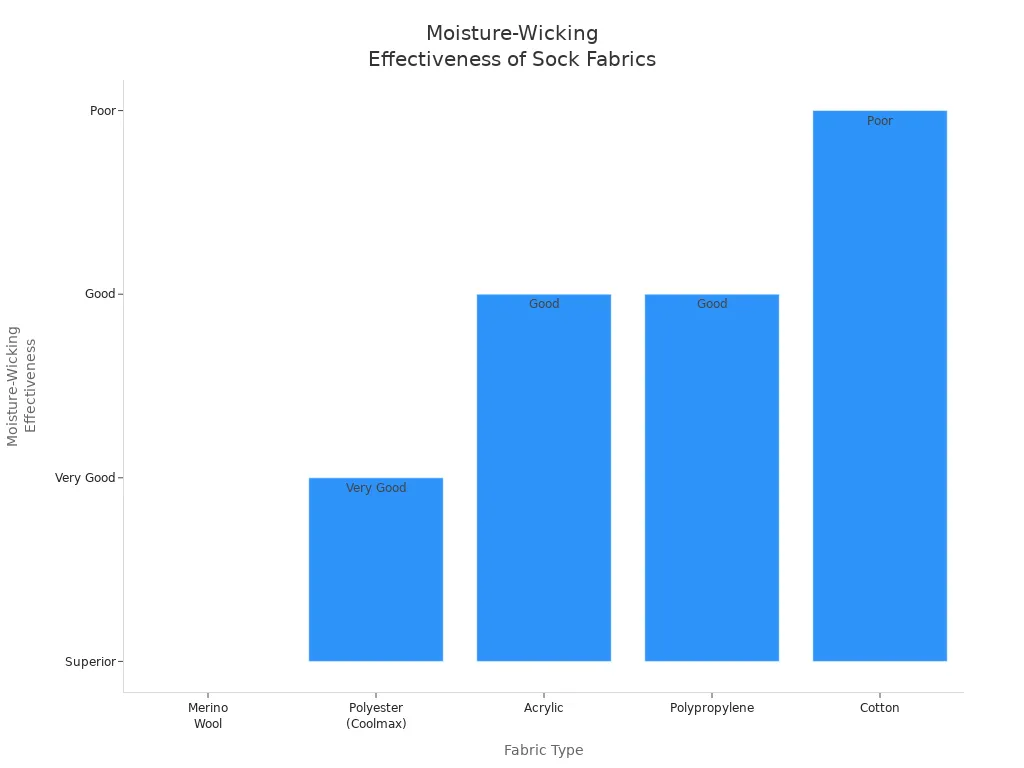
You have many options for moisture-wicking socks. Merino wool stands out as the best choice. It keeps your feet dry, soft, and comfortable. Polyester blends, like Coolmax, dry quickly and work well for sports. Polypropylene moves sweat away but does not absorb water. Avoid cotton, which holds moisture and dries slowly.
| Fabric Type | Moisture-Wicking Properties | Additional Notes |
|---|---|---|
| Merino Wool | Superior moisture management; soft and non-itchy | Great insulation, temperature control, and antimicrobial properties |
| Polyester (Coolmax) | Fast drying; special fiber shape for moisture transport | Best for hot weather and sports |
| Acrylic | Good wicking, slower drying | Not as warm; can feel hot on warm surfaces |
| Polypropylene | Does not absorb water; moves sweat away | Helps keep feet dry |
| Cotton | Absorbs moisture, dries slowly | Not recommended for moisture-wicking socks |
When you shop for socks, check the label for words like “moisture-wicking,” “breathable fabrics,” or “antimicrobial.” Look for blends with merino wool, polyester, or polypropylene. Avoid socks that list cotton as the main material. If you see “breathable socks for foot health,” you know the brand cares about keeping your feet dry and healthy.
Use polyester blends for sports and daily wear. They last long and keep your feet dry.
Pick merino wool for cold weather. It keeps your feet warm and dry.
Choose bamboo or light blends for hot weather. These breathable fabrics help your feet stay cool.
Try socks with seamless toes and extra padding for running or hiking.
Experts suggest owning different socks for different activities and seasons. This helps you match your socks to your needs.
You want socks that keep your feet dry but also feel soft and comfortable. Thicker socks often wick moisture better than thin ones. Longer socks can help manage sweat and fit better. Always wash your socks in cold water and air dry them to keep them working well. Good moisture-wicking materials support your foot hygiene and keep your feet healthy every day.
You need to change your socks often to keep your feet healthy. Doctors recommend that you change socks at least once every day. If you have sweaty feet, you should change them more often. Hot weather, sports, or long walks can make your feet sweaty. When this happens, put on a fresh pair of socks right away.
Here are some signs that tell you it is time to change your socks:
Your socks feel damp or wet.
You notice a bad smell.
You see dirt or stains.
Your skin feels itchy or irritated.
If you notice any of these, do not wait. Change your socks as soon as possible. Wearing clean, dry socks helps stop fungus from growing. It also keeps your feet comfortable all day.
Tip: If you get sweaty feet at school or work, keep an extra pair of socks in your bag or locker.
Clean socks are just as important as changing them. Always wash your socks after each use. Use warm water and soap to remove sweat, dirt, and germs. Dry your socks completely before wearing them again. Damp socks can let fungus grow, even if they look clean.
You can add a little disinfectant or white vinegar to your wash. This helps kill any leftover germs or fungus. Make sure you wash socks made from special materials, like merino wool or bamboo, according to the care label. This keeps them working well and lasting longer.
| Step | What to Do | Why It Matters |
|---|---|---|
| Wash after each use | Use warm water and soap | Removes sweat and germs |
| Dry completely | Air dry or use a dryer | Stops fungus from growing |
| Disinfect | Add vinegar or disinfectant | Kills extra bacteria and fungi |
Note: Never wear socks two days in a row without washing them, especially if you have sweaty feet.
Antifungal powders help protect your feet from fungus. These powders work best when you use them with good sock habits. Start by washing and drying your feet well, especially between your toes. Sprinkle antifungal powder on your feet before putting on socks. Look for powders with ingredients like clotrimazole or miconazole.
Follow these steps for the best results:
Wash and dry your feet, paying close attention to sweaty areas.
Apply antifungal powder or spray.
Wear moisture-wicking socks made from breathable materials.
Change your socks regularly to keep your feet dry.
Antifungal powders soak up extra sweat and stop fungus from growing. When you use them with clean, dry socks, you lower your risk of toenail fungus. This routine works well for people who get sweaty feet or spend a lot of time in shoes.
Using antifungal powders and changing socks regularly creates a strong defense against toenail fungus.
Wearing damp socks is one of the biggest mistakes you can make for your foot health. When your socks stay wet, they trap moisture and heat against your skin. This creates the perfect place for fungus to grow. Fungi love warm, moist environments. If you keep your feet in damp socks, you raise your risk of athlete's foot and toenail fungus.
Damp socks keep your feet sweaty for hours.
Fungi thrive in these conditions and can invade your toenails.
Cotton socks absorb sweat but do not dry out, so your feet stay wet.
Synthetic fibers that do not wick moisture well also leave your feet damp.
Tight socks or elastic bands can irritate your skin, making it easier for fungus to enter.
You should always change your socks if they get wet. If you have socks for sweaty feet, make sure they dry quickly and keep your feet comfortable. Dry socks help prevent athlete's foot and keep your feet healthy.
Tip: Carry an extra pair of socks if you know your feet get sweaty during the day.
Choosing the wrong sock material can make your feet more likely to get athlete's foot. Many people pick 100% cotton socks because they feel soft. However, cotton acts like a sponge. It soaks up sweat and holds onto it, keeping your feet damp. This dampness gives fungus a chance to grow.
Here are some common mistakes with sock materials:
Wearing cotton socks that retain moisture and sweat.
Picking socks with low synthetic fiber content, which do not wick moisture well.
Using wool socks all day, which may cause your feet to sweat more.
Not letting your shoes dry out between uses, which keeps your feet in a damp environment.
You should look for socks with good breathability and moisture-wicking properties. Merino wool and some synthetic blends help keep your feet dry and lower your risk of athlete's foot. Avoid socks that trap heat and sweat.
Sock fit matters more than you might think. Socks that are too tight can squeeze your toes and trap sweat. This makes your feet sweaty and uncomfortable. Tight socks or bands can also cause small cuts or abrasions. These small injuries give fungus a way to enter your skin and nails, leading to athlete's foot or toenail fungus.
Loose socks bunch up and rub against your skin. This friction can cause blisters, which also open the door for infection. You want socks that fit snugly but do not leave marks on your skin. A good fit helps your socks wick moisture away and keeps your feet dry.
Remember: The right socks protect your foot health. Choose socks that fit well, dry quickly, and allow your feet to breathe. This lowers your risk of athlete's foot and keeps your feet feeling fresh.
You can prevent toenail fungus and combat athlete's foot by building smart daily habits. These steps help keep your feet healthy and lower your risk of infection.
Always change your socks after you sweat or finish exercise. Damp socks create a warm, moist place where athlete's foot and toenail fungus can grow. Podiatrist recommended socks made from moisture-wicking materials help keep your feet dry and comfortable.
Wash your feet every day with soap and water. Dry them well, especially between your toes. Fungi love damp skin, so keeping your feet dry is one of the best ways to prevent toenail fungus and combat athlete's foot.
Sprinkle antifungal powder or use a spray on your feet and inside your shoes. These products absorb extra moisture and stop fungus from growing. If you sweat a lot or spend time in public showers, this habit helps prevent athlete's foot.
Wear different shoes each day. This gives your shoes time to dry out and keeps them from staying damp. Dry shoes help prevent toenail fungus and make it harder for athlete's foot to spread.
Public showers, locker rooms, and pools are common places for athlete's foot. Always wear flip-flops or shower shoes in these areas. This simple step helps you combat athlete's foot and keeps your feet safe.
Trim your toenails straight across. This prevents ingrown nails, which can trap fungus. Do not cover discolored nails with polish. Let your nails breathe and stay healthy.
Check your feet and toenails often. Look for changes like discoloration, thickening, or cracks. Early action helps you prevent toenail fungus and athlete's foot from getting worse.
Tip: A healthy diet with vitamin D and zinc supports your immune system and helps your body fight off infections.
Sometimes, home care is not enough. You should see a doctor if you notice any of these signs:
If your toenails turn white, yellow, or brown, or become thick and hard to trim, you may have a fungal infection that needs medical care.
Pain, swelling, or redness can mean the infection is spreading. You should not ignore these symptoms.
If your nails stay brittle, crumbly, or have a foul odor after using home treatments, see a podiatrist. Early treatment helps prevent complications.
If you keep getting athlete's foot or toenail fungus, a doctor can help you find the cause and suggest stronger treatments.
If you have diabetes, poor circulation, or a weak immune system, see a doctor right away if you notice any foot problems. These conditions make infections more serious.
If you are not sure what is wrong with your nails or feet, a podiatrist can give you the right diagnosis and treatment plan.
Note: Untreated toenail fungus can cause pain, skin injury, and even affect your confidence. Early care keeps your feet healthy and helps you avoid long-term problems.
Choosing the right socks and caring for your feet helps you avoid toenail fungus. You keep your feet healthy by wearing moisture-wicking socks, changing them daily, and drying your feet well. Use this simple checklist to protect your feet:
| Healthy Habit | Why It Matters |
|---|---|
| Wear moisture-wicking socks | Keeps feet dry and blocks fungus |
| Change socks regularly | Prevents moisture buildup |
| Dry feet thoroughly | Stops fungal growth between toes |
| Inspect feet often | Catches problems early |
Stay consistent with these habits. You can enjoy strong, healthy feet every day!
You should pick socks made from moisture-wicking materials like merino wool, bamboo, or synthetic blends. These socks keep your feet dry and help stop fungus from growing.
You need to change your socks at least once a day. If your feet sweat a lot or get wet, change them more often to keep your feet dry and healthy.
Cotton socks hold moisture and dry slowly. You should avoid cotton if you want to lower your risk of toenail fungus. Choose socks that dry quickly and keep your feet cool.
Yes, antimicrobial socks kill or block fungi and bacteria. These socks give you extra protection, especially if you have had fungal infections before or spend time in public places.
You can use antifungal powder for extra protection. Sprinkle it on your feet before putting on socks. The powder helps keep your feet dry and stops fungus from growing.
Your socks should hug your feet without feeling tight. You should not see deep marks on your skin. The heel should line up with your foot, and your toes should move easily.
Yes, sharing socks can spread fungus and bacteria. Always wear your own clean socks. Never share socks with others, even family members.
You should see a doctor if you notice yellow, thick, or brittle toenails. Early treatment helps stop the infection from getting worse. Keep your feet clean and dry while you wait for care.


