Foshan Mingjun Textile Company Ltd.

Views: 0 Author: Site Editor Publish Time: 2026-01-19 Origin: Site
Millions of people in the U.S. have eczema. This includes 9.6 million kids and 16.5 million adults. If your skin is sensitive, good eczema socks help a lot. The best 7 materials are cotton, linen, silk, merino wool, bamboo, lyocell (TENCEL), and avoid synthetics. These fabrics are soft and help stop itching. They also help your skin stay healthy. You should wear socks that feel nice all day!
Pick socks made from natural things like organic cotton, bamboo, silk, merino wool, or lyocell. These socks feel soft and help your skin stay healthy.
Do not use socks made from polyester or nylon. These can hold heat and sweat. This can make eczema worse.
Find socks that pull moisture away, have no seams, and use hypoallergenic materials. These features help stop skin irritation.
Wash eczema socks gently. Use detergents with no fragrance. This keeps socks soft and working well.
Put on clean socks every day. Change them more if they get wet. This keeps your feet dry and stops irritation.
You know how uncomfortable itchy feet can get. If you have eczema, the wrong socks can make things worse. Your skin needs gentle care. The fabric you choose can help your feet feel calm and protected. Some materials, like cotton and silk, are soft and let your skin breathe. These fabrics do not trap sweat or heat. That means less irritation for you.
Dermatologists often recommend cotton for sensitive skin. Poly-cotton blends and silk also work well. Superfine Merino Wool is another good choice. It feels soft and helps your skin stay at the right temperature. Studies show that Superfine Merino Wool can reduce eczema symptoms in children and young adults. It does not scratch or make your skin feel hot.
Let’s look at how some popular fabrics compare:
Fabric Type | Anti-microbial Performance | Mechanical Characteristics |
|---|---|---|
Cotton | Moderate | Good |
Tencel | High | Excellent |
Bamboo | High | Good |
Bamboo and Tencel are also great for eczema socks. They fight germs and feel smooth on your skin. You want socks that keep your feet dry and comfy all day.
Some socks can bother your skin. You might notice redness, itching, or even blisters. This often happens because of rough fibers, dyes, or chemicals. Synthetics like polyester or nylon can trap sweat and heat. That makes your skin feel worse.
Here are some things to watch out for:
Rough seams or tags that rub your skin
Fabrics that do not breathe, like polyester
Harsh dyes or chemicals used in processing
You want to pick socks made from eczema-friendly fabrics. These materials, like cotton, silk, bamboo, and Tencel, help your skin stay happy. They reduce friction and let your feet breathe. When you choose the right socks, you give your skin a break and help it heal.
Image Source: pexels
When you buy eczema socks, you want your feet to feel good. Let’s check out the best fabrics for eczema socks and see how they help your skin.
Most people pick cotton socks first. This is a good idea, especially if you use organic cotton. This fabric is soft and gentle. It lets your feet breathe and keeps sweat away. You do not want socks that hold in sweat. Organic cotton keeps your feet dry. It is a top choice for people with eczema.
Here is why organic cotton is special:
Organic cotton does not have harsh chemicals, so it is less likely to cause allergies or skin problems.
Air moves better through organic cotton, so your feet stay dry.
Organic cotton feels soft, so you do not get rubbing or chafing.
It pulls sweat away from your skin, which helps with eczema.
Many eczema socks use organic cotton and TENCEL fibers, and these are made without harsh chemicals.
Socks made with no seams are more comfortable.
Organic cotton socks keep feet drier than regular cotton socks.
If you want socks that are comfy and protect your skin, organic cotton is a great pick.
Linen is also a good choice for eczema socks. You might not think about linen for socks, but it works well. Linen lets air move around your feet, so they stay cool and dry. You do not get sticky feet, even when it is hot.
Linen soaks up sweat and keeps your feet dry. You will not feel wet, even when it is humid. This helps during eczema flare-ups. Linen is also hypoallergenic, so it rarely causes problems.
Here is why linen is good for sensitive skin:
Linen is hypoallergenic, so it helps people with allergies.
It fights off bacteria and fungi.
Linen does not often cause reactions, so it is good for eczema.
It lowers the chance of irritation and discomfort.
If you want socks that keep your feet cool and dry, linen is a smart choice.
Silk feels fancy, but it is also useful for eczema socks. You might like how smooth and soft silk feels. Silk acts like a shield for skin with eczema. It is hypoallergenic and cuts down on rubbing. You can wear silk socks over creams to keep moisture in.
Silk lets your feet breathe and pulls sweat away. It stops bacteria and bad smells. Silk keeps your feet cool in summer and warm in winter. It helps your feet feel good all year.
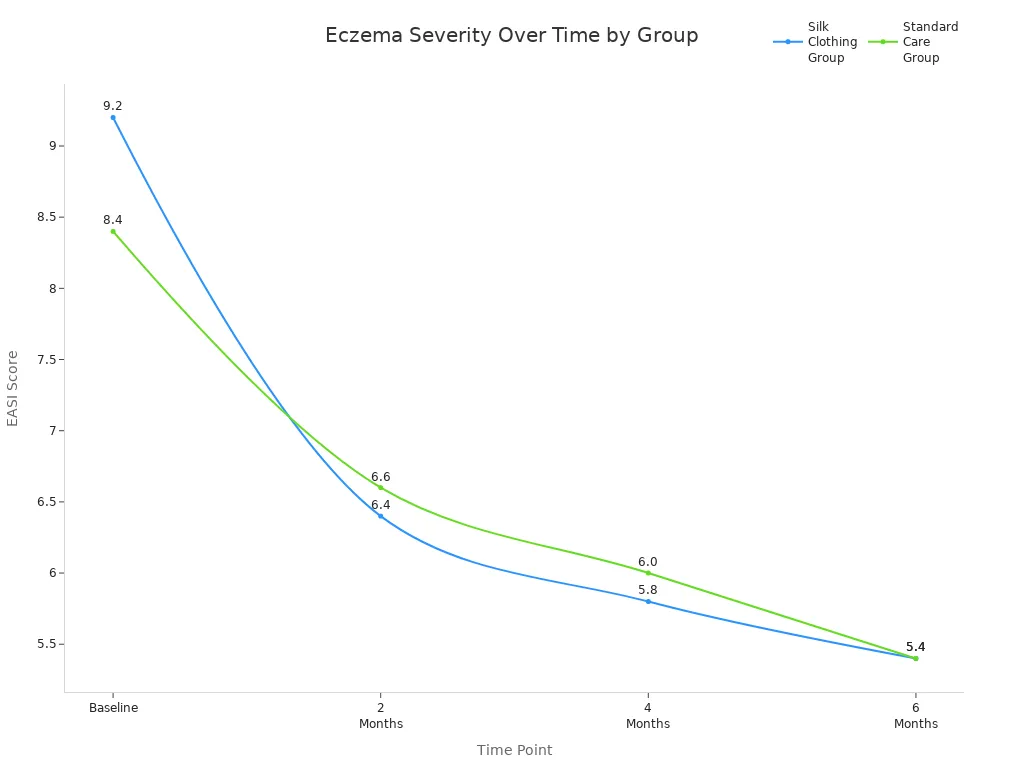
Here is a chart showing how silk works in studies:
Group | EASI Score (Baseline) | EASI Score (2 Months) | EASI Score (4 Months) | EASI Score (6 Months) |
|---|---|---|---|---|
Silk Clothing Group | 9.2 | 6.4 | 5.8 | 5.4 |
Standard Care Group | 8.4 | 6.6 | 6.0 | 5.4 |
You can see that silk does not always work better in studies, but many people still like it. Silk is a favorite for eczema socks because it is soft and gentle.
You might think wool is itchy, but merino wool is not. Superfine merino wool is safe for people with asthma and eczema. It feels soft and does not scratch. Studies show that merino wool helps people with eczema feel better.
Here is why merino wool is a good choice:
Merino wool is comfy for sensitive skin.
Fine merino wool helps with atopic dermatitis.
Superfine merino wool is good for sensitive skin.
New superfine merino wool helps manage eczema.
Study | Findings |
|---|---|
Study 1 | Wool is not an allergen; only coarse fibers cause problems. |
Study 2 | Fine merino wool helps with atopic dermatitis. |
Study 3 | Superfine merino wool is good for sensitive skin. |
Study 4 | New superfine merino wool helps with eczema. |
If you want warm socks that do not itch, merino wool is a great choice.
Bamboo is a top pick for eczema socks. It pulls sweat away and fights germs. Bamboo keeps your feet dry and cool, which is important for eczema. The antibacterial part helps stop bad smells. Bamboo socks help keep your feet healthy by keeping them dry and fresh.
Here is what bamboo does for your skin:
Bamboo fights bacteria that cause bad smells.
Bamboo socks help keep feet healthy and fresh.
Bamboo fibers have a special agent that keeps away irritants.
Bamboo socks lower bacteria, which helps stop infections and irritation.
Bamboo fibers pull sweat away, so feet stay dry and comfy.
Bamboo has 'bamboo kun', which stops bacteria from growing.
Dr. Amanda Chen, board-certified dermatologist, says: "The cool, dry environment that bamboo naturally creates against the skin is exactly what we recommend for patients with atopic dermatitis and other inflammatory skin conditions. We're seeing remarkable improvements in patient comfort."
You can trust bamboo as one of the best fabrics for eczema socks.
Lyocell, also called TENCEL, is a newer fabric for eczema socks. It feels silky and manages sweat well. A study showed that TENCEL and Smartcel™ Sensitive helped people with atopic dermatitis, made itching better, and helped people sleep when worn at night.
Lyocell is smooth and lets your feet breathe. It is gentle on sensitive skin and keeps your feet dry.
Here is how lyocell compares to other fabrics:
Fabric Type | Preference | Itching Reduction | TEWL Measurement |
|---|---|---|---|
Lyocell | Significant | Lower average | Decreased |
Cotton | Less preferred | Higher average | Increased |
If you want socks that are soft and help your skin heal, lyocell is a great pick.
You might see socks made from polyester or nylon. These are not good for eczema. Synthetics trap sweat and heat. They can make your skin feel worse. You should pick socks made from organic cotton, linen, silk, merino wool, bamboo, or lyocell. These fabrics let your skin breathe and stay healthy.
When you pick socks made from organic cotton or other good fabrics, you help your feet stay comfy and itch-free.
When you choose socks for eczema, comfort is important. You also want your feet to be safe. Natural fabrics like organic cotton, linen, bamboo, and silk are good choices. These materials feel soft and gentle on your skin. They let your feet breathe and help keep sweat away. Organic cotton is special because it is hypoallergenic. It does not have harsh chemicals. This means you are less likely to get itchy or have a skin reaction.
Here are some reasons to pick organic cotton and other natural fabrics:
Organic cotton lets air in and soaks up sweat.
You can wash organic cotton easily.
There are no harmful chemicals in organic cotton.
Organic cotton is gentle for sensitive skin.
It helps lower allergic reactions.
Organic cotton is soft and does not scratch.
Many people choose organic cotton for eczema socks.
Organic cotton lasts a long time.
Bamboo and linen are helpful too. Bamboo soaks up more sweat than cotton. It keeps your feet cool. Linen is light and soft. Silk feels smooth and protects your skin. These natural fabrics are great for people with eczema.
You can see how natural fibers and synthetics compare in this table:
Fiber Type | Moisture Management Effectiveness | Additional Benefits |
|---|---|---|
Natural Fibers | More effective | Hypoallergenic, free from harmful chemicals |
Synthetic Fibers | Less effective | Tends to trap heat and moisture, potentially worsening eczema symptoms |
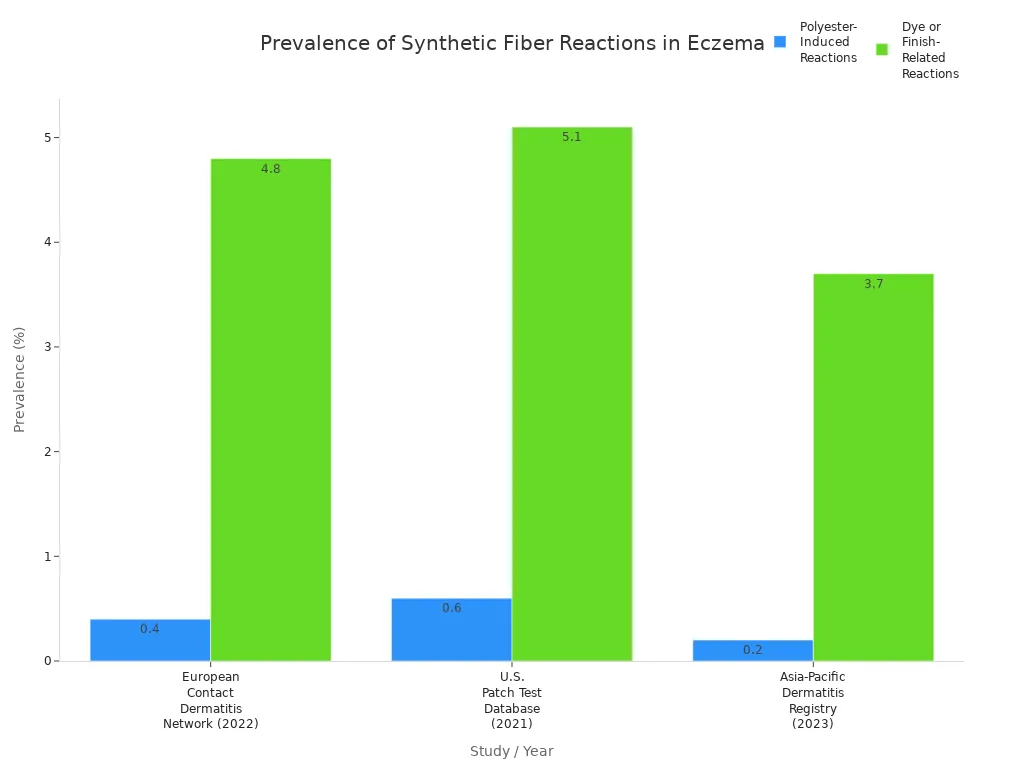
Synthetic socks, like polyester or nylon, can cause problems. These materials trap heat and sweat. Your feet may feel wet and uncomfortable. If you have eczema, this can make things worse. Synthetic socks sometimes use dyes or finishes that bother your skin.
You might wonder how often these reactions happen. Studies show that allergies to polyester are rare. But chemicals used to finish the fabric cause more problems. Look at this chart to see how often reactions happen:
Synthetic socks are not as soft as organic cotton. You may feel itchy, red, or even get blisters. Synthetics do not pull sweat away as well as organic cotton. Your feet can stay damp, which causes odor and sometimes infections. If you want socks that protect your skin, pick organic cotton or other natural fabrics.
Image Source: unsplash
Shopping for eczema socks can feel confusing. You want comfort, but you also need protection for your skin. Start by checking the label. Look for socks made from organic fibers like organic cotton, organic bamboo, or organic merino wool. These natural materials feel soft and let your feet breathe. You will notice less itching and irritation.
Here are some features you should look for:
Choose eczema socks with moisture-wicking properties. Moisture-wicking fabrics keep your feet dry and cool.
Pick socks with seamless or flat seams. These prevent rubbing and discomfort.
Go for hypoallergenic and dye-free socks. You lower your risk of skin irritation.
Make sure the socks have a soft texture and the right thickness. You want gentle support without overheating.
Check the fit. Socks should hug your feet but not squeeze them.
Some eczema socks include a soft lining with aloe vera gel. This gives extra soothing benefits.
You want socks that help your skin heal. Moisture-wicking socks made from organic fibers work best for sensitive feet.
Taking care of your eczema socks helps them last longer and keeps your skin safe. You need to wash them gently. Turn your socks inside out before washing. Use a non-bio detergent that does not contain SLS. Avoid fabric softeners because they can leave residue and cause irritation.
Here is a simple table to help you remember the best care practices:
Care Practice | Description |
|---|---|
Gentle Washing | Turn socks inside out, use SLS-free non-bio detergent, skip fabric softeners |
Drying | Air dry or use a cool setting to protect the fabric |
Replacement | Change socks often, especially if they look worn |
When you wash eczema socks, skip detergents with strong fragrances, dyes, or harsh chemicals. Pick hypoallergenic and eco-friendly detergents. You can use natural options like bicarbonate of soda or white vinegar. These keep your socks soft and safe for your skin.
Moisture-wicking socks made from organic fibers stay comfortable when you care for them the right way. You help your feet stay healthy and happy.
You have many great choices for eczema socks. Cotton, linen, silk, merino wool, bamboo, and lyocell all help your skin feel calm and dry. Picking the right socks can make your feet happy. Here are some tips from dermatologists:
Go for seamless socks with little elastic.
Wash new socks before wearing.
Use gentle, fragrance-free detergent.
Skip fabric softeners and bleach.
Change socks often, especially if damp.
Choose light colors to avoid dyes.
The right socks can make a big difference for your sensitive skin!
You want socks made from organic cotton, bamboo, silk, or merino wool. These materials feel soft and let your skin breathe. They help keep your feet dry and comfortable. Avoid socks with harsh dyes or rough seams.
Yes, you can wear superfine merino wool socks. They do not itch like regular wool. Merino wool helps control temperature and moisture. Many people with eczema find them comfortable.
Change your socks at least once a day. If your feet get sweaty or damp, switch to a fresh pair right away. Dry socks help prevent irritation and infection.
Tip: Turn your socks inside out before washing. Use a gentle, fragrance-free detergent. Skip fabric softeners. Air dry your socks or use a cool dryer setting. This keeps the fabric soft and safe for your skin.