
Views: 0 Author: Site Editor Publish Time: 2026-02-14 Origin: Site


You want your child to bounce back quickly after sports, right? Pediatric compression socks give you that edge. These socks boost blood flow, which means your child feels less sore and heals faster. Pediatric compression socks also cut down on swelling and add comfort after a tough game. When you see your child tired or achy, you can trust pediatric compression socks to make a difference. Many parents choose pediatric compression socks because they support growing legs and help kids recover with a smile.
Pediatric compression socks help blood move better. This helps your child recover faster after sports. These socks lower swelling and soreness. They make your child feel more comfortable after games. Compression socks support legs that are still growing. They help keep legs steady and lower the chance of injuries. Wearing compression socks right after sports helps muscles get more oxygen and nutrients. Pick the right size and compression level for best comfort and results. Using compression socks often can help young athletes feel less tired. It also helps them recover faster. Taking care of compression socks, like washing and air drying, keeps them working well and feeling good. MINGJUN Hosiery makes high-quality compression socks. They can be customized and help your child's health. They also help the environment.
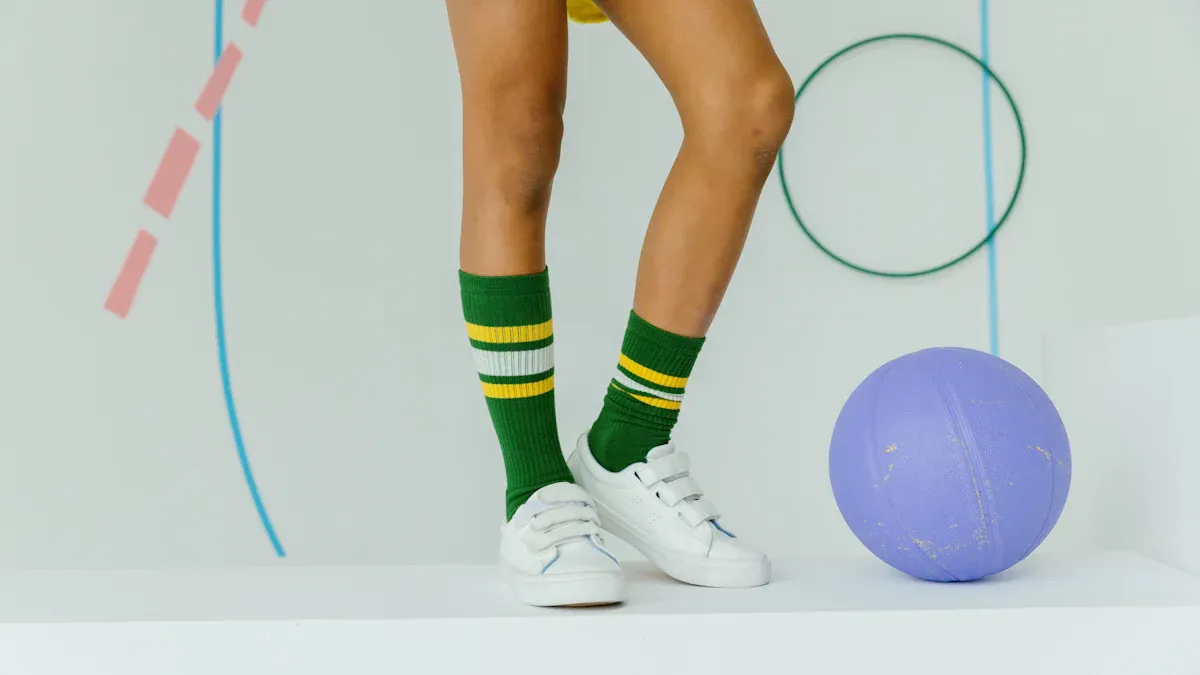
Image Source: pexels
You might wonder what makes compression socks special for kids. Compression socks use gentle pressure to help blood move better in your child’s legs. When your child wears compression socks after sports, these socks help push blood back to the heart. This means your child’s muscles get more oxygen and nutrients. Compression socks also help reduce swelling and keep legs from feeling tired. The main purpose of compression socks for children is to support healthy blood flow, speed up recovery, and make sure your child feels comfortable after being active.
You may think all socks are the same, but compression socks have unique features. Regular socks just cover your child’s feet and keep them warm. Compression socks do much more. They use special fabric and tightness to give steady pressure along the legs. This pressure helps blood flow and keeps muscles from getting too sore. Compression socks also have extra padding and support in key areas. Take a look at this table to see how compression socks stand out:
Feature |
Description |
|---|---|
Cushioning and shock absorption |
Padding in the right spots to absorb impact and protect heels during sports. |
Enhanced stability |
Compression supports the ankle and helps keep joints in line, lowering the chance of injury. |
Improved recovery |
Compression boosts blood flow and cuts down on swelling, so your child can get back to play faster. |
Compression socks fit snugly and stay in place, even when your child runs or jumps. You will notice that compression socks feel firmer than regular socks, but they are still soft and comfortable. Compression socks are made for active kids who need more than just basic foot coverage.
You might ask if your child really needs compression socks. Many children can benefit from wearing compression socks after sports. Here are some groups who see the most help:
Children who play sports and need better blood flow and less swelling.
Toddlers, school-age kids, and teens, each with their own needs for support.
Young athletes who run, jump, or play endurance sports and need more oxygen to their muscles.
Kids who play in tournaments or have busy sports schedules and need to recover quickly.
Compression socks for children are a smart choice if you want to help your child feel less sore, heal faster, and stay comfortable after every game or practice. You give your child an extra layer of support and care with compression socks.
Compression socks help your child’s legs after sports. They use gentle pressure to boost blood flow. This means muscles get more oxygen and nutrients. Better blood circulation helps your child heal faster and feel healthier.
You want your child’s muscles to heal fast. Compression socks help by improving blood flow. The pressure pushes blood back to the heart. This brings more oxygen and nutrients to tired muscles. Clinical studies show compression garments help circulation. They use graduated mechanical pressure. This helps blood return to the heart and stops pooling in the legs. Studies show compression sleeves increase tissue oxygen. This means more blood and oxygen reach muscles.
Swelling slows your child down after sports. Compression socks help decrease swelling by improving blood flow. The pressure reduces swelling and keeps your child comfortable. You see less swelling and more energy in your child. Compression socks also help by moving lymph fluid and lowering vein pressure. Here’s how compression socks help blood flow in the legs after sports:
Mechanism |
Description |
|---|---|
Venous Flow Velocity |
Makes blood return to the heart faster. |
Venous Wall Distension |
Stops veins from stretching too much and swelling. |
Valvular Function Improvement |
Helps vein valves work better and move blood the right way. |
Lymphatic Outflow Stimulation |
Moves lymph fluid to reduce swelling and help recovery. |
Diminished Venous Hypertension |
Lowers vein pressure and makes legs feel better. |
Your child feels less sore and tired with compression socks. They help muscles recover and your child bounces back faster. Steady compression improves blood flow. This means less soreness and less fatigue. Your child enjoys sports without aching legs.
Compression socks help muscles recover after sports. The pressure boosts blood flow and reduces swelling. Your child feels stronger and ready for the next game. Research shows compression sleeves lower soreness and swelling in young athletes. Here’s what studies found:
Study |
Findings |
|---|---|
Kerherve et al. (2017) |
Compression garments did not change muscle soreness in trail runners. |
Kim et al. (2017) |
Less muscle soreness in people wearing compression garments after exercise. |
Kraemer et al. (2001) |
Less soreness and swelling in people wearing compression sleeves. |
Compression socks help your child heal from small injuries like bruises and strains. You give your child extra support and comfort with compression socks. The pressure improves blood flow and speeds up healing. It also reduces swelling in your child’s legs.
Your child gets back to play faster with compression socks. Compression keeps the foot stable and lowers inflammation. It also relieves discomfort. Compression socks give arch support and cushioning. They absorb impact and reduce strain on heels during sports. Stability keeps the ankle in line and stops too much movement. Better recovery comes from more blood flow and less inflammation. Your child stays active and healthy.
Tip: If your child feels sore or swollen after sports, try compression socks. They help your child recover faster and feel better.
You want your child to feel steady and confident after every game. Pediatric compression socks do more than just help with blood flow—they give real support to growing joints. When your child wears these socks, you help protect their ankles and calves from twists and strains. This support means your child can move freely and recover with less pain.
Compression socks act like a gentle hug for your child’s lower legs. They keep everything in place, so your child feels balanced and secure. Here’s how these socks make a difference for ankles and calves:
They give targeted compression around the ankle joint. This extra support helps your child stay steady during movement.
The socks keep the foot and leg in proper alignment. Good alignment lowers the risk of rolling an ankle or making sudden, painful moves.
Compression limits too much movement in the ankle. Less movement means fewer chances for sprains or strains.
The snug fit helps reduce swelling and inflammation. Your child feels less pain and bounces back faster after sports.
You might notice your child stands taller and walks with more confidence. That’s the power of joint support. Pediatric compression socks help your child play hard and recover well. You give your child the comfort and stability they need to enjoy every game.
Tip: If your child complains about sore ankles or wobbly legs after sports, try compression socks. They offer gentle support and help your child feel strong and ready for the next adventure.
You want your child to recover well after sports. Compression socks work best when your child puts them on right after a game or practice. The gentle compression helps tired legs feel fresh and strong. You can slip them on as soon as your child finishes running, jumping, or playing. This timing gives muscles the support they need to bounce back.
Tip: Keep a pair of compression socks in your child’s sports bag. You can help your child start recovery right away.
You might wonder how long your child should wear compression socks. Most kids benefit from wearing them for one to two hours after sports. Some children feel good wearing them longer, especially if they have soreness or swelling. You can check your child’s comfort and adjust the time. If your child feels great, you can keep the socks on a bit longer. If your child feels tightness or discomfort, you can take them off sooner.
Getting the right size matters. Compression socks should fit snugly but not too tight. You want socks that cover the calf and ankle without pinching. You can check the size chart before buying. If you choose socks that are too loose, your child won’t get the full benefit. If you pick socks that are too tight, your child may feel uncomfortable.
You see different levels of compression in socks. Some socks offer light compression, while others give more firm support. Graduated compression socks provide stronger pressure at the ankle and less at the calf. This design helps blood flow back to the heart. You can choose the level based on your child’s needs. If your child has medical conditions, you can talk to a healthcare professional.
Here’s what you should consider when picking the right fit:
Consider any medical conditions.
Consult with healthcare professionals.
Tailor the socks based on individual assessments.
Monitor how well the compression socks work for your child.
Note: You can check your child’s legs for signs of swelling or discomfort. If you notice anything unusual, you can ask a doctor for advice.
You want the best for your child. MINGJUN Hosiery offers high-quality compression socks made with care. The company uses advanced knitting machines and sustainable materials. You can trust that every pair meets strict standards for safety and comfort. MINGJUN Hosiery holds certifications that show their commitment to quality:
Certification |
Description |
|---|---|
OEKO-TEX Standard 100 |
Provides assurance that textiles are safe for direct skin contact, particularly for children. |
Established quality standard for medical device manufacturers, ensuring high-quality production. |
You can choose custom compression socks for your child. MINGJUN Hosiery lets you pick the size, color, and level of compression. The company uses recycled and organic materials, so you help the planet while helping your child. You get socks that fit your child’s needs and match their style.
Tip: If you want socks that last and feel good, you can try MINGJUN Hosiery’s compression socks. You support your child’s recovery and protect the environment.
You want your child to feel good and stay safe when using compression socks. Most kids say they feel better when they wear them after sports. If your child likes how the socks feel and does not complain about discomfort, you can let them keep wearing the socks. Always listen to your child’s feedback. If your child feels happy and comfortable, you know you are helping their health.
Sometimes, you may notice something unusual. If your child feels tingling, numbness, or pain and discomfort in their legs, you should talk to a doctor. You should also check with a doctor if your child has a medical condition that affects their health, like diabetes or circulation problems. A doctor can help you decide if compression therapy is right for your child. You want to make sure you protect your child’s overall health.
A good fit matters for your child’s health. If the socks are too tight or too loose, your child may feel discomfort. Watch for these signs that the socks do not fit well:
Red marks or deep lines on the skin
Swelling above or below the socks
Complaints of numbness or tingling
Socks slipping down or bunching up
If you see any of these signs, you should stop using the socks and try a different size. You want to avoid any risk to your child’s health.
Tip: Always check your child’s legs after they wear compression socks. If you see anything that worries you, ask your child how they feel.
Improper use of compression socks can sometimes cause problems. Here are a few risks to watch for:
Nerve damage, such as peroneal nerve palsy, can happen if socks are too tight.
Children with certain health conditions may have a higher risk for nerve problems.
Poorly fitting socks can affect your child’s overall health and quality of life.
Some materials in socks may contain chemicals like BPA, which could impact your child’s health.
You can lower these risks by choosing high-quality socks and checking the fit often.
You may wonder if compression socks really help with recovery. Many studies show that compression socks can help reduce soreness and muscle fatigue after sports. Kids who use them often feel less tired and bounce back faster.
Researchers have looked at how well compression socks work for young athletes. Here’s what some studies found:
Study |
Findings |
Effect Size |
|---|---|---|
Hill et al. |
Hedges’ G=0.40 (95% CI 0.24 to 0.58) |
|
Engel et al. |
Compression clothing decreases leg soreness and muscle fatigue |
Hedges’ G=0.67±1.06 (range −0.44 to 3.80) |
Scientists reviewed 122 studies, including 7 meta-analyses, to see how compression garments help with recovery. The results show that compression socks can make a real difference for your child’s health. Some studies had stronger results than others, but most agree that compression socks help with soreness and muscle fatigue.
You want your child to feel strong and healthy after every game. Compression socks give your child support and help them recover faster. You can trust that compression socks are a safe and effective way to support your child’s health after sports.
You want your child to feel strong and happy after sports. Sometimes, you notice signs that your child needs extra support. These signs can show up in different ways. You might see your child limping or avoiding their favorite activities. You may hear them complain about pain or feel frustrated. Here are some common recovery issues you should watch for:
Pain that lasts longer than two or three months after an injury.
Pain even when scans or x-rays look normal.
Symptoms that get worse after activity instead of getting better.
Swelling, color changes, or unusual sensitivity in the legs or feet.
Avoiding sports, exercise, or putting weight on the affected area.
Emotional changes like frustration, low mood, or anxiety.
Trouble sleeping because of ongoing pain.
Feelings of sadness, anger, or isolation from friends.
If you notice any of these signs, your child may need more support. You can help by listening to your child and talking with their coach or doctor. You give your child confidence when you show you care.
Tip: If your child feels left out or upset because they cannot play, remind them that recovery is part of being an athlete. You help them stay positive and bounce back stronger.
You want your child’s compression socks to stay clean and work well. Proper care keeps them comfortable and effective. You should wash compression socks after each use. Use gentle soap and cool water. Avoid bleach or harsh chemicals. Let the socks air dry instead of using a dryer. This helps the fabric last longer.
It is smart to have at least two pairs of compression socks. One pair can be worn while the other is washed. Over time, socks lose their stretch and support. You should replace them after many washes or when they feel loose. Fresh socks give your child the best support.
Care Step |
What To Do |
|---|---|
Washing |
Use gentle soap and cool water. |
Drying |
Air dry, avoid the dryer. |
Replacement |
Get new socks after many washes. |
Number of Pairs |
Keep at least two pairs handy. |
Note: Clean socks help prevent skin irritation and keep your child feeling good. You make recovery easier when you care for their gear.
You want your child to feel better quickly after sports. Pediatric compression socks can help with this. They make blood move faster and lower swelling. These socks also help muscles heal after playing. Experts say they are safe for kids if they fit right. MINGJUN Hosiery socks give even more benefits:
Deep pressure input helps your child stay calm and pay attention.
The socks help your child know where their body is and move better.
Using sustainable materials is good for your child and the earth.
Give your child comfort and care by choosing MINGJUN Hosiery.
You might notice your child has sore legs, swelling, or feels tired after playing. If your child often complains about pain or takes longer to recover, compression socks can help speed up healing and boost comfort.
Yes! Your child can wear compression socks during games or practice. These socks support muscles and joints while your child moves. Many young athletes feel less tired and more stable when they wear them.
Check the size chart before you buy. Measure your child’s calf and ankle. The socks should fit snugly but not feel too tight. If you need help, you can ask MINGJUN Hosiery for advice.
You can let your child wear compression socks daily if they feel comfortable. Always check for signs of tightness or skin marks. If you see any problems, take the socks off and try a different size.
Wash socks in cool water with mild soap. Let them air dry. Avoid bleach and dryers. Clean socks last longer and keep your child’s legs healthy.
MINGJUN Hosiery uses advanced machines and eco-friendly materials. You get socks that fit well, last long, and feel soft. You can also order custom designs and sizes for your child.


