Foshan Mingjun Textile Company Ltd.

Views: 0 Author: Site Editor Publish Time: 2025-12-04 Origin: Site
You want to prevent blood clots, so using a DVT sock can help you stay safe. Blood clots and deep vein thrombosis (DVT) affect many people.
Up to 900,000 Americans face venous thromboembolism every year.
Between 60,000 and 100,000 people die from these conditions.
Compression socks support blood circulation by applying pressure to your legs. They help the veins move blood back to your heart and lower your risk. Studies show these socks can reduce swelling and prevent blood clots.
Wearing DVT socks every day can help stop blood clots. It also lowers your chance of getting deep vein thrombosis.
Pick the right size for your compression socks. This helps them feel good and work well. Measure your legs before you buy them.
Move your body and drink water to help DVT socks work better. Try to move often and drink lots of water each day.
Look at your legs every day for DVT signs. These signs are swelling or pain. Go to the doctor if you see any of these signs.
Do what your doctor says about wearing DVT socks. Ask your doctor if you feel pain or have questions.
You might wonder what happens when your blood forms a clot. Blood clots are gel-like clumps that form when your blood changes from liquid to solid. Your body needs clots to stop bleeding after an injury. Sometimes, though, clots form when you do not need them. These clots can block blood flow and cause health problems.
You face a higher risk of blood clots if you have certain health conditions or habits. Here are some common risk factors:
Sitting for a long time, like during travel or bed rest
Injuries to your veins, such as from a broken bone
Cancer or heart disease
Taking hormonal birth control or hormone therapy
Being over 60 years old
Carrying extra weight
Family history of clotting problems
Smoking
You should watch for signs like swelling, pain, tenderness, or redness in your legs. These symptoms can mean a clot is forming.
Deep vein thrombosis, or DVT, happens when a blood clot forms in a deep vein, usually in your lower leg, thigh, or pelvis. This type of thrombosis is different from other clots because it forms deep inside your body, not near the surface. DVT can block blood flow and cause serious problems. Sometimes, a clot can break loose and travel to your lungs. This can lead to a dangerous condition called pulmonary embolism.
Here is a quick look at the symptoms you might notice:
Condition | Symptoms |
|---|---|
DVT | Swelling, Pain, Tenderness, Redness of the skin |
PE | Difficulty breathing, Fast or irregular heartbeat, Chest pain, Coughing up blood, Lightheadedness or fainting |
If you notice these signs, you should talk to your doctor right away. Staying alert can help you catch problems early and protect your health.
Image Source: unsplash
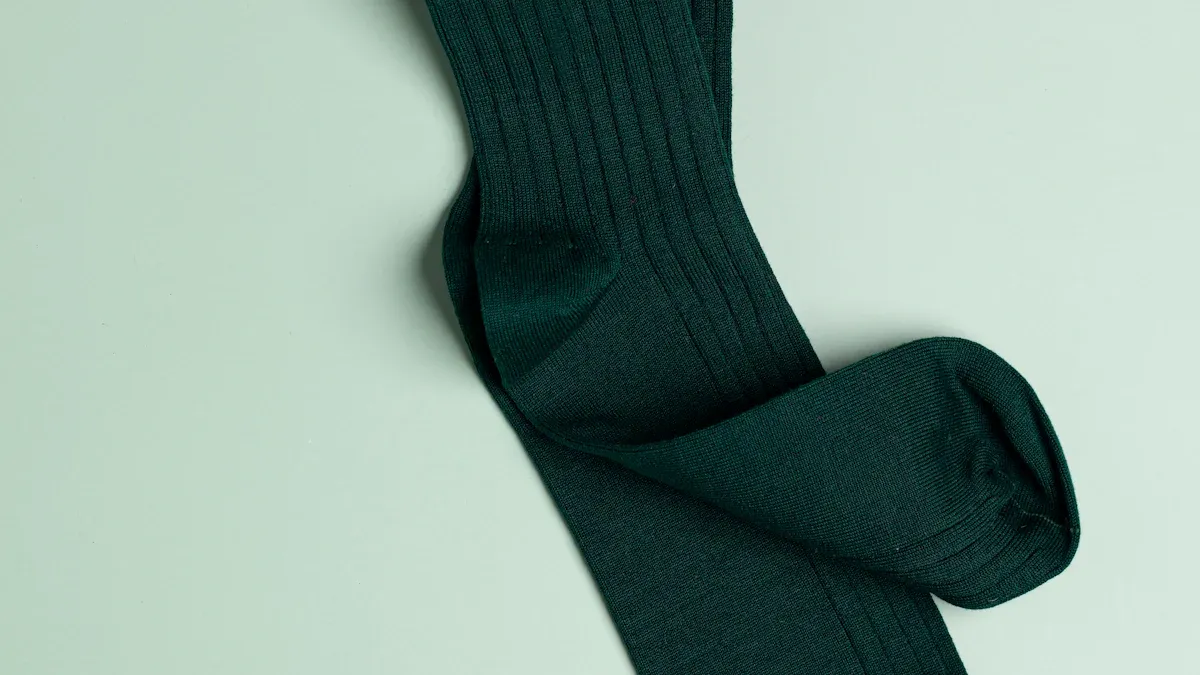
You might wonder how compression socks actually help your legs. These socks use a special design called graduated compression. That means they squeeze your ankles the most and get looser as they move up your leg. This gentle pressure helps your veins push blood back toward your heart. When blood moves faster, it is less likely to pool in your legs and form clots.
Here’s a quick look at what happens inside your legs when you wear compression socks:
Mechanism | What It Does |
|---|---|
Graduated Compression | Applies most pressure at the ankle |
Vein Support | Narrows vein diameter, boosts blood flow speed |
Prevents Pooling | Keeps blood from collecting in your lower legs |
Helps Muscles and Veins | Moves blood upward, away from your feet |
You do not have to be a hospital patient or a frequent flyer to benefit. Anyone who wants to support healthy blood flow can use compression socks.
You may ask if science backs up the use of compression socks. The answer is yes. Studies show that these socks can lower your risk of deep vein thrombosis. For example, research found that compression socks cut the rate of DVT in airline passengers, even those who do not have symptoms. In high-risk groups, only 37 people need to wear them to prevent one case of DVT. For people at lower risk, the number is 111, which still shows a real benefit.
Doctors also found that compression socks help reduce swelling after long flights. Some studies say the evidence is moderate, but many experts agree that these socks support your circulation and help keep your legs healthy. You get the most benefit when you wear them as directed and check your legs for any changes.
Tip: If you want to keep your legs feeling good and lower your risk of blood clots, consider adding compression socks to your daily routine.
Getting the right dvt sock size makes a big difference in comfort and effectiveness. You want your compression socks to fit snugly, but not feel painfully tight. Start by measuring your ankle just above the bone, then measure your calf at its widest point. If you need thigh-high stockings, measure your thigh about five centimeters below the groin. For mid-thigh stockings, measure the length from your heel to your knee. Use these numbers to pick the best size for your legs.
Measurement Type | Description |
|---|---|
Ankle circumference | Measure just above the ankle bone for maximum pressure point. |
Calf circumference | Measure at the widest point of the calf. |
Thigh circumference | Measure about 5 cm below the groin for thigh-high stockings. |
Leg length | Measure from heel to knee for mid-thigh stockings. |
A proper fit helps your dvt sock support circulation and lower your risk of clots. If you notice discomfort or skin irritation, you may need a different size.
You should always check with your doctor before starting compression socks for dvt prevention. Medical guidelines can change depending on your health and risk factors. Some organizations suggest not using compression stockings routinely for certain patients, while others recommend them for specific cases. Your doctor knows your medical history and can help you decide if a dvt sock is right for you. If you ever feel your socks are too tight or uncomfortable, reach out to your healthcare team for advice.
Tip: Your doctor can help you choose the best type of compression socks and tell you how long to wear them each day.
Learning how to put on compression stockings makes your routine easier and keeps your legs safe. Start by putting your hand inside the sock and grabbing the heel, then turn the sock inside out so the heel is at the front. Step into the foot and gently unfold the sock up your leg, smoothing out wrinkles as you go. Make sure the top band sits about two finger-widths below your knee bend. Don’t pull the sock too far up.
Put on compression socks in the morning when your legs are least swollen.
Use a little talcum powder or cornstarch to help the sock slide on.
Smooth out any wrinkles from bottom to top.
When you take off your socks, pull the top band down, then stroke downward with flat hands, and finally pull the sock off your heel.
Wearing your dvt sock every day helps lower your risk of blood clots. Studies show that regular use of compression socks can reduce swelling and cut the rate of postthrombotic syndrome by about half. If you’re in the hospital or traveling, wearing compression socks with other prevention methods works even better. Make them part of your daily routine for the best results.
Note: Consistency is key. Skipping days can reduce the benefits for your circulation and dvt prevention.
Taking care of your skin keeps your legs healthy while you wear compression socks. Wash your socks after every use to prevent bacteria buildup. If you have sensitive skin or allergies, talk to your doctor about different fabrics. Never wear compression socks over open cuts or grazes, since this can cause irritation or infection. If you see redness, itching, or dents in your skin, check your sock size and fit.
Avoid sleeping in compression socks to let your legs rest.
Watch for signs of irritation and adjust your routine if needed.
You should check your legs every day for symptoms of dvt. Look for swelling, pain, redness, or warmth. If you notice trouble breathing, chest pain, lightheadedness, or blood in your cough, get medical help right away. These signs can mean a clot has moved to your lungs.
Callout: Quick action can save your life. Don’t ignore new symptoms.
Never roll or fold your dvt sock. Rolling creates a tight band that can cut off circulation and lead to sores or ulcers. Make sure the seams run straight up your leg and check for bunching or wrinkling, especially at the ankles. If your socks feel too tight, switch to a different size.
Keep the top band flat and smooth.
Avoid folding the sock down, which can cause skin problems.
Keeping your compression socks clean and in good shape helps them work better and last longer. Wash them in cool water with mild detergent. Air dry them flat and keep them out of direct sunlight. Check your socks for damage or loss of stretch, and replace them every three to six months.
Best Practice | Description |
|---|---|
Regular Washing | Removes dirt and sweat, keeps fabric elastic and supportive. |
Use Mild Detergent | Protects the sock’s fibers; avoid high temperatures. |
Air Dry | Maintains stretch and function; avoid heat sources. |
Check for Damage | Replace socks every 3-6 months for best results. |
Store Properly | Lay flat in a cool, dry drawer; don’t fold or roll. |
You can boost the benefits of your dvt sock by staying active and drinking plenty of water. Increase your activity by walking, stretching, or moving your legs often. Proper hydration keeps your blood flowing smoothly and lowers your risk of clots. Aim for eight to ten glasses of water each day, and limit alcohol and caffeine.
Dehydration makes blood thicker and increases clot risk.
Staying active helps your circulation and supports dvt prevention.
If you think compression socks may help you, talk to your doctor first. If your socks feel too tight or cause discomfort, remove them and contact your healthcare team. Always seek medical help if you notice symptoms of dvt, such as swelling, pain, redness, or trouble breathing.
Reminder: Your doctor can guide you on the safest way to use compression socks and help you watch for any problems.
You can lower your risk of blood clots by staying active. Sitting for long periods makes blood pool in your legs, which can lead to dvt. Try to stand up and stretch every hour, even if you are busy at work or watching TV. A five-minute walk or simple leg movements help your blood flow better. Regular activity, like playing sports once a week, can cut your risk of blood clots by almost a third. You do not need to run a marathon—just keep moving!
Stretch your legs and feet often.
Join a weekly sport or exercise class.
Staying active is one of the best ways to support dvt prevention and keep your legs healthy.
Keeping your weight in a healthy range helps your veins work well. Extra weight puts pressure on your veins and slows blood flow. This can make it easier for clots to form. Obesity increases the risk of dvt through changes in your body that make blood thicker and harder to move. Losing weight and staying active can help lower your risk.
Obesity is identified as a significant risk factor for dvt, with studies showing that obese individuals are at a higher risk due to various physiological changes that promote blood clot formation. Weight loss and maintaining a healthy weight can significantly reduce the risk of dvt and its complications.
Here are some ways extra weight can affect your veins:
Risk Factor | How It Impacts Your Body |
|---|---|
Venous stasis | Blood pools in your legs |
Increased clotting proteins | Makes blood more likely to clot |
Less movement | Slows circulation |
If you notice symptoms of dvt, such as swelling or pain, talk to your doctor about ways to improve your health.
Drinking enough water keeps your blood thin and flowing smoothly. Dehydration makes your blood thicker, which can raise your risk of clots. Aim for eight glasses of water each day. If you feel thirsty, your body may already need more fluids. Good hydration helps your heart pump blood easily and supports healthy circulation.
Water keeps blood viscosity low.
Dehydration can make blood sticky and slow.
Tip: Carry a water bottle with you and sip throughout the day to help prevent blood clots.
Image Source: unsplash
You might not think about blood clots when you book a flight, but long trips can raise your risk. When you sit for hours on a plane, your legs do not move much. This makes blood flow slower in your veins. Slow blood flow can lead to clots.
Here are some facts you should know:
Long-distance flights can make your risk of blood clots two to four times higher.
Flights longer than four hours are the most risky.
Most travel-related blood clots show up in the first one or two weeks after you land.
If your flight lasts more than eight hours, your risk goes up even more, especially if you already have other risk factors like obesity or a history of clots.
The chance of getting a clot after a long flight is about one in 4,600.
You can see that sitting still for a long time is not good for your veins. If you have other health problems, your risk is even higher. That is why you need to take steps to protect yourself.
Compression socks are a smart way to lower your risk of blood clots when you fly. They help your veins push blood back to your heart, even when you cannot move much.
Here is how you can use them for your next flight:
Pick socks with moderate compression, usually 15-20 mmHg. If you need stronger socks, ask your doctor.
Measure your legs to find the right size. The socks should feel snug but not too tight.
Put your socks on before you get on the plane. Make sure they are smooth and do not have wrinkles.
Keep your socks on for the whole flight, even when you get up to walk around.
Tip: Wear your compression socks every time you fly, especially on long trips. They can help keep your legs healthy and lower your risk of blood clots.
Choosing the right size for your compression socks matters more than you might think. If you pick socks that are too tight, you can end up with pain or even block your blood flow. Socks that are too loose will not give your legs the support they need. You might notice swelling or discomfort if your socks do not fit well.
Wearing the wrong size of compression socks can significantly affect their effectiveness and comfort. Socks that are too tight can block circulation and cause pain, while loose socks fail to provide the necessary support, leading to swelling and discomfort. Properly sized compression socks work by applying graduated compression, starting tight at the ankle and loosening up the leg, ensuring circulation is boosted and not blocked.
Always measure your legs before buying new socks. If your socks feel uncomfortable or leave deep marks, you may need a different size.
You should never ignore pain or discomfort when wearing compression socks. Your body gives you warning signs for a reason. If you feel tingling, numbness, or your skin turns blue, take off the socks right away. Wearing socks that are too tight or leaving them on too long can cause serious problems.
Numbness
Restricted blood flow
Other problems can include skin irritation, allergic reactions, pain, swelling in your feet, or even infections. If you notice any of these, talk to your doctor. Your comfort and safety come first.
Many people make mistakes by not following the instructions from the manufacturer or their doctor. You need to wear your socks the right way and for the right amount of time. Here are some common mistakes to avoid:
Bunching the stocking or pulling it on like a regular sock, which creates uneven pressure.
Using damaged or worn-out socks that have lost their stretch.
Not cleaning or storing your socks properly.
Skipping regular replacement, which reduces support.
Not consulting a healthcare professional for the right type and compression level.
Wearing compression stockings consistently and correctly is essential for effective DVT prevention.
If you follow the instructions and check your socks often, you will get the most benefit and keep your legs healthy.
You can take charge of your health by using DVT socks to lower your risk of blood clots and deep vein thrombosis. Studies show that compression stockings can cut the chance of clots by more than half, especially after surgery. When you follow simple tips and healthy habits, you boost your protection. Your healthcare provider can help you pick the right socks and teach you how to use them. Stay proactive—your legs will thank you!
DVT socks gently squeeze your legs. This helps blood move up your legs toward your heart. You lower your risk of blood clots when you wear them. Your legs feel less tired and swollen, especially after sitting or standing for a long time.
You can wear DVT socks on your legs during the day. Most people take them off at night. Your legs need a break while you sleep. If your doctor says to wear them longer, follow that advice. Always check your legs for any changes.
If your legs hurt, feel numb, or turn blue, take off the socks right away. Your legs might need a different size or style. Talk to your doctor before you put the socks back on your legs. Never ignore pain in your legs.
Wash your DVT socks every day to keep your legs healthy. Use cool water and mild soap. Dry them flat. Check your legs for redness, swelling, or sores. If you see changes in your legs, call your doctor. Clean socks protect your legs.
Yes! DVT socks help stop swelling in your legs when you travel. Long trips make blood pool in your legs. The socks keep blood moving in your legs. You feel better when your legs stay comfortable and healthy on flights or car rides.