Foshan Mingjun Textile Company Ltd.

Views: 0 Author: Site Editor Publish Time: 2025-11-13 Origin: Site
Varicose veins happen to about one in four people. The table below shows this:
Study Count | Pooled Prevalence | 95% Confidence Interval | Heterogeneity |
|---|---|---|---|
9 | 25% | 18-31% | High (I⊃2; = 95%) |
You get varicose veins when vein walls get weak. Blood pressure goes up. Valves do not work right. This makes blood collect and veins swell. If you do not treat these veins, you can get swelling. Your skin may change. You might get blood clots and pain. You can stay healthy by learning how these veins start. Take action early to feel better.
Varicose veins happen in about 25% of people. They often cause pain and swelling in the legs.
You may feel heaviness, pain, and see twisted veins. These symptoms are worse after standing for a long time.
Your genes, age, and gender can raise your risk for varicose veins.
Pregnancy and being overweight put more pressure on leg veins. This makes varicose veins more likely.
Moving your body often helps blood flow better. It also lowers your chance of getting varicose veins.
Lifting your legs can help with swelling. It also helps blood move and eases symptoms.
Compression stockings help veins by giving gentle pressure. This helps blood go back to your heart.
Treating varicose veins early and changing habits can stop problems. It also helps keep your veins healthy.
Image Source: unsplash
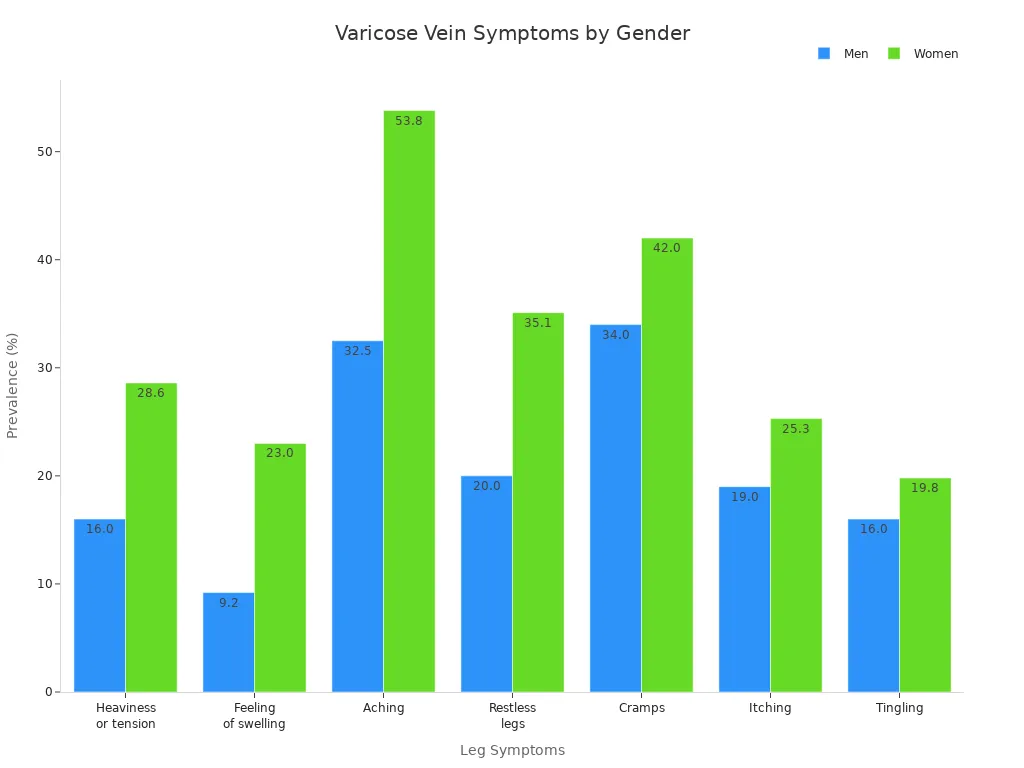
You might see different signs if you have varicose veins. Your legs can feel heavy or tight after standing a long time. Some people notice swelling or pain in their legs. You may get cramps or feel your legs move a lot at night. Itching and tingling are also common for many people. These problems can make you feel uncomfortable and affect your daily life.
Here is a table that shows how often men and women have these symptoms:
Leg symptoms | Men (%) | Women (%) | P value |
|---|---|---|---|
Heaviness or tension | 16.0 | 28.6 | ⩽0.01 |
Feeling of swelling | 9.2 | 23.0 | ⩽0.01 |
Aching | 32.5 | 53.8 | ⩽0.01 |
Restless legs | 20.0 | 35.1 | ⩽0.01 |
Cramps | 34.0 | 42.0 | ⩽0.01 |
Itching | 19.0 | 25.3 | ⩽0.01 |
Tingling | 16.0 | 19.8 | 0.084 |
You can also see the difference between men and women in this chart:
Tip: If you have these signs, try to rest your legs. Try not to stand for a long time.
Varicose veins are usually found in your lower legs. You may see them on your calves or thighs. The great saphenous vein and small saphenous vein are often affected. Sometimes, they show up in other places, like the pelvis or around the vulva. This happens more during pregnancy.
Here are some common places where you might see them:
Lower legs
Great saphenous vein
Small saphenous vein
Pelvis (mostly in women)
Vulva (more in pregnant women)
You can look at this table to see how often these places are affected:
Anatomical Location | Prevalence Rate |
|---|---|
Extra-pelvic varicose veins (women) | 16.5% |
Recurrent varicose veins (women) | 25.6% |
Vulvar varicose veins (pregnant women) | 22% |
Vulvar varicose veins (non-pregnant women) | 10% |
Enlarged venous plexuses in pelvis (women) | up to 34% |
Note: You might see small, red or blue veins on your legs. These are called telangiectasias and are common.
You may wonder how spider veins are different from varicose veins. Spider veins look like thin lines on your skin. They are less than 1 millimeter wide. Varicose veins are bigger, bulge out, and twist. They can be more than 3 millimeters wide.
Here is a table to help you compare:
Feature | Spider Veins | Varicose Veins |
|---|---|---|
Appearance | Smaller, web-like patterns, < 1mm | Larger, bulging, twisted, > 3mm |
Symptoms | Usually painless, may cause mild discomfort | Can cause aching, heaviness, swelling |
Underlying Causes | Hormonal changes, sun exposure, injuries | Blood backing up, can lead to serious complications |
Spider veins: You may not feel pain, but sometimes you feel mild discomfort or burning.
Varicose veins: You can feel heaviness, cramps, itching, swelling, or inflammation.
Spider veins mostly change how your skin looks. They do not cause serious health problems. Varicose veins can cause blood flow problems, skin changes, and sores that heal slowly if you do not treat them.
Reminder: If you see big, swollen veins or feel pain, talk to your doctor. Getting help early can stop more problems.
Your veins have walls that help keep blood moving in the right direction. When these walls get weak, veins can stretch and lose their shape. Many changes happen inside your veins that make the walls weaker. For example, low oxygen levels, problems with cell death, and changes in the support structure around your vein cells all play a role. You also lose important proteins like elastin as you get older, which makes your veins less flexible. If your veins cannot contract well, they start to bulge.
Here is a table that shows some of the main reasons why vein walls weaken:
Evidence Description | Source |
|---|---|
Many factors affect veins at the cellular level, such as low oxygen, cell death problems, and changes in the support structure. | |
Weak vein walls stretch more easily when they lose contact with muscle cells and cannot contract well. | |
Less elastin means veins get wider. Older people make less elastin, and those with varicose veins have even lower levels. | |
High pressure in veins causes them to stretch and changes how cells work, leading to more damage. |
Note: If you notice your veins bulging or twisting, your vein walls may be getting weaker.
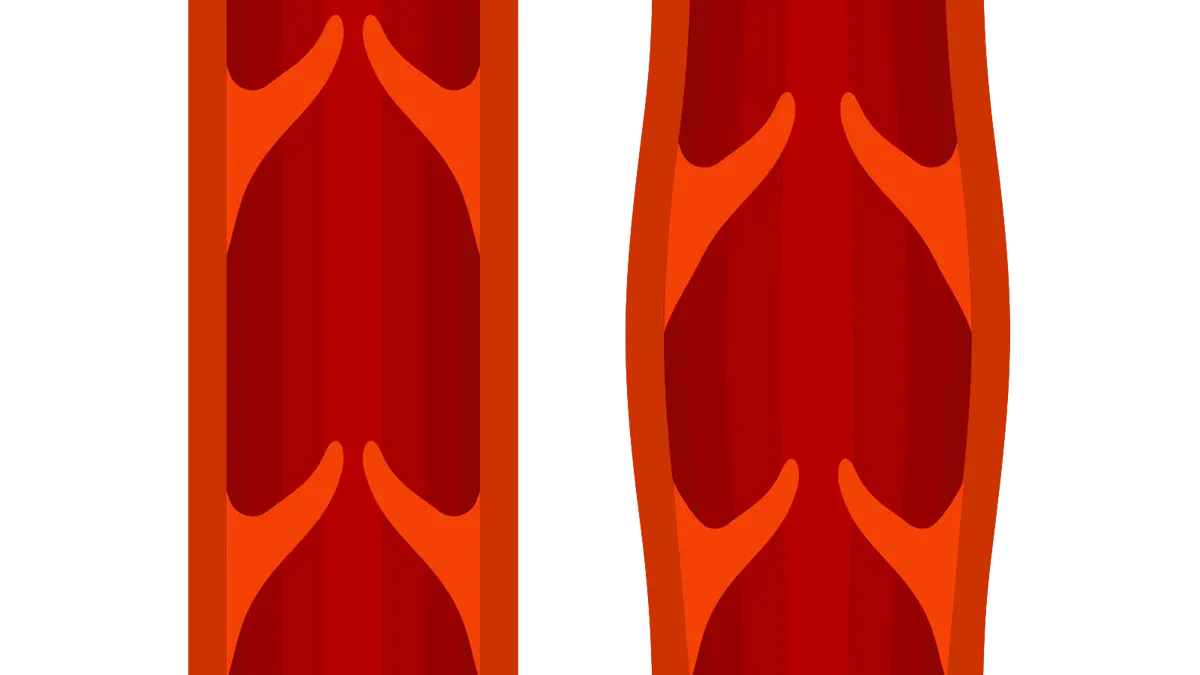
Valves inside your veins act like gates. They open and close to keep blood moving toward your heart. When these valves do not work right, blood can flow backward and pool in your veins. This backward flow stretches the vein walls and makes them bigger. Over time, the valves can become leaky and let more blood slip through. Your body reacts by changing the structure of the vein wall, which makes the problem worse.
Here are some ways valve malfunction leads to varicose veins:
Incompetent valves let blood flow backward, causing veins to stretch.
Leaky valves make blood pool, which increases pressure and damages the vein wall.
High pressure triggers changes in the vein wall, making veins even wider.
Special enzymes break down the support structure of the vein wall, making it weaker.
Injury to the cells lining your veins causes inflammation and more damage.
Tip: If you feel heaviness or swelling in your legs, your vein valves may not be working well.
Blood pressure inside your veins plays a big part in the development of varicose veins. When pressure rises, veins have to work harder to move blood. This extra pressure stretches the vein walls and makes them lose their normal shape. Your body senses this change and tries to fix it, but sometimes the veins cannot recover. You may notice swelling or pain in your legs when blood pools in your veins.
Here is a table that explains how increased blood pressure affects your veins:
Evidence Summary | Description |
|---|---|
Venous Hypertension | High pressure in veins is a main cause of varicose veins. |
Mechanotransduction | Pressure changes how vein walls work, leading to structural changes. |
Symptoms | Swelling and pain happen when veins stretch from high pressure. |
You can also see how high blood pressure in veins causes problems:
High pressure leads to venous hypertension.
Blood pools in your veins, making it harder for your body to circulate blood.
This strain can raise blood pressure in other parts of your body.
Callout: You can help lower pressure in your veins by moving your legs and avoiding long periods of standing or sitting.
Varicose veins form when weak vein walls, faulty valves, and high blood pressure work together. You can protect your veins by learning how these changes happen and taking steps to keep your veins healthy.
You may wonder why some people get varicose veins while others do not. Genetics play a big role. If your parents or close family members have them, you have a higher chance of getting them too. Scientists have found several genetic factors that increase your risk:
Factor V Leiden Mutation: Raises the risk of blood clots, which can lead to vein problems.
Protein C and S Deficiencies: These genetic issues make blood clots more likely.
Prothrombin G20210A Mutation: Causes higher levels of prothrombin, increasing clot risk.
PIK3CA Gene Mutations: Linked to changes in blood vessel development.
FOXC2 Gene Mutations: Connected to problems with vein valves and blood flow.
A large study found 30 new genetic markers related to varicose veins. These markers affect how your blood vessels and bones develop. If you have these genes, you may notice vein problems earlier or more often than others.
Tip: If your family has a history of vein problems, watch for early signs and talk to your doctor.
As you get older, your risk for varicose veins goes up. Your veins lose strength and flexibility with age. Studies show that after age 65, the number of people with varicose veins doubles. In one study from Budapest, over 80% of people aged 71 to 80 had them.
Gender also matters. Women get varicose veins more often than men. Hormones, pregnancy, and other factors make women more likely to have weak vein walls and valve problems. Men can get them too, but the risk is usually lower.
Age increases risk, especially after 65.
Women have a higher chance than men.
Older adults often see more severe symptoms.
Note: You cannot change your age or gender, but you can take steps to protect your veins as you get older.
Pregnancy brings big changes to your body. Hormones like progesterone rise, which relaxes your blood vessel walls. This makes veins stretch and weakens them. Your growing baby also puts pressure on a large vein called the inferior vena cava. This pressure slows blood flow from your legs to your heart.
Here is how pregnancy and hormones affect your veins:
Progesterone levels go up and relax your blood vessels.
Relaxed veins stretch and make it harder for blood to move back to your heart.
The baby’s weight presses on your veins, causing swelling and visible veins.
You may notice swollen ankles or new veins during pregnancy. These changes help your body support the baby, but they also raise your risk for varicose veins. After pregnancy, some veins may improve, but others can stay enlarged.
Callout: If you are pregnant, try to move your legs often and avoid standing for long periods. This helps keep your blood moving and lowers your risk.
Carrying extra weight affects your veins in many ways. When you gain weight, your body puts more pressure on the veins in your legs. This pressure makes it harder for blood to move back to your heart. Over time, your vein walls and valves can weaken. Blood may start to pool in your legs, stretching the veins and making them more visible.
You should know how obesity increases your risk for vein problems:
Extra weight strains your leg veins and makes blood flow less effective.
Poor circulation from excess weight can lead to venous insufficiency.
Obesity causes inflammation and hormonal changes that damage vein walls.
Increased pressure weakens vein valves, allowing blood to flow backward.
Blood pooling in your legs can make varicose veins worse and cause complications.
Strong vein valves help keep blood moving in the right direction. When you carry too much weight, these valves cannot work as well. You may notice swelling, aching, or heaviness in your legs. If you lose weight, you can lower the pressure on your veins and help prevent future problems.
Tip: Try to maintain a healthy weight. Small changes in your diet and activity level can make a big difference for your veins.
Your daily habits play a big role in vein health. Some lifestyle choices can increase your risk for vein problems. You can see how different factors affect your veins in the table below:
Lifestyle Factor | Description |
|---|---|
Prolonged Standing or Sitting | Increases pressure on leg veins; sitting for long periods can hinder blood circulation. |
Lack of Physical Activity | Contributes to poor circulation and weakens vein walls; regular movement improves blood flow. |
Places additional strain on veins, making circulation harder; linked to increased vein pressure. | |
Poor Dietary Habits | High sodium diets lead to water retention; low-fiber diets can cause constipation. |
High Heels and Tight Clothing | Shifts weight and reduces calf muscle function; tight clothing restricts circulation. |
Smoking and Alcohol Consumption | Damages blood vessels and increases venous pressure; affects overall vascular health. |
If you do not move enough, your veins can become weak. Physical activity helps your muscles push blood through your veins. When you sit or lie down for long periods, blood can pool in your legs. This pooling stretches your veins and makes them less healthy. Regular movement keeps your blood flowing and supports strong vein walls.
You can improve your vein health by:
Walking or stretching every day.
Taking breaks to stand up if you sit for long periods.
Choosing activities that use your leg muscles, like biking or swimming.
Callout: Even short walks can help your veins. Try to add movement to your daily routine.
Standing or sitting for hours at a time increases pressure in your leg veins. Your muscles do not help move blood when you stay in one position. This can lead to swelling, discomfort, and visible veins. If your job requires you to stand or sit for long periods, you should take steps to protect your veins.
Simple ways to reduce risk include:
Changing your position often.
Elevating your legs when possible.
Wearing comfortable shoes and avoiding tight clothing.
Note: If you notice swelling or pain after sitting or standing, try to move your legs or elevate them. These habits can help prevent varicose veins.
You can protect your veins by staying active every day. Movement helps your muscles push blood back to your heart. When you use your legs, you keep blood from pooling and reduce swelling. Many types of exercise work well for vein health. You do not need to run fast or lift heavy weights. Simple activities make a big difference.
Here are some exercises that help prevent vein problems:
Walking: Try to walk for at least 30 minutes each day. Walking strengthens your calf muscles and improves blood flow.
Swimming: This exercise is gentle on your joints. Swimming boosts circulation and works your whole body.
Cycling: Riding a bike helps your legs move and keeps blood flowing. You can use a regular bike or a stationary one.
Yoga: Poses like legs-up-the-wall help blood move out of your legs. Yoga also lowers pressure in your veins.
Tip: Choose activities you enjoy. Regular movement keeps your veins healthy and lowers your risk for varicose veins.
Keeping a healthy weight helps your veins work better. Extra weight puts more pressure on your legs and veins. When you lose weight, you lower this pressure and help blood flow more easily. You may notice less swelling and discomfort when you reach a moderate weight.
You can see the benefits of weight management in this table:
Benefit | Description |
|---|---|
Less pressure on veins | Reduces strain and helps blood move smoothly |
Better circulation | Supports healthy veins and lowers risk |
Fewer symptoms | Many people feel less swelling and pain |
You do not need to lose a lot of weight at once. Small changes in your diet and activity level help. Eating more fruits and vegetables and choosing whole grains can support your goals. Staying active also helps you manage your weight and keeps your veins strong.
Callout: If you feel heaviness or swelling in your legs, talk to your doctor about ways to manage your weight.
Raising your legs above your heart helps blood flow back to your heart. This simple step lowers pressure in your veins and reduces swelling. You can do this at home or at work. Try to elevate your legs for about 15 to 20 minutes at a time. Aim to repeat this two to four times each day.
Follow these steps for leg elevation:
Lie down on your back.
Place pillows under your legs so your feet are higher than your heart.
Relax and keep your legs raised for 15 to 20 minutes.
Repeat this process several times a day.
Note: Leg elevation works best when you do it regularly. Make it part of your daily routine to help your veins stay healthy.
Compression stockings give your legs gentle pressure. This pressure helps your veins move blood back to your heart. You can wear them during the day to stop blood from pooling in your legs. Many doctors recommend compression stockings if you want to prevent varicose veins or reduce symptoms like aching and swelling.
You may notice less pain and swelling when you use compression stockings. A study in 2018 showed that stockings with 18 to 21 mm Hg pressure helped people feel less ache and pain after just one week. Another study in 2017 found that stockings with 22 mm Hg pressure controlled leg swelling during pregnancy. Surgery works better for severe cases, but stockings help many people manage mild symptoms.
Here are some benefits of compression stockings:
Reduce swelling in your legs
Ease aching and heaviness
Support blood flow back to your heart
Lower your risk for new varicose veins
You should choose stockings that fit well and feel comfortable. MINGJUN Hosiery offers high-quality compression stockings. Many people trust this brand because the stockings provide the right amount of pressure and comfort. You can wear them at work, at home, or while traveling. If you stand or sit for long periods, compression stockings help keep your legs healthy.
Tip: Put on your compression stockings in the morning before you start your day. This helps prevent swelling and keeps your veins working well.
You can lower your risk for varicose veins by making small changes in your daily life. Healthy habits keep your veins strong and help your blood flow better. Experts suggest several simple steps you can follow every day.
Stay active. Walking, swimming, and biking help your muscles push blood through your veins.
Elevate your legs. Lift your legs above your heart to reduce swelling and help blood move.
Use compression stockings. These support your veins and keep blood flowing upward.
Eat a healthy diet. Choose foods high in fiber, antioxidants, and healthy fats. Drink plenty of water to stay hydrated.
Change your position often. Avoid sitting or standing for long periods. Take breaks to move around.
Wear loose clothing. Tight clothes can slow blood flow in your legs.
Avoid crossing your legs. This can make it harder for blood to move through your veins.
You do not need to make big changes all at once. Start with one or two habits and add more over time. You will notice your legs feel better and look healthier. Good habits protect your veins and help you stay active.
Callout: Small daily choices make a big difference for your vein health. Try to move more, eat well, and use compression stockings like those from MINGJUN Hosiery for the best support.
You can help mild varicose veins with easy steps. These steps make you feel better and may slow down vein problems.
Wear shoes that feel good and loose clothes. Tight clothes or high heels can stop blood from moving well in your legs.
Lift your legs above your heart for 15 to 20 minutes. Do this a few times each day. This helps swelling go down and helps blood move back to your heart.
Try compression therapy. Compression stockings help your veins and make blood flow better.
Gently massage your legs toward your heart. This can relax your muscles and help blood move.
Use hydrotherapy. Switch between warm and cool water on your legs. This can help blood flow and lower swelling.
Manage stress. Try to relax, sleep well, and do things you enjoy. This helps your body heal.
Tip: Small changes in your daily habits can really help your legs feel better.
Doctors have different ways to treat varicose veins. These treatments are for worse cases or if self-care does not help.
Procedure | |
|---|---|
Sclerotherapy | Low-cost, done in the clinic, and not very painful; more research is being done on how well it works long-term. |
Endovenous Laser Ablation (EVLA) | Works very well; good results and saves money over five years. |
Radiofrequency Ablation (RFA) | Works as well as EVLA; may help stop veins from coming back. |
Mechanochemical Endovenous Ablation | One of many ways to treat varicose veins. |
Ultrasound-Guided Foam Sclerotherapy | Has more failures; but people get better faster and feel less pain than with EVLA or stripping. |
Sclerotherapy is used for small or medium veins. A doctor puts a special liquid in the vein. The vein closes and fades away after some time. This is a fast treatment and you do not need to be put to sleep.
Laser therapy uses strong light to fix bad veins. The heat closes the vein and your body takes it away. You might need more than one visit for the best results.
Surgery is for big or painful veins. Doctors take out or tie off the bad veins. You usually get better fast and your symptoms improve.
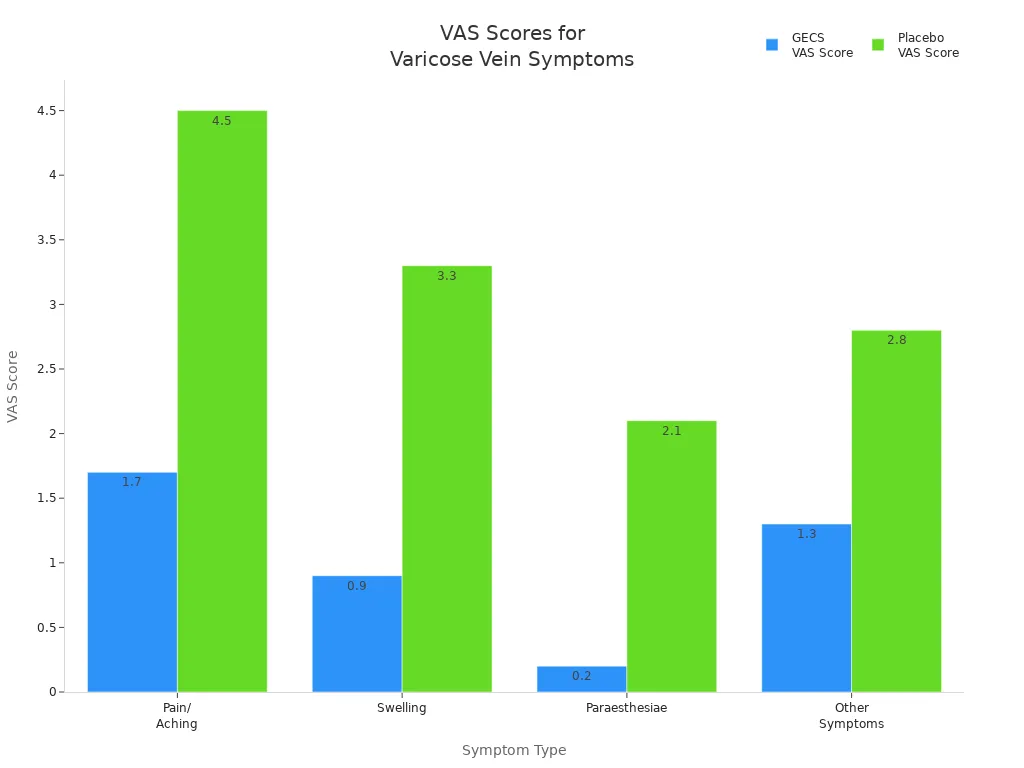
Compression stockings are important for helping symptoms. You wear them during the day. They gently squeeze your legs. This helps blood move up and lowers swelling, pain, and heaviness. Studies show that compression stockings help people feel better and live better.
Outcome Measure | GECS (VAS Score) | Placebo (VAS Score) | p-value |
|---|---|---|---|
Pain/Aching | 1.7 ± 3.0 | 4.5 ± 2.8 | 0.02 |
Swelling | 0.9 ± 1.9 | 3.3 ± 3.5 | N/A |
Paraesthesiae | 0.2 ± 0.6 | 2.1 ± 3.1 | N/A |
Other Symptoms | 1.3 ± 1.1 | 2.8 ± 1.7 | N/A |
People who wear compression stockings have less pain and swelling. The O’Donnell Study (2006) showed that compression therapy helps symptoms and lets you stay active. MINGJUN Hosiery makes good compression stockings. Many people like this brand because they are comfy and work well.
Note: Put on your compression stockings in the morning. Pick ones that fit right and feel good all day.
You can help your varicose vein symptoms by making good choices each day. Drinking water helps your veins work well. Try to drink about eight glasses of water daily. Eating healthy foods with fiber, vitamins, and minerals is important for your blood vessels. Foods like berries and fish have antioxidants and omega-3 fatty acids. These help your blood move better. Moving your body keeps blood from staying in your legs. Walk, stretch, or do gentle exercises often. Take breaks every two or three hours to lift your legs up. This helps blood flow and lowers swelling. Do not cross your legs when you sit. This makes it easier for blood to move.
Here are some easy ways to help your symptoms:
Drink lots of water every day.
Eat foods with fiber, vitamins, minerals, and antioxidants.
Move around often to help blood flow.
Lift your legs up a few times each day.
Do not cross your legs when sitting.
Drink less alcohol to keep your veins healthy.
Keep a healthy weight by eating well and moving more.
Tip: Small changes in your day can help your legs feel better and stop new symptoms from starting.
You should look for signs that mean you need a doctor’s help. Some symptoms show your veins need more care. If you feel pain, swelling, or see twisted veins, talk to a doctor. If your veins itch a lot, bleed, or you have open sores, you need to see a doctor. Night cramps and tired legs can also mean a bigger problem.
Warning Sign | Description |
|---|---|
Leg Discomfort | Pain, throbbing, burning, or heaviness, especially after sitting or standing |
Chronic Pain | Increasing pain during long periods of sitting or standing |
Twisted Veins | Visible twisted veins or signs of venous insufficiency |
Swelling | Fluid leakage causing swelling in the legs |
Chronic Itching | Persistent itching due to vein problems |
Bleeding Veins | Bleeding from veins near the skin surface |
Ulcers or Open Wounds | Sores that do not heal |
If you see swollen or bulging veins, feel pain, or notice itchy skin, get checked by a doctor. Tired legs, heavy feelings, and night cramps are also signs. Getting help early can stop bigger problems.
Alert: Do not wait if you have sores or bleeding veins. These need a doctor right away.
Having varicose veins can change how you feel about yourself. Many people feel embarrassed or worry about how their legs look. You might skip swimming or outdoor fun because of your veins. This can make you feel alone. Pain and changes in your legs can cause worry or sadness. Some people feel less confident and may feel depressed.
Surveys show people with varicose veins feel worse in body and mind than others. Bad vein problems can make these feelings stronger, especially with ulcers. Getting treatment can help you feel better about yourself. After care, many people feel happier and more confident. You may feel better and want to do more things.
Feeling embarrassed or worried can change your daily life.
Skipping activities can make you feel alone.
Worry and sadness are common with pain and changes in your legs.
Treatment can help you feel better and more confident.
Note: You are not alone. Many people feel this way. Talking to a doctor and getting support can help you with both your body and your feelings.
You can help stop varicose veins by moving often, keeping a healthy weight, and wearing compression stockings like MINGJUN Hosiery. Eating good foods and lifting your legs up also help your veins. Some new treatments hurt less and help you heal faster. Taking care of your veins early can really help.
Remember: Tell your doctor if your veins look different or if your legs hurt.
You get varicose veins when vein walls weaken and valves stop working well. Blood pools in your veins and makes them swell. Family history, age, pregnancy, and standing or sitting for long periods raise your risk.
Varicose veins do not go away without help. You can manage symptoms with exercise, leg elevation, and compression stockings. Medical treatments remove or close problem veins if you need more help.
Most varicose veins do not cause serious problems. You may feel pain or swelling. Rarely, you can get blood clots or sores. See a doctor if you notice bleeding, ulcers, or severe pain.
Compression stockings gently squeeze your legs. This helps blood move back to your heart. You feel less swelling and pain. Many doctors recommend brands like MINGJUN Hosiery for comfort and support.
You can lower your risk by staying active, keeping a healthy weight, and wearing compression stockings. Elevate your legs and avoid sitting or standing for long periods. Eat healthy foods and drink water.
You should see a doctor if you have pain, swelling, or twisted veins. Bleeding, open sores, or skin changes need quick attention. Early treatment helps you avoid bigger problems.
Men can get varicose veins, but women have them more often. Hormones, pregnancy, and family history affect your risk. Men should watch for symptoms and talk to a doctor if they notice changes.
Spider veins look like thin, red or blue lines on your skin. Varicose veins are bigger, bulge out, and twist. Spider veins rarely hurt. Varicose veins can cause pain, swelling, and other symptoms.