Foshan Mingjun Textile Company Ltd.

Views: 0 Author: Site Editor Publish Time: 2025-12-26 Origin: Site
You sit down in your airplane seat and get ready for a long trip. You might not know that sitting for many hours can raise your risk of deep vein thrombosis. DVT socks put gentle pressure on your legs. This helps your blood move better and lowers the chance of clots. The right socks can help you feel comfortable and safe while you travel. Good brands like MINGJUN Hosiery have socks that fit well, use strong materials, and give support for a long time.
DVT socks help your blood move better and lower the chance of blood clots on long trips.
Pick knee-high graduated compression socks with 15-20 mmHg pressure for most trips.
The right fit is very important. Measure your ankle and calf to get the best size for comfort and support.
Put on DVT socks before your trip starts. This helps stop swelling and keeps you comfortable on the plane.
Move around, stretch, and drink water during travel. This helps your blood flow better.
Choose socks made from breathable materials like bamboo or merino wool. These keep your feet comfy in all kinds of weather.
Talk to a doctor if you have health problems or are worried about using DVT socks.
Check your socks often for fit and signs of damage. This makes sure they still give you the support you need.
DVT socks are special garments you wear on your lower legs. They use gentle compression to help your blood flow better. You might see them called compression socks or stockings. Doctors often recommend them for people who sit for long periods, like on airplanes or buses. These socks fit snugly around your ankle and get looser as they move up your leg. This design helps push blood back toward your heart.
You can use DVT socks to lower your risk of blood clots. When you sit still for a long time, blood can pool in your legs. This can lead to swelling or even dangerous clots. DVT socks help keep your blood moving. They also reduce swelling and make your legs feel less tired.
Tip: Always choose socks that fit well. If your socks are too tight or too loose, they will not work as well.
Travelers often spend hours sitting in one place. This can slow down blood flow in your legs. DVT socks give your legs the support they need during long trips. You can wear them on flights, train rides, or even long car journeys.
Here is how DVT socks help you when you travel:
They promote blood circulation by gently squeezing your legs. This makes it easier for your veins to push blood back to your heart.
They prevent blood from pooling in your lower legs. This lowers your risk of swelling and blood clots.
They reduce leg swelling. You will feel more comfortable and find it easier to move around after your trip.
Many travelers notice less pain and swelling when they use these socks. You can feel more confident and safe during your journey.
Graduated compression socks are a popular choice for travel. These socks have the highest pressure at the ankle. The pressure slowly decreases as the sock goes up your leg. This design helps your blood move in the right direction.
Studies show that knee-length graduated compression socks can lower the risk of deep vein thrombosis during long flights. Socks with ankle pressures between 14 mmHg and 30 mmHg work well for most travelers. These socks also help prevent swelling and discomfort on flights longer than four hours.
You can find graduated compression socks in many styles and sizes. Some are lightweight for warm weather. Others use thicker materials for cold climates. Brands like MINGJUN Hosiery offer options that fit different needs and travel plans.
If you want to protect your legs and feel comfortable on your next trip, consider using DVT socks. They are a simple tool that can make a big difference in your travel experience.
When you fly for a long time, you sit a lot. Sitting for many hours can slow your blood flow. This makes your risk of dvt go up. Even people who are healthy can have this problem. Studies have found some important facts:
If you fly more than four hours, about 1 out of 4,656 people will get venous thrombosis with symptoms within eight weeks.
This means there are 3.2 cases for every 1,000 people each year.
For healthy travelers, the risk of venous thromboembolism on flights over four hours is about 1 in 6,000.
You might not feel anything wrong during your flight. Problems can show up days or weeks later. Compression socks help lower your risk. They support your veins and keep your blood moving.
Compression socks give travelers many good things. You can feel safer and more comfortable on your trip. Here are some benefits you get:
They help your blood flow better. This stops swelling and pain.
They make blood clots less likely on long flights.
They help your legs feel less heavy and tired.
They stop blood from pooling in your legs.
They give your legs more comfort and support when you sit for a long time.
They help you feel less tired after your flight.
You will see less swelling and pain in your legs. Compression socks help you feel fresh and ready when you arrive.
Tip: Put on your compression socks before your trip begins. This helps you stay safe and comfortable during your flight.
Some people have a higher chance of getting blood clots. You should wear compression socks if you are in one of these groups:
Group of Travelers | Risk Factors |
|---|---|
Long-distance travelers | |
Individuals with obesity | Increased risk of DVT |
Recent surgery patients | Higher likelihood of developing blood clots |
Pregnant women | Increased risk during and after pregnancy |
Those on hormone therapy | Hormonal changes can elevate DVT risk |
Individuals with a history of DVT | Previous occurrences increase the risk of future DVT |
People who travel a lot, have had DVT, or just had surgery should talk to a doctor before flying. Pregnant women and people on hormone therapy also have more risk. Compression socks give extra support and help keep you healthy when you travel.
DVT socks help many travelers, but some people should not use them. You need to know if you have any health problems that make compression unsafe. Certain medical conditions can make DVT socks risky for you. If you have one of these problems, you should avoid wearing compression socks:
Severe cardiac insufficiency. This means your heart cannot pump blood well enough for your body’s needs.
Critical ischemia. This happens when your legs do not get enough blood. Doctors measure this with an ankle-brachial pressure index (ABPI) less than 0.6 or an absolute perfusion pressure of 50 mmHg or lower.
Severe diabetic neuropathy and microangiopathy. If you have diabetes and nerve or small blood vessel damage in your legs, compression can cause harm.
Decompensated cardiac insufficiency. If your heart failure is not under control, you should not use compression therapy.
Advanced heart failure. If you have New York Heart Association (NYHA) stage III or IV heart failure, DVT socks are not safe for you.
You may have other health problems that affect your legs or blood flow. If you have existing circulatory issues, always check with your doctor before using DVT socks. Compression can sometimes make these problems worse.
Note: If you notice pain, numbness, or changes in skin color while wearing DVT socks, take them off and talk to a healthcare provider.
You should talk to a doctor before using DVT socks if you have any chronic health conditions. This includes heart disease, diabetes, or problems with your veins. Your doctor can help you decide if DVT socks are right for you. It is best to have this talk at least four to six weeks before your trip. This gives your doctor time to check your health and make a plan for safe travel.
If you have had surgery, a recent injury, or swelling in your legs, you should also ask your doctor for advice. Some people need special socks or extra care. Your doctor can give you tips to keep your legs healthy and lower your risk of blood clots.
You should always listen to your body. If you feel pain, tingling, or discomfort while wearing DVT socks, remove them and get medical help. Your safety comes first.
You need to pay attention to the compression level when choosing compression socks for travel. The compression level tells you how much pressure the socks put on your legs. This pressure is measured in millimeters of mercury (mmHg). Most travelers do well with moderate compression. This helps reduce swelling, improves blood flow, and keeps blood from pooling in your legs during long flights.
Here is a simple table to help you understand which compression level works best for different needs:
Compression Level | Best For |
|---|---|
Very early or mild swelling, prevention for at-risk limbs | |
20–30 mmHg | Daily wear, post-surgery or injury swelling, mild to moderate symptoms |
Most people who travel choose socks with 15–20 mmHg. This level gives enough support for healthy blood flow and comfort. If you have more serious swelling or a medical condition, you might need 20–30 mmHg. You should talk to your doctor before using higher compression levels.
Tip: Moderate compression socks are ideal for travel. They help prevent swelling and keep your legs feeling fresh.
You must pick the right size for your dvt socks. The correct fit makes sure the socks work well and feel comfortable. If the socks are too tight, you might feel pain or see marks on your skin. If they are too loose, they will not give you the support you need.
Always measure your ankle and calf before buying compression socks.
The socks should fit snugly but should not hurt.
If you feel discomfort or see skin changes, check your size or ask a healthcare provider.
Studies show that proper sizing can lower your risk of DVT by up to 80%. The table below shows why fit matters:
Key Findings | Description |
|---|---|
Effectiveness of Compression Socks | Good fit and sizing can reduce DVT risk by 60–80% when used correctly. |
Risks of Improper Sizing | Wrong size can make the socks less effective or even cause harm. |
You should always follow the size chart from the brand you choose. If you are unsure, ask for help before your trip.
The material of your compression socks affects how they feel and how well they work. You want socks that are soft, stretchy, and let your skin breathe. Some materials also help keep your feet dry and comfortable during long flights.
Here is a table that shows common materials and how they affect comfort and breathability:
Material | Comfort Effect | Breathability Effect |
|---|---|---|
Merino Wool | Soft, keeps temperature steady | Wicks moisture, resists odor |
Alpaca | Very soft and comfortable | Good airflow |
Bamboo Fiber | Smooth and breathable | Manages moisture well |
Nylon | Adds stretch and support | Medium breathability |
Spandex | Makes socks elastic and keeps shape | Not very breathable |
Merino wool keeps your feet warm or cool and pulls sweat away from your skin.
Alpaca feels soft and helps air move around your feet.
Bamboo fiber lets your feet breathe and stay dry.
Nylon and spandex make the socks fit well and last longer.
You should look for socks that mix these materials for the best comfort and support. Good brands use high-quality fibers to make sure your socks feel good all flight long.
Note: If you have sensitive skin, choose socks made from natural fibers like merino wool or bamboo.
You have many choices when it comes to the length and style of DVT socks. The right length can make a big difference in how well the socks work and how comfortable you feel during your trip. Each style supports your legs in a unique way.
Here is a table to help you compare the main types of DVT sock lengths:
Sock Length | Description |
|---|---|
Knee-High Stockings | Ideal for most DVT cases, especially if the clot is below the knee. Easier to wear and effective for circulation support. |
Thigh-High Stockings | Recommended for DVT above the knee or for additional venous support. Higher coverage but may require a grip to stay in place. |
Full-Length | Best for those needing compression throughout the legs, including hips and waist. Recommended for severe circulation issues. |
Knee-high stockings work well for most travelers. You can put them on easily, and they give strong support for your lower legs. Thigh-high stockings cover more of your leg. You might need these if your doctor says you need extra support above the knee. Full-length stockings cover your whole leg and even your waist. These are best if you have serious circulation problems.
You should also think about the style features that add comfort and make travel easier:
Breathable fabrics help keep your feet dry and warm. You will not have to worry about sweat building up.
Seamless or soft fabric reduces friction. This means you will not get blisters or feel itchy.
Non-binding cuffs keep your socks in place without squeezing too hard. Your blood can flow well, and the socks will not slide down.
You want socks that look good and feel good. Many brands offer different colors and patterns, so you can pick a style that matches your travel outfit. When you choose the right length and style, you help prevent deep vein thrombosis, reduce swelling, and make your trip more comfortable.
Tip: Choose the sock length your doctor recommends. If you are not sure, knee-high socks are a safe choice for most travelers.
You want your compression socks to fit well and work properly. Accurate sizing helps you get the best results. Follow these steps to measure your legs:
Measure your bare legs in the morning. Your legs are less swollen at this time.
Use a flexible tape measure. Wrap it around the narrowest part of your ankle and write down the number.
Measure the widest part of your calf. Record this number too.
For knee-high socks, also measure your foot length.
For thigh-high socks, measure your thigh and hip if needed.
Compare your numbers to the sizing chart from the brand you choose.
Tip: Always use the brand’s size chart. Each company may have different sizes.
Start with your ankle. Place the tape measure around the smallest part, just above your ankle bone. Write down the measurement in centimeters or inches. Next, find the widest part of your calf. Wrap the tape measure around this spot and record the number. These two measurements help you pick the right size for most compression socks.
Look for the size chart from the brand you want to buy. Match your ankle and calf numbers to the chart. If you fall between two sizes, choose the one that feels snug but not too tight. Good brands like MINGJUN Hosiery provide clear charts to help you find your best fit.
Many travelers make mistakes when choosing the right compression socks. You can avoid these problems by following a few simple tips:
Do not pick socks just because they look nice. Function matters more than style.
Always follow sizing guidelines. Skipping this step can lead to socks that do not work well.
Choose brands that test their socks for medical use.
Do not reuse old or stretched socks. They lose their support over time.
Remember to move and stretch during your flight. Socks help, but movement is important too.
Take off your socks after your flight. Wearing them too long can cause discomfort.
Here is a quick table to help you match compression levels to your needs:
Compression Level (mmHg) | Purpose |
|---|---|
Mild support for short flights | |
15–20 mmHg | Swelling prevention during long flights |
20–30 mmHg | Medical-grade support (consult a doctor) |
30–40 mmHg | For severe poor circulation (doctor required) |
Note: Choosing the right compression socks helps you stay comfortable and safe during travel.
Image Source: pexels
You should put on your DVT socks before you start your journey. The best time is in the morning, when your legs are least swollen. If you wait until after you have been sitting, your legs may swell and the socks may feel tight. Put them on before you leave for the airport or right before your flight.
Follow these steps to wear your compression socks correctly:
Sit down and make sure your legs are clean and dry.
Turn the sock inside out up to the heel.
Place your toes into the sock and pull it over your foot.
Gently roll the sock up your leg, smoothing out any wrinkles.
Make sure the sock fits snugly but does not pinch or bunch up.
Tip: Smooth socks help prevent discomfort and keep blood moving well.
You should wear your compression socks during the entire flight. Keep them on while you sit for long periods. Remove them after you reach your destination or when you can walk around freely. If your trip lasts many hours, you can keep them on until you finish your journey.
If you feel discomfort or notice your socks bunching up, adjust them right away. You can take them off for short breaks if needed, but put them back on before sitting again. Always check your skin for redness or marks. If you see any problems, remove the socks and let your legs rest.
Travel health experts share helpful tips for staying comfortable with compression socks on long flights:
Choose socks with gentle, constant squeeze to help blood flow and prevent pooling in your lower legs.
Pick a compression level around 15-20 mmHg for general travel. If you have higher risk, ask your doctor about 20-30 mmHg.
Wear compression socks to reduce swelling and achiness. They can remind you to move around during long periods of sitting.
Wear shoes that fit well and give your feet room. Avoid tight shoes that press on your toes or heels. Soft, supportive shoes work best with compression socks.
Drink water often during your flight. Stand up and walk in the aisle when you can. Stretch your legs and flex your ankles every hour. Moving helps your blood flow and keeps swelling down.
Pick socks made from breathable materials. If you feel too warm, adjust your clothing or use a blanket for comfort. If your skin feels itchy, check for wrinkles in your socks and smooth them out.
Check your socks every few hours. Make sure they stay smooth and do not slide down. If you feel any pain or numbness, adjust the socks or take a short break.
Proper care keeps your compression socks working well and feeling comfortable. Follow these steps to maintain them:
Wash your compression socks every day to prevent bacteria buildup.
Hand wash if you are unsure about machine washing.
Use mild soap and cool water. Avoid hot water.
Gently rub the socks together to clean, then rinse thoroughly.
Squeeze out excess water and lay flat to dry. Do not wring.
Check the manufacturer’s recommendations for drying.
Always use gentle soap and cool water. Hand washing is safest. Lay socks flat to dry. Do not use a dryer unless the brand says it is safe.
Store your socks in a clean, dry place. Fold them gently or roll them to keep their shape. Avoid stretching or pulling them when you store them.
Check your socks for signs of wear. If they feel loose or stretched out, they may not give enough compression. Replace old socks to keep your legs protected.
Look for these signs:
Sign | What It Means |
|---|---|
Socks feel loose | Compression is not strong enough |
Fabric is thin | Socks may tear or lose support |
Elastic is worn out | Socks may slide down your leg |
Discoloration | Material may be breaking down |
Replace your socks if you notice any of these problems. Fresh socks help you stay safe and comfortable on every trip.
You want socks that last and work well. MINGJUN Hosiery uses special machines to make each sock carefully. Workers check every sock many times before it leaves the factory. This helps make sure the socks fit right and give good support. You can trust your DVT socks to keep their shape and pressure, even after you wear them a lot. MINGJUN Hosiery has made sports socks for over 25 years. You get the benefit of their careful work and high standards.
Note: MINGJUN Hosiery has certifications like OEKO-TEX® and GRS. These show the company follows strict safety and quality rules.
You might care about the earth when you travel. MINGJUN Hosiery uses recycled and organic materials for their socks. The company also uses packaging that breaks down in nature. This means less trash ends up in landfills. When you pick these socks, you help the planet. MINGJUN Hosiery uses green ways to make their socks. These steps use less water and energy. You can feel proud to wear socks that are good for you and the earth.
MINGJUN Hosiery uses green materials that are certified.
The company makes less pollution by using smart methods.
You get socks that are safe for your skin and better for the planet.
You may want socks that fit your style or needs. MINGJUN Hosiery lets you choose how your socks look and feel. You can pick the color, size, and print you like. You can also choose earth-friendly fabrics. This helps you get socks that are just right for your trip.
Here is a table that shows what you can pick:
Description | |
|---|---|
Colors | Many colors you can choose from |
Prints | Different print designs to pick |
Sizes | Sizes for all kinds of feet |
Eco-friendly Fabrics | Choices for green fabric options |
You can order socks for yourself, your family, or a group. MINGJUN Hosiery makes it simple to get the right socks for every traveler. You get comfort, style, and peace of mind on every trip.
You want your trip to feel safe and comfortable. Many travelers worry about how DVT socks will feel during long flights. You might wonder if these socks can cause problems. Most people find DVT socks helpful, but you should know about common concerns.
Here are some things travelers often notice:
Skin irritation, such as redness or itching
Pain or numbness if socks are too tight
Minor bruising or marks on the skin
Dry skin after wearing socks for many hours
You can avoid most problems by choosing the right size. Always measure your legs before you buy DVT socks. Socks that are too tight can slow your blood flow. Socks that are too loose will not give enough support. If you feel pain, take off the socks and check your skin.
Proper fit is very important. You should smooth out wrinkles when you put on your socks. Wrinkles can press into your skin and cause discomfort. If you have sensitive skin, look for socks made from soft, breathable materials. Brands like MINGJUN Hosiery use gentle fabrics that help prevent irritation.
Tip: If you notice pain, numbness, or changes in your skin color, remove the socks and talk to a doctor.
You should also keep your skin clean and dry. Wash your socks after each use. This helps prevent skin problems and keeps your socks working well.
DVT socks help many people, but some health conditions make them unsafe. You should know when not to use these socks. Certain medical problems can get worse with compression.
Here is a table that shows when you should avoid DVT socks:
Type of Contraindication | Conditions |
|---|---|
Absolute Contraindications | Severe peripheral arterial disease, active skin infections, heart failure causing massive edema, critical deep vein thrombosis (phlegmasia cerulea dolens) |
Relative Contraindications | Mild arterial disease, controlled heart failure, diabetic neuropathy, sensitive skin |
If you have any of these conditions, talk to your doctor before using DVT socks. Your doctor can help you decide what is safe for you. Never use DVT socks if you have a serious blood flow problem in your legs. If you have an active skin infection, wait until your skin heals.
You should also avoid DVT socks if you have severe swelling from heart failure. Some people with mild problems can use DVT socks with a doctor’s advice. Always listen to your body. If you feel pain or see changes in your skin, stop using the socks and get medical help.
Note: Your safety comes first. When in doubt, ask a healthcare professional before your trip.
Image Source: pexels
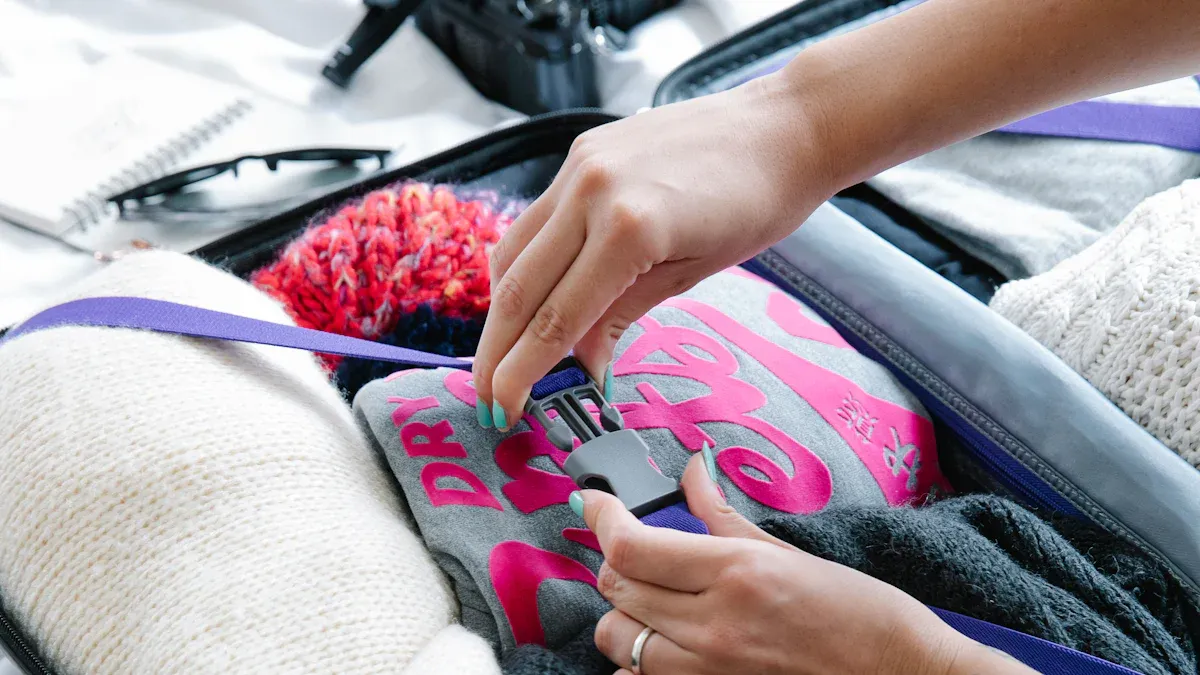
You want your socks to last and work well. Rolling your socks gently is better than folding or balling them up. Rolling helps keep the shape and the pressure steady. Folding or balling can damage the fibers and make the socks less effective. Always roll your socks flat and avoid sharp bends.
Clean socks help keep your skin healthy. Pack a small bag of gentle soap or travel laundry sheets. Wash your socks by hand in cool water and let them air dry. If you travel for many days, wash your socks every night. This keeps them fresh and ready for the next use.
Travel pouches or organizers help you keep your socks together. You can use a small mesh bag or a zip pouch. This keeps your socks clean and easy to find in your suitcase. Hard cases give extra protection if you want to keep the socks in perfect shape.
Long trips need more than one pair of socks. Pack extra pairs so you always have a clean set. If you have a medical need, bring enough pairs for every day of your trip. Keeping pairs together helps you avoid losing one sock.
Here is a table with best practices for packing and storing your socks:
Best Practice | Description |
|---|---|
Never fold or ball up | This helps maintain the compression properties. |
Store flat or gently rolled | Prevents damage and maintains shape. |
Keep pairs together religiously | Ensures you have matching socks when needed. |
Pack in hard cases if possible | Provides extra protection during travel. |
Bring extras for medical needs | Ensures you have enough for your health requirements. |
MINGJUN Hosiery offers socks that dry quickly and are easy to wash. These socks use special materials that let air flow and wick away moisture. You can wash them by hand and they dry overnight. This makes them perfect for travel. You spend less time waiting for socks to dry and more time enjoying your trip.
You can do more than wear socks to stay healthy on long flights. Here are some simple steps you can add to your routine:
Stand up or walk around the cabin when you can.
Drink plenty of water to keep your blood moving well.
Stretch your legs and move your ankles often.
Ask your doctor if you need medicine for extra protection.
These steps work with your socks to lower your risk of blood clots. You help your body stay active and healthy during travel.
Try to stand up every hour. Walk up and down the aisle if possible. Moving your legs helps your blood flow and keeps you comfortable.
Drink water often. Avoid too much coffee or soda. Eat light meals with fruits and vegetables. This helps your body stay strong and your blood flow well.
Wear loose pants and shirts. Tight clothes can slow your blood flow. Soft, stretchy clothes help you feel good and move easily.
You can do simple exercises in your seat. Point and flex your toes. Lift your heels and then your toes. Circle your ankles. These moves help your legs stay active.
Talk to your doctor before your trip if you have health problems. Your doctor can tell you if you need extra steps or special socks. This keeps you safe and healthy.
MINGJUN Hosiery designs socks that fit many needs. You can choose socks for different climates, sizes, and styles. The company uses safe materials and tests every pair. You get socks that work well with other healthy travel habits. This helps you feel confident and protected on every journey.
Warm places need socks that let air flow. Lightweight and breathable socks keep your feet cool and dry. Look for socks made with bamboo or special synthetic blends. These materials help sweat dry fast and stop your feet from feeling hot.
Cold weather needs socks that keep you warm. Merino wool blends work well for cold trips. These socks hold heat but let sweat escape. Your feet stay warm and dry, even in winter.
Humid places can make your feet sweat more. Choose socks that wick moisture away from your skin. This helps prevent blisters and keeps your feet comfortable. Synthetic blends and bamboo fibers work well in these places.
Pick the material that matches your trip. Merino wool blends help with temperature and odor. Synthetic blends last long and dry fast. Always check the label to find the best socks for your needs.
MINGJUN Hosiery offers socks for every climate. You can find lightweight socks for hot places and insulated socks for cold trips. The company uses breathable, moisture-wicking fabrics. You stay comfortable and protected, no matter where you go.
Tip: Choose socks that match your travel plans. The right pair helps you stay healthy and enjoy your journey.
Choosing the right dvt socks for travel starts with a few simple steps:
Pick knee-high socks that fit snugly by measuring your calf and checking sizing charts.
Select a compression level of 15-20 mmHg for most trips.
Choose breathable materials to keep your feet comfortable.
Measure your calf in the morning for the best fit.
You can make your journey safer by moving around, stretching your legs, staying hydrated, and wearing loose clothing. Always talk to your doctor if you have health concerns. Trusted brands like MINGJUN Hosiery offer quality options for every traveler.
You should feel gentle pressure without pain. The socks should not bunch up or leave deep marks. Your toes should move easily. If you feel numbness or tingling, the socks may be too tight.
Yes, you can wear DVT socks daily if your doctor says it is safe. Many people use them for work, travel, or long periods of sitting. Always check your skin for irritation.
You do not need a prescription for most travel socks. Higher compression levels (over 20 mmHg) may require a doctor’s advice. Always ask your doctor if you have health concerns.
Wear your DVT socks for the entire flight. Put them on before you travel and keep them on until you can move around freely. Remove them if you feel discomfort.
Most DVT socks allow gentle machine washing. Use cold water and mild soap. Avoid bleach and fabric softeners. Air dry your socks to keep their shape and elasticity.
If your legs swell or hurt while wearing DVT socks, take them off and check your skin. Rest your legs and contact your doctor for advice. Do not ignore pain or swelling.
Children and teens can use DVT socks if a doctor recommends them. Always measure carefully for the right size. Never use adult socks on children without checking with a healthcare provider.
You can wear DVT socks with sandals or open shoes. Choose socks with a comfortable toe seam. Make sure your footwear does not press on your toes or cause discomfort.