Foshan Mingjun Textile Company Ltd.

Views: 0 Author: Site Editor Publish Time: 2025-12-26 Origin: Site
You can believe that dvt socks are backed by doctors for stopping deep vein thrombosis. Choosing things based on facts helps keep you safe. Deep vein thrombosis happens to up to 900,000 people every year in the U.S. Between 60,000 and 100,000 people die from it each year. Being in the hospital, getting cancer treatment, or being pregnant makes your risk of dvt higher. Compression stockings are a good way to help prevent it. These socks lower the chance of getting dvt, especially for people who travel or just had surgery.
Statistic | Value |
|---|---|
Annual incidence of VTE in the U.S. | Up to 900,000 people |
Annual deaths due to VTE | 60,000–100,000 people |
High-risk situations for VTE | Hospitalization, cancer treatment, pregnancy |
DVT socks are also called compression stockings. They help lower the chance of getting deep vein thrombosis. This is very important for people who have a higher risk. Deep vein thrombosis can affect up to 900,000 people each year in the U.S. It can cause serious health problems and cost a lot of money. Wearing compression stockings helps blood move better in your legs. They also help stop swelling and keep your veins healthy. These socks are very helpful after surgery and when you travel far. It is important to get the right size. The socks should feel tight but not hurt. You should measure your legs to find the best size. If you wear DVT socks every day, you can stop blood clots from forming. They also make you feel better, especially if you sit or lie down for a long time. Talk to your doctor to find out what compression level you need. Your doctor will also tell you how long to wear the socks. Compression therapy is safe for most people. But you should always check that the socks fit right. If they are too tight, they can stop blood from moving well. MINGJUN Hosiery makes good DVT socks that are also good for the planet. They have many choices to help you stay comfortable and safe.
Image Source: pexels
Deep vein thrombosis is a dangerous health issue. It happens when a blood clot forms in a deep vein, usually in your leg. You might not see any signs at first. Sometimes, your leg gets swollen, feels warm, or hurts. The clot can break free and move to your lungs. This can cause pulmonary embolism, which is very serious. You have a bigger chance of getting deep vein thrombosis if you stay still for a long time, hurt your veins, or your blood clots too easily. Some people have family members who had blood clots. Others get deep vein thrombosis after surgery, during pregnancy, or from certain medicines.
Deep vein thrombosis can happen to anyone. Your risk goes up if you are older than 60, have cancer, or weigh too much. People who travel far, especially by plane, have more risk. Sitting or standing for many hours can slow blood flow in your legs.
Sitting or lying down for a long time
Vein injury
Blood that clots too easily
More estrogen
Health history
Being overweight
Family tendency for blood clots
Age over 60
Type A blood group
Cancer
Hormonal birth control
Pregnancy
Recent surgery
Not moving much
Family history of blood clots
Stopping dvt is important for your health and your money. If you do not treat deep vein thrombosis, it can cause big problems. You could die suddenly if a clot goes to your lungs. Many people die within a year after finding out they have deep vein thrombosis. Treating deep vein thrombosis costs a lot. You may pay much more for care than people without this problem.
Description | Cost (USD) |
|---|---|
$12,000 - $15,000 | |
Total costs per case (with problems) | $18,000 - $23,000 |
Yearly VTE costs for US healthcare | $7 - $10 billion |
Deep vein thrombosis causes 60,000 to 300,000 deaths each year in the United States.
About 20% of people die within one year after diagnosis.
Healthcare costs for deep vein thrombosis patients are almost twice as high as for others.
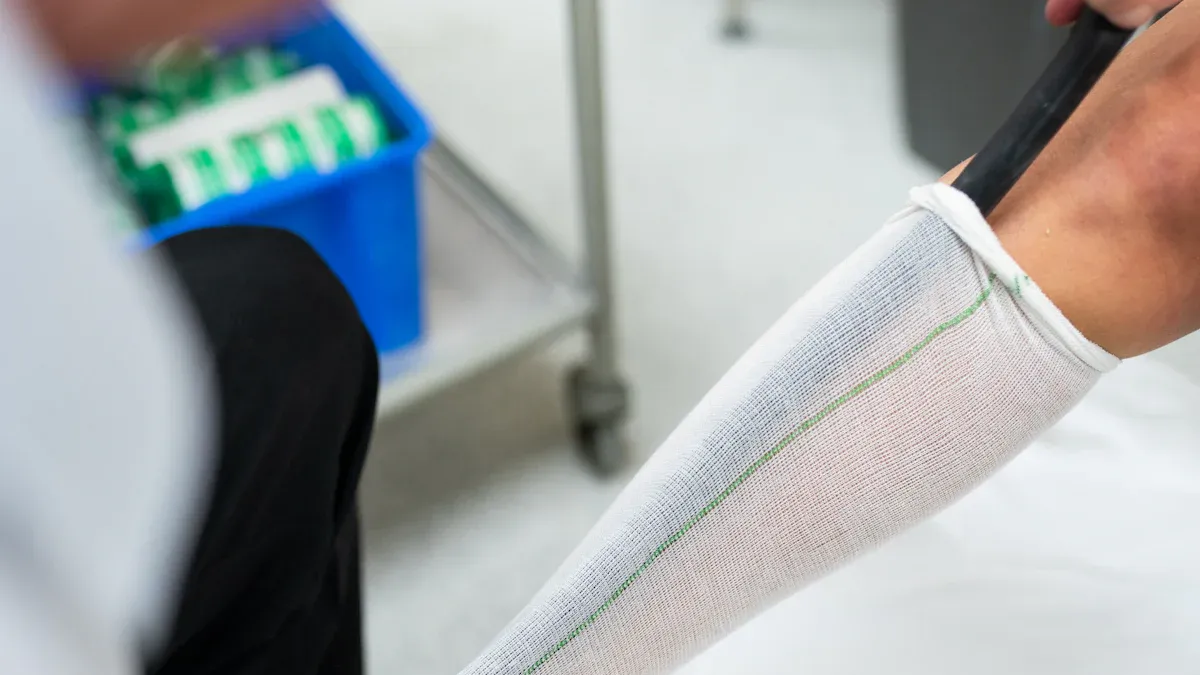
Dvt socks, also called compression stockings, help lower your chance of dvt. These socks use special pressure to help your veins. The pressure is strongest at your ankle and gets lighter higher up your leg. This helps push blood back to your heart. Compression stockings make blood move faster, lower swelling, and help veins work better. There are different kinds of compression stockings for stopping deep vein thrombosis. Some go up to your knee, some to your thigh, and some cover your whole leg.
Type of Sock | Compression Level (mmHg) | Intended Use |
|---|---|---|
Knee-High Stockings | 15-20 | Good for most deep vein thrombosis below the knee, helps blood flow. |
Thigh-High Stockings | 20-30 | Best for deep vein thrombosis above the knee, gives more support. |
Full-Length (Pantyhose) | 30-40 | Good for bad circulation, gives pressure all over the legs. |
Graduated Compression Socks | Varies | Tightest at the ankle, helps blood move up to the heart. |
You can use compression stockings when you travel, after surgery, or if you have vein problems. Doctors often tell people to wear compression stockings to help stop dvt and make you feel better.
Benefits of compression stockings:
Faster blood flow
Less swelling
Better vein return
Image Source: unsplash
Many studies show compression stockings help stop deep vein thrombosis. These studies prove compression therapy lowers your chance of blood clots. Researchers tested graduated compression stockings on people after surgery and those who cannot move much. You can look at the table below to see the results:
Study | Findings | Conclusion |
|---|---|---|
Kiyoshi Abe et al. | GCS greatly lowered DVT after TKA | Not using GCS made DVT risk 2.229 times higher |
Cui-Qin Sang et al. | GCS with IPC and LMWH lowered DVT cases | Shows GCS works for DVT prevention |
Junya Itou et al. | No big difference in DVT when mixing GCS and IPC with medicine | Proves GCS works with IPC |
These trials show compression stockings work well for stopping blood clots. You get more protection when you use compression therapy with other treatments like anticoagulants or IPC. Experts agree that compression stockings help prevent DVT in people with high risk.
Systematic reviews and meta-analyses give more proof. These studies look at many trials to find clear answers. Researchers found medical compression stockings help stop post-thrombotic syndrome after deep vein thrombosis. The table below shows what they found:
Study | Findings | Statistical Heterogeneity | Risk Difference |
|---|---|---|---|
Systematic Review of GCS for PTS | PTS happened in 49–70% of control patients after 5 years | High (I2 = 0.94 for all PTS; I2 = 0.79 for severe PTS) | 0% to 39% between trials |
Graduated compression stockings lower the chance of problems. Some reviews did not find trials comparing compression stockings to no treatment in low-risk surgery patients. One trial showed few people got deep vein thrombosis. Only one person had a big clot. This proof supports using compression therapy for people who might get blood clots.
Main points from reviews:
Medical compression stockings help stop post-thrombotic syndrome.
Graduated compression stockings lower swelling and help lymph flow.
Compression therapy works best for people with high risk of deep vein thrombosis.
Reviews show strong proof for compression stockings in hospitals and after surgery.
You get better lymph health and less swelling if you use them often.
You should listen to expert guidelines when picking compression stockings for prevention. These rules come from big studies and expert groups. Guidelines say you should use medical compression stockings soon after deep vein thrombosis. This helps stop post-thrombotic syndrome and helps lymph flow.
Staying in the hospital or having surgery raises your risk of deep vein thrombosis. Doctors use compression therapy to help lower this risk. Medical compression stockings help blood move better and support veins. There is strong proof they work for orthopedic and general surgery patients.
Orthopedic surgery, like hip or knee replacement, means you need extra protection from blood clots. Graduated compression stockings give your legs the right pressure. They help your lymphatic system and keep swelling down. Hospital guidelines recommend using compression stockings after surgery to prevent acute deep vein thrombosis.
Here is a table with evidence from randomised controlled trials:
Group | NNT | Odds Ratio | |
|---|---|---|---|
Control Group | 26% | 8 | 0.35 |
Treatment Group | 13% |
The treatment group with compression stockings had a much lower risk of dvt. The odds ratio shows a strong benefit. Treating eight patients with compression therapy stops one case of acute deep vein thrombosis.
General surgery also raises your risk of blood clots. Medical compression stockings help you avoid problems and support your lymphatic health. Guidelines say patients who cannot move much after surgery should use compression therapy. You get better blood flow and less swelling. Evidence shows compression stockings lower the risk of dvt and post-thrombotic syndrome. You should follow your doctor’s advice and use compression stockings as part of your prevention plan.
MINGJUN Hosiery makes high-quality medical compression stockings for hospitals and clinics. You benefit from their safe materials and certified manufacturing. Their products meet strict safety and effectiveness rules.
Long flights make you sit for hours. This slows blood flow and raises your risk of deep vein thrombosis. Compression stockings help keep you safe when you travel. There is strong proof that compression therapy works for airline passengers.
Here is a table with the evidence:
Evidence Type | Findings |
|---|---|
Symptomless DVT Reduction | Wearing compression stockings led to a big drop in symptomless DVT for airline passengers compared to those not wearing them. |
Leg Swelling Reduction | Passengers using compression stockings had less leg swelling than those who did not. |
Overall Risk Reduction | The risk of getting symptomless DVT dropped from many per thousand to just two or three per thousand. |
Graduated compression stockings lower your risk of dvt and keep your legs from swelling. Guidelines give clear advice for travelers on long flights. You should wear compression stockings if you have had acute deep vein thrombosis or other venous and lymphatic problems.
MINGJUN Hosiery makes dvt socks for travelers. You get custom sizes and eco-friendly materials. Their products follow evidence-based travel recommendations.
Chronic venous disease affects your veins and lymphatic system. You may feel pain, heaviness, and swelling in your legs. Medical compression stockings help you feel better and improve your life. There is strong proof from clinical studies and randomised controlled trials.
Graduated compression stockings help with pain and swelling in chronic venous disorder patients.
A multicentre RCT showed big improvement in pain and quality of life for patients using stockings compared to placebo.
Compression stockings work well for patients with lower CEAP classes (C1-C3).
Earlier studies found low-pressure compression stockings help venous symptoms and quality of life in C1-C3 chronic venous diseases.
A randomized study found thigh-high compression stockings gave relief from aching, pain, leg cramps, and restlessness compared to sclerotherapy.
Venous symptoms like heaviness and pain are common and mean you need treatment with medical compression stockings.
Compression therapy gives big relief of symptoms in chronic venous disorder patients.
You should follow your doctor’s advice and use compression therapy for chronic venous disease. Guidelines support using medical compression stockings for chronic and acute symptoms. You get better lymphatic health and less swelling. Compression stockings also help stop post-thrombotic syndrome in chronic venous and lymphatic disorder patients.
MINGJUN Hosiery helps your health with evidence-based products. Their compression stockings use safe materials and advanced knitting. You get comfort, durability, and support for your lymphatic and venous health.
Venous leg ulcers are open sores on your lower legs. These ulcers happen when veins do not work well. Blood collects in your veins and pushes on your skin. This pressure can break down your skin and cause an ulcer. You might feel pain or see swelling. Your skin may change color. Swelling and skin changes make healing slow.
Medical compression stockings help heal venous leg ulcers. Doctors tell most people with ulcers to use these stockings. You should not use them if you have a reason not to. Compression stockings put gentle pressure on your legs. This pressure helps blood move back to your heart. It also lowers swelling and helps your skin heal faster.
Tip: Wear your medical compression stockings every day for best results. Put them on in the morning before you get out of bed.
Many studies show compression therapy helps venous leg ulcers. You can look at the table to see how treatments compare:
Evidence Type | Findings |
|---|---|
Compression Stockings | Safe and effective in stopping venous leg ulcers from coming back, lowering risk by about half |
Compression Therapy | Helps venous leg ulcers heal when you can use it |
Meta-analysis | Compression stockings work better than short-stretch bandages for healing (RR 1.33, p=0.03) |
Doctors studied different kinds of compression. High-compression stockings help more ulcers heal in two to four months. Some studies found no big difference between stockings and bandages. You can see these results here:
Evidence Type | Findings |
|---|---|
RCT Comparison | Compression stockings and bandages work about the same (RR 1.10, p=0.23) |
4-layer vs. Stockings | No difference in how well they work (RR 0.97, p=0.59) |
High-compression Stockings | More likely to heal ulcers in 2-4 months (RR 1.62, p=0.00021) |
Medical compression stockings help ulcers heal and stop them from coming back. Chronic venous disease can cause ulcers again and again. Using stockings lowers your chance of new ulcers by about half. This helps your health and comfort.
If you have swelling or skin changes, talk to your doctor about compression stockings. These stockings work best if you use them every day. They help control swelling, improve blood flow, and support healing. You can also use them to stop ulcers if you have vein problems.
MINGJUN Hosiery makes high-quality medical compression stockings with safe materials. Their advanced knitting gives you comfort and support. You can trust their products to help with vein problems and ulcer healing.
Key points to remember:
Venous leg ulcers often come from vein problems.
Medical compression stockings help heal ulcers and stop them from coming back.
Using them every day gives you the best results.
MINGJUN Hosiery offers reliable, eco-friendly choices for your needs.
Compression therapy is safe for most people. Some side effects can happen. Compression stockings that do not fit right may cause problems. If stockings are too tight, they can stop blood flow. This is dangerous. Sometimes, the top of the stocking squeezes too much. That can make things worse.
You might see some side effects when you use compression therapy. These include itching or red skin, feeling cold or warm in your legs, pain or discomfort, bruising or rubbing, allergic reaction to the material (rare), bacterial or fungal infection (rare), and soft tissue damage (rare).
Check your skin often for changes. If you see swelling, pain, or color changes, talk to your doctor. Using the right size and following your doctor’s advice helps you avoid most problems.
Some health problems mean you should not use compression therapy for deep vein thrombosis prevention. Doctors call these contraindications. If you have any of these, talk to your healthcare provider before using compression stockings.
Condition | Description |
|---|---|
Decompensated heart failure or NYHA stage III/IV needs careful monitoring. | |
Peripheral Arterial Occlusive Disease | Severe PAOD means you should not use compression stockings. |
Diabetic Neuropathy and Microangiopathy | Severe forms make compression therapy unsafe. |
Always tell your doctor about your medical history. This helps you stay safe when using compression therapy for venous and lymphatic disorders.
Doctors and scientists use research to guide treatment. There are still some gaps in the evidence for compression therapy and deep vein thrombosis prevention. You should know about these gaps.
Not enough research exists on people with low risk of deep vein thrombosis. Most studies last only 7 to 14 days. The highest risk for acute clots is 4 to 6 weeks after surgery. Different studies use different methods, so results are hard to compare. There is no clear answer on how long to use compression stockings after surgery.
Ask your doctor for advice based on the latest evidence. This helps you get the best care for acute and chronic conditions.
Note: Compression therapy works best when you use it as part of a plan based on evidence. Always follow your doctor’s instructions for the safest results.
You need the right size for your DVT socks to work well. If your socks are too tight, they can hurt your legs. If they are too loose, they will not help your blood flow. You should always measure your legs before you buy new socks.
Compression socks should feel tighter than regular socks but not uncomfortably tight. Follow the size guide for a compressive fit that benefits your legs.
Here is how you can find your best fit:
Measure your calf, ankle, and foot. Do this when your legs are least swollen. Measure the widest part of your calf and the smallest part of your ankle. If one leg is bigger, use that leg’s measurements.
Check a sizing chart. Use your numbers to pick the right size. Most brands have charts to help you.
Try the socks on. They should feel snug but not painful. If you are not sure, try a bigger size.
Sizing charts help you choose the correct sock size. If you pick the wrong size, your socks may not work. Too-tight socks can stop blood flow. Too-loose socks will not give you enough pressure.
MINGJUN Hosiery offers custom sizing for compression socks. You can find socks that fit your legs perfectly. The company also uses sustainable materials, so you help the planet while caring for your health.
Wearing your DVT socks every day helps prevent blood clots. Some people stop wearing their socks because they feel uncomfortable or hard to put on. You can avoid these problems by choosing the right size and learning how to wear them.
Factor Influencing Compliance | Description |
|---|---|
Patient Education | Lack of proper instructions from healthcare providers can lead to non-compliance. |
Physical Difficulties | Issues with donning the stockings can deter patients from wearing them. |
Comfort Levels | Discomfort or feeling of constriction can affect adherence. |
Psychosocial Aspects | Factors such as depression can significantly impact compliance. |
Type of Compression Stockings | Different types may have varying levels of adherence. |
Support from Healthcare Professionals | Encouragement and guidance can improve adherence rates. |
Many things can make it hard to wear compression stockings. These include age, education, and even the weather. You may find it easier if your doctor or nurse shows you how to put them on. Support from healthcare professionals can help you stick with your treatment.
The price of DVT socks can change based on the brand and where you live. Some brands cost more, but you can find good options at many prices. Here is a look at some popular brands:
Brand | Accessibility Rating | |
|---|---|---|
Therafirm | $35-$65 | 12/15 |
Ames Walker | $15-$35 | 14/15 |
Sockwell | $25-$45 | 13/15 |
You can buy compression stockings at medical stores, online shops, or through your doctor. MINGJUN Hosiery makes it easy to get high-quality socks with custom sizes and eco-friendly materials. You can find socks that fit your budget and your needs.
You want your DVT socks to work their best every day. Simple habits can help you get the most benefit and keep your legs healthy. Here are some practical tips you can follow:
Wear at the Right Times
Put on your compression socks in the morning when your legs feel least swollen. You can wear them during activities to reduce fatigue. After exercise, use them for recovery. If you travel, especially on long flights or car rides, wear your socks to prevent swelling.
Maintain Your Socks
Wash your socks after one or two uses. Use a mild detergent to protect the fibers. Lay them flat to air dry. This keeps the elasticity strong and helps your socks last longer.
Choose the Right Compression Level
Pick a compression level that matches your needs. Use 15-20 mmHg for mild swelling. Try 20-30 mmHg for moderate varicose veins. For severe cases, 30-40 mmHg may be needed, but you should ask a healthcare professional before using higher pressure.
Consider Lifestyle Factors
Stay active to help your blood flow. Move your legs often, even if you sit for long periods. Eat a balanced diet and drink enough water to reduce swelling. Keep a healthy weight to lessen strain on your legs.
Tip: Put your socks on before you get out of bed. This helps prevent swelling from starting.
You can also look for socks that fit your style and values. MINGJUN Hosiery offers custom sizing so you get a perfect fit. Their socks use sustainable materials and eco-friendly processes. You help the planet while caring for your health.
Sustainable Materials | Description |
|---|---|
Recycled yarn options | Available for eco-friendly socks |
Water-saving dyeing processes | Reduces water usage in production |
Eco-friendly packaging | Sustainable packaging options |
If you have trouble putting on your socks, try using a sock aid or ask for help. Make sure your socks feel snug but not too tight. Check your skin for redness or irritation. If you notice any problems, talk to your doctor.
You can make compression socks part of your daily routine. Good habits and the right products help you stay comfortable and safe. MINGJUN Hosiery supports your health with custom options and sustainable choices.
After surgery, you have a bigger chance of getting deep vein thrombosis. Doctors give advice to help keep you safe. Graduated compression stockings are a good way to lower your risk. You should start wearing them when you get to the hospital. Keep them on until you can walk by yourself. Your care team checks your risk and decides if you need these stockings. They write down when you use them to make sure you get the right care.
Wear compression stockings from the time you arrive at the hospital until you can move around.
Take your stockings home if your doctor tells you to.
Some hospitals give you extra compression units to use at home.
These tips come from strong proof in medical studies. Compression stockings help stop blood clots and help you heal faster. Always listen to your care team for the best results.
Pregnancy changes your body and makes blood clots more likely. You can protect yourself by following what experts say. Medical compression stockings help stop swelling and pain. They also lower your chance of deep vein thrombosis.
Evidence Type | Description |
|---|---|
Cohort Study | Wearing 12-18 mmHg compression stockings lowered blood clots in pregnant women. |
Randomized Clinical Trial | Stockings helped with varicose veins and made pain and swelling better during pregnancy. |
Physiological Evidence | Compression stockings stopped extra backward blood flow in the legs of pregnant women. |
Doctors say you should wear compression stockings if you have swelling, varicose veins, or had blood clots before. Wear them while you are pregnant and after your baby is born if your doctor says so. These tips are based on strong proof from medical studies.
If you cannot move much, you have a higher chance of blood clots. Compression socks are important for your care. They help blood flow and stop clots from forming. Medical studies show compression socks help your circulation and lower the risk of clots getting worse. They do not break up clots you already have, but they keep them from growing and lower your chance of problems.
Doctors often tell people who cannot move much to wear DVT stockings. These stockings put gentle pressure on your legs. This pressure helps your blood keep moving and lowers the risk of clotting. If you have a health problem that makes it hard to move, ask your doctor about compression socks. Following these tips can help you stay healthy and avoid serious problems.
Tip: Always talk to your doctor before you start using compression therapy. Your doctor will give you advice based on your own risk and health needs.
When you travel far, you have a bigger chance of blood clots. Sitting for many hours on a plane or bus slows your blood flow. This can cause deep vein thrombosis, which is very serious. You might not feel any signs, but the danger is still there. You can lower your risk by doing some easy things.
Doctors studied how compression stockings help people who travel. The results show they work very well. You can look at the table below to see what they found:
Evidence Type | Findings |
|---|---|
High-Certainty Evidence | There is a very large reduction in symptomless DVT among airline passengers wearing compression stockings. |
Odds Reduction | The odds of developing a symptomless DVT are decreased by approximately 90%. |
Wearing compression stockings keeps your legs safer on long trips. Your legs will swell less and feel better. These stockings help most on flights longer than four hours. More study results are shown here:
Evidence Type | Findings |
|---|---|
High-Certainty Evidence | Wearing graduated compression stockings reduces the risk of developing symptomless DVT on long-haul flights (over four hours). |
Moderate-Certainty Evidence | Compression stockings may reduce the risk of developing superficial vein thrombosis. |
No Cases Reported | No cases of symptomatic DVT, pulmonary embolism, or deaths were reported in the studies. |
You should do these things when you travel far:
Wear graduated compression stockings if your trip is over four hours.
Put your stockings on before you leave.
Move your feet and legs often during the trip.
Drink water to stay hydrated.
Do not cross your legs for a long time.
The next table shows how much compression stockings help:
Evidence Type | Findings |
|---|---|
High-Certainty Evidence | Wearing compression stockings decreases the odds of a symptomless DVT by approximately 90% compared to not wearing them. |
Statistical Analysis | The analysis shows a clear effect of wearing stockings, regardless of the method used. |
These tips make a big difference for your health. You can lower your chance of blood clots by following them. Always pick stockings that fit well and feel good. If you have other health problems, ask your doctor before you travel.
Tip: Make wearing compression stockings part of your travel plans. You will feel better and stay safer every time you go on a trip.
Doing these things helps you enjoy your trip and keeps your legs healthy.
New technologies are changing how DVT socks work. Companies use fibers like spandex, nylon, and Lycra. These materials stretch well and feel comfortable. Breathable fabrics keep your skin dry. They help lower the chance of skin irritation. Some socks have antimicrobial treatments. These treatments stop bad smells and keep bacteria away.
Seamless knitting removes seams from socks. This makes socks more comfortable. It helps spread pressure evenly on your legs. 3D knitting lets makers control compression in each part of the sock. You get a better fit and more support. Some socks use wearable tech. Smart socks check your blood flow and pressure. Sensors inside the socks collect data about your movement and circulation. Real-time monitoring sends this information to your phone. You can see how your legs are doing right away.
Technology Type | Description |
|---|---|
Advanced materials like spandex, nylon, and Lycra that enhance elasticity and comfort. | |
Breathable Fabrics | Fabrics designed to wick moisture and reduce skin irritation. |
Antimicrobial Treatments | Treatments that prevent odors and bacterial growth. |
Seamless Knitting Technology | Eliminates seams for better comfort and pressure distribution. |
3D Knitting | Allows precise control over compression levels and fit. |
Integration of Wearable Tech | Smart stockings that monitor health metrics like blood flow and pressure. |
Sensors and Data Collection | Embedded sensors that track activity and circulation. |
Real-Time Monitoring | Immediate feedback provided to users via mobile devices for optimal health management. |
These new ideas use science and engineering. You can expect more improvements as researchers test new things.
Researchers want to find better ways to prevent deep vein thrombosis. Some studies compare different types of compression socks. Experts want to know how long you should wear DVT socks after surgery. Others look at which compression levels work best for different people.
Scientists want more proof about how socks help people with low risk of blood clots. Many studies focus on people in hospitals or those who travel far. More research could show how socks help people with daily activities. Some teams test smart socks and sensors to give better health information. They use this proof to make socks safer and more helpful.
You help future research by sharing your experience with DVT socks. Your feedback helps companies and doctors make better products and care. As technology grows, you will see more choices and better results.
Note: Always pick products that use the latest evidence and technology. This helps you get the best care for your health.
You can rely on dvt socks and medical compression stockings to help stop deep vein thrombosis. Studies show compression therapy lowers your risk for both sudden and long-lasting cases. Here are some examples:
Study Description | DVT Incidence with Compression Stockings | DVT Incidence without Compression Stockings |
|---|---|---|
Surgery patients (1,681 people) | 21% | |
Meta-analysis (15 trials) | Up to 63% reduction | N/A |
Compression stockings and graduated compression stockings help your lymphatic health. They also help with post-thrombotic syndrome and chronic venous disease. Experts give strong advice and rules for using them in both sudden and long-term prevention. Many people feel better with less swelling and fewer symptoms. Pick medical compression stockings from MINGJUN Hosiery for good quality, eco-friendly materials, and comfort. Always follow the rules and talk to your doctor for help.
Wearing compression stockings can lower the chance of symptomless DVT when you travel.
You may notice less swelling in your legs and fewer cases of superficial vein thrombosis.
Most doctors say compression therapy is good for sudden and long-term lymphatic problems.
Medical compression stockings help with both sudden and long-term prevention.
Rules and expert advice help you use compression therapy the right way.
Tip: Talk to your doctor to find the best compression therapy for your lymphatic and venous health.
DVT socks are special compression stockings. You wear them to help your blood flow better in your legs. They lower your risk of blood clots, especially if you sit or lie down for long periods.
You may need DVT socks if you have surgery, travel long distances, or have a higher risk of blood clots. Your doctor can tell you if DVT socks are right for you.
Most people wear DVT socks during the day and take them off at night. Your doctor may give you a different schedule. Always follow your doctor’s advice for best results.
Yes, you can wash most DVT socks in a washing machine. Use cold water and a gentle cycle. Air dry them to keep their shape and strength.
Yes, DVT socks come in many sizes. You should measure your legs to find the best fit. A good fit helps the socks work well and feel comfortable.
Some people feel itching, redness, or discomfort. These problems usually happen if the socks do not fit right. If you notice pain or swelling, stop using the socks and talk to your doctor.
You can buy high-quality DVT socks from medical stores or trusted brands like MINGJUN Hosiery. MINGJUN Hosiery offers custom sizing and eco-friendly materials for your comfort and health.