Foshan Mingjun Textile Company Ltd.

Views: 0 Author: Site Editor Publish Time: 2026-04-08 Origin: Site
You may ask what makes 20–30 mmHg compression socks special. These socks press on your legs in a strong and focused way. This helps control swelling and helps blood move better. Doctors tell people to wear 20–30 mmHg compression socks if they have varicose veins or swelling that you can see. Many people with vein problems use this kind of compression because it gives more support than socks with less pressure.
Research shows that 20–30 mmHg compression socks lower leg swelling better than socks with less pressure.
Compression Level | Edema Reduction | Significance (p-value) |
|---|---|---|
15-20 mmHg | Less swelling on the second day than the first day | < 0.001 |
Even less swelling, mostly in SIT group | < 0.001 (SIT), < 0.05 (STD), < 0.05 (COMB) |
If you stand for a long time, travel a lot, or have blood flow problems, these socks might help you.
20–30 mmHg compression socks give strong support. They help lower swelling and make blood flow better. Doctors tell people to use these socks for some health problems. These include varicose veins, deep vein thrombosis, and healing after surgery. Picking the right compression level is very important. It helps you feel good and makes the socks work well. Ask a doctor if you do not know which level to choose. Getting the right size is also important for safety and comfort. Measure your legs in the morning to get the best fit. Compression socks can help athletes heal faster. They also stop swelling when you travel for a long time.
Image Source: unsplash
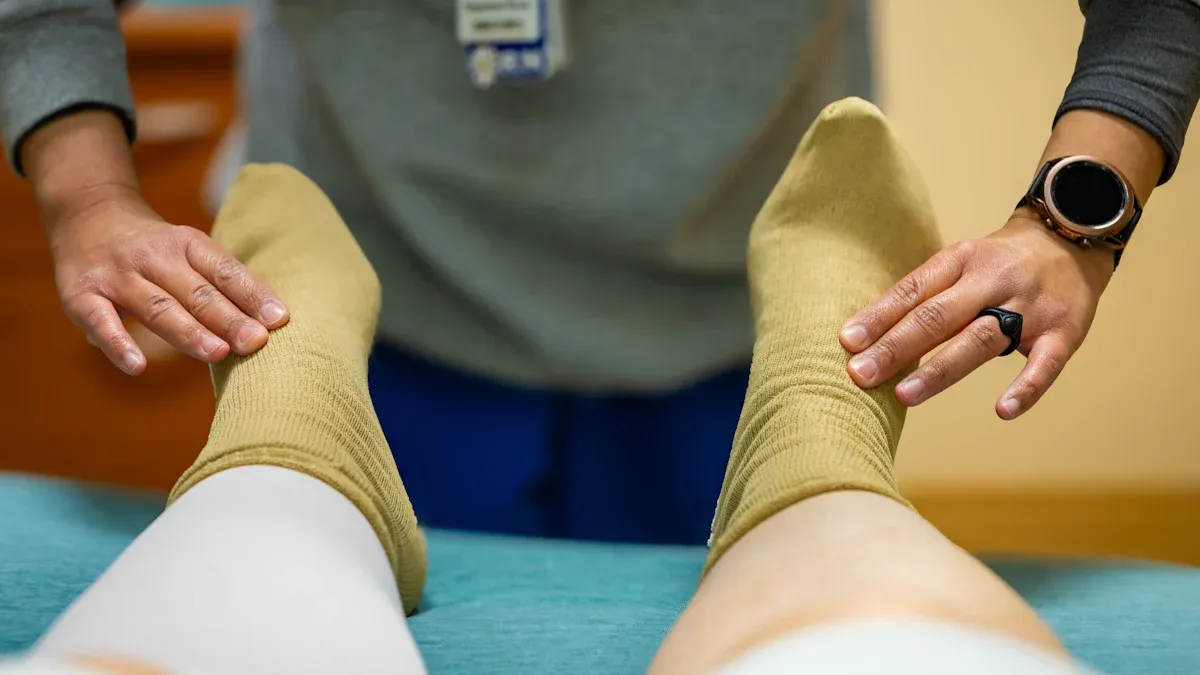
You may wonder what makes 20-30 mmhg compression socks different from other types. These socks give your legs a firm, steady squeeze. This level of compression is higher than what you find in everyday support socks. You get more support for your muscles and joints, which is important if you have certain medical needs. Many doctors recommend these socks to help prevent deep vein thrombosis or to help you recover after surgery.
You will notice that 20-30 mmhg compression socks use special materials to provide the right amount of pressure. Here is a table showing some common materials and their blends:
Material | Typical Blend Composition |
|---|---|
Bamboo Viscose | 35–50% bamboo viscose + 25–35% nylon + 15–25% spandex |
Coolmax | 40–60% Coolmax + 20–30% nylon + 15–25% spandex |
Merino Wool | 30–50% merino + 25–35% nylon + 15–25% spandex |
These blends help the socks stay comfortable, stretchy, and strong. You get a good fit and lasting support.
20-30 mmhg compression socks provide higher pressure than 15-20 mmhg socks.
They offer more support to your muscles and joints.
Doctors often recommend them for preventing blood clots and helping you heal after surgery.
When you wear 20-30 mmhg compression socks, you help your blood move better in your legs. The compression squeezes your lower legs, which pushes blood back up toward your heart. This helps your muscles get more oxygen and nutrients. You may notice less swelling and faster muscle recovery after exercise.
Research shows that these socks increase blood flow speed, even when you lie down. They also help stop swelling if you sit or stand for a long time. Compression therapy supports your veins and lymph system. This is important if you have problems like varicose veins or if you are at risk for blood clots.
Tip: Wearing the right compression socks can make a big difference in how your legs feel after a long day.
You might notice mmHg on compression socks. This means millimeters of mercury. Doctors use this unit for blood pressure too. In socks, mmHg shows how much pressure is on your leg. The pressure helps blood move and keeps swelling down. Not all compression levels are the same. You can pick mild (8-15 mmHg), moderate (15-20 mmHg), firm (20-30 mmHg), or extra firm (30-40 mmHg). Each level helps with different problems.
Compression socks use a pressure gradient. The sock squeezes your ankle the tightest. The pressure gets lighter as it goes up your leg. This helps blood go back to your heart. Your legs feel less tired and swell less. Compression works best when you choose the right level for you.
Tip: Always look at the mmHg number before buying socks. Picking the right level helps you feel better and get good results.
You might wonder how 20-30 mmHg compares to other levels. Lower compression, like 15-20 mmHg, gives gentle support. You use it for small swelling or to stop tired legs. The 20-30 mmHg compression is tighter. You use it for bigger vein problems, swelling, or after surgery. This level helps your veins and helps you heal.
Here is a table that shows when you might need 20-30 mmHg compression socks:
Condition/Situation | Benefits of 20–30 mmHg Compression Socks |
|---|---|
Moderate varicose veins | Reduces moderate swelling |
Chronic leg swelling | Helps manage varicose vein discomfort |
Post-surgical patients | Supports vein health |
Individuals with venous insufficiency | Improves circulation more aggressively |
Long-haul travelers | Helps prevent worsening vein conditions |
Athletes needing stronger recovery support | May reduce risk of blood clots during long travel (with medical guidance) |
Tried 15–20 mmHg without relief | More therapeutic than preventive |
You should only use extra firm compression (30-40 mmHg) if your doctor says so. Most people find 20-30 mmHg socks work well for health and daily life. You get more support and better results than with lower levels.
Compression socks help control swelling, improve blood flow, and stop tired legs.
You choose the right compression level for your health and what you do.
Image Source: unsplash
You can wear 20-30 mmHg compression socks for many health reasons. These socks give strong support and help with swelling. They also help blood move better in your legs. Doctors tell people to use these socks for varicose veins, deep vein thrombosis, and lymphedema. You might need them if you have chronic venous insufficiency or bad swelling. Groups like the American Venous Forum and Society for Vascular Surgery say compression therapy is good for your veins. The American Academy of Family Practitioners says to use compression for venous ulcers. You should take off your socks at night and get new ones every six months.
Varicose and spider veins
Venous problems and swelling when pregnant
Moderate to severe edema or lymphatic edema
Care for active ulcers
Post-thrombotic syndrome
Superficial thrombophlebitis
Orthostatic hypotension
Compression socks help blood flow and stop swelling. You can wear them after surgery to lower your risk of deep vein thrombosis. Compression helps your veins and helps you heal.
You might need compression socks for daily support. Nurses wear 20-30 mmHg compression socks to stop swelling and help blood flow during long work hours. Athletes use these socks to help blood move, recover faster, and feel less sore. People who travel wear compression socks to stop swelling and deep vein thrombosis on long trips. Compression also helps pregnant women and people who stand or sit for a long time.
Nurses: Stop swelling, help blood flow, and stay comfy.
Athletes: Help blood move, recover faster, and avoid injuries.
Travelers: Lower swelling and reduce the risk of deep vein thrombosis.
Studies show compression socks cut down on work swelling and help blood flow. Compression helps your blood move and supports healthy legs for many daily things.
You should wear 20-30 mmHg compression socks if you have bad varicose veins, swelling that does not go away, or venous insufficiency. People healing from surgery or at risk for deep vein thrombosis also need compression. People who get tired legs, swelling, or need to recover after hard activity or travel can use these socks too. If you want good, eco-friendly compression socks, MINGJUN Hosiery makes socks that help blood flow and keep your veins healthy.
Note: Compression socks help with swelling, blood flow, and healing. The right socks can help your blood move and stop swelling.
You need to pick the right compression for your needs. The right level helps your legs feel better and keeps you safe. Here are the main things you should think about:
Look at your health. Check if you have swelling, vein problems, or need support after surgery.
Think about your daily life. Do you stand, sit, or move a lot? Your job and activities matter.
Start with a lower compression if you are new. Try it for a day. If your legs still feel heavy or swollen, you may need a higher level.
Watch for signs. If your shoes feel tight or you see marks on your skin, check your fit.
Compression Level | Best For |
|---|---|
8–15 mmHg | Mild support, tired legs |
15–20 mmHg | Light swelling, travel |
20–30 mmHg | Moderate swelling, varicose veins |
30–40 mmHg | Severe issues (doctor’s advice) |
MINGJUN Hosiery offers custom, high-quality compression socks for every need.
Tip: If your socks feel too tight or cause itching, you may need a different size or level.
Getting the right size is very important. Socks that are too tight can block blood flow. Loose socks do not give enough compression. Always measure your legs in the morning when swelling is lowest.
Sit with your knees bent at 90 degrees.
Use a soft tape measure. Measure both legs.
Measure your ankle at the narrowest spot above the bone.
Measure your calf at the widest part.
For knee-high socks, measure from the floor to two finger-widths below the back of your knee.
Match your numbers to the size chart on the package or website.
Never fold your socks. Folding can stop blood flow.
Note: Proper fit keeps compression safe and comfortable.
You should talk to a doctor before using 20–30 mmHg compression if you have:
Peripheral artery disease
Heart failure
Skin infections or bad rashes
Severe nerve problems
Diabetes with poor blood flow
Condition | Contraindication Details |
|---|---|
Advanced PAD | ABPI < 0.5, ankle artery pressure < 60 mmHg, toe pressure < 30 mmHg, TcPO2 < 20 mmHg ankle |
Severe PAD, infections, heart failure, critical DVT | Do not use without doctor approval. |
If you are not sure, always ask a healthcare provider. The right advice keeps you safe and helps you get the most from your compression socks.
You get a lot of good things from 20–30 mmHg compression socks. Studies show these socks help blood move better and stop swelling. They also make your legs less tired and sore. These socks help your muscles feel better after you move around a lot. People with chronic venous insufficiency or moderate varicose veins get the most help. They are also good if you need support after surgery. Athletes and people who might get DVT can see good changes too. If you are not sure, talk to your doctor. Picking good socks like the ones from MINGJUN Hosiery keeps you comfy and healthy.
You can wear them for most of the day. Most people wear them from morning until bedtime. Take them off before sleeping unless your doctor says otherwise.
Yes, you can wear them during exercise. They help improve blood flow and may reduce muscle soreness. Many athletes use them for better recovery.
Yes, these socks help prevent swelling during long trips. You should put them on before your journey and keep them on until you arrive.
Wash your socks in cold water by hand or on a gentle machine cycle. Air dry them flat. Do not use bleach or iron them.